Cathal Costello Costello
Send me sweet love letters of Dhamma… DMs open
Views: 6

Cathal Costello Costello
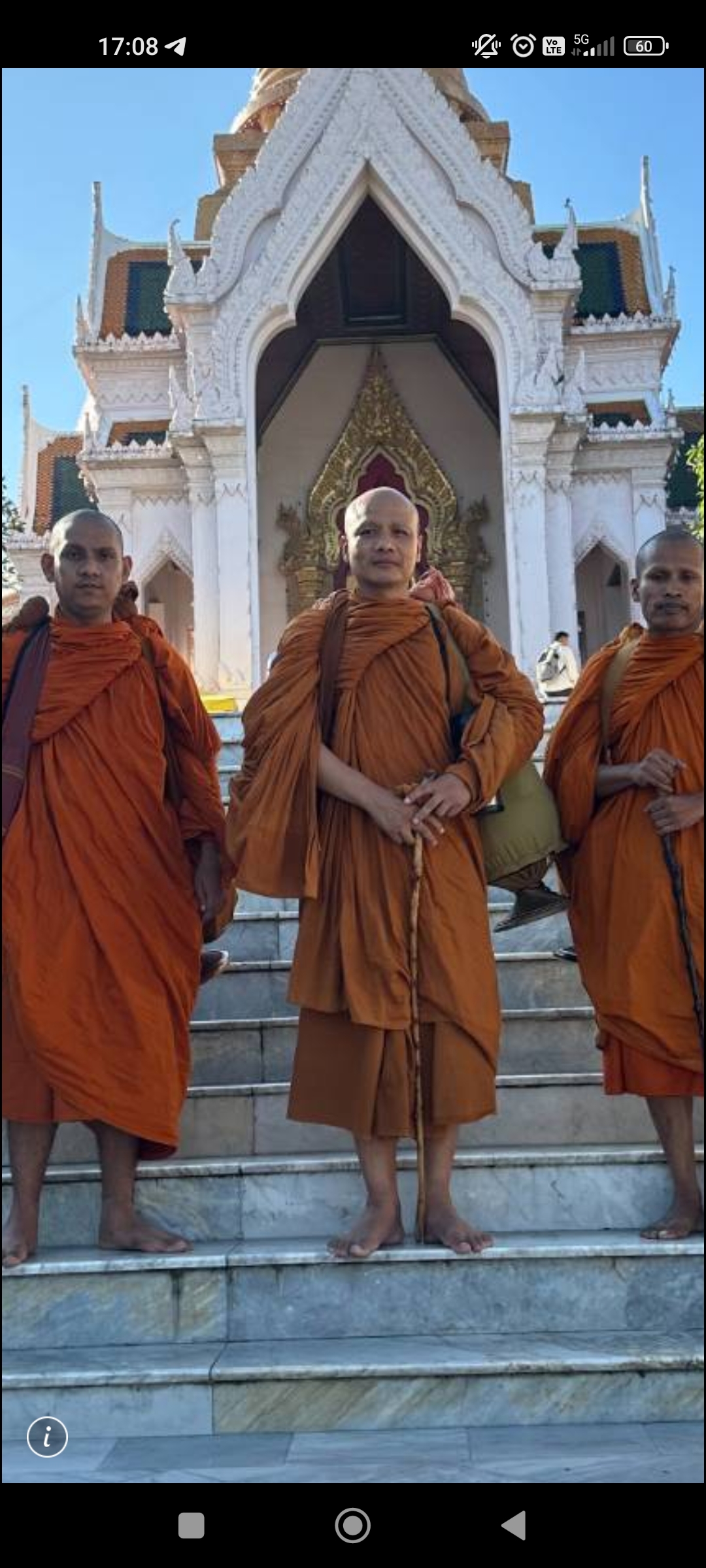
It only became surprising after a couple of months with him, it was the consistency and integrity that slowly that thought creeped up in me. I thought “Wow this is some high level monk” lol but most monks who hit 10+ years are like this at least the ones who put some work in themselves hangout noble ones Its fairly normal to me at this point.
Hanging around those guys I guess hit me hard on a subconscious level or something that no matter how messed up I got especially with all my westerner baggage I can clear that out and enter into the state of wow life is good. I can accept myself as I have been accepted, I was never judged, I was always expecting to be judged but I wasnt. My mind slowly quietened down and it began overly obvious that the judgements I make are not only unnecessary pointless and hurtful but are just built on delusion.
So i share that cos when you do hangout with guys who have done a lot of work within themselves it sort of affects you deep into the bone, marrow hits the marrow. Dhammarato taught me that he had it real good I think, being cared for in the right way can totally change you, waking up to caring for the right things and stop caring about nonsense. I feel almost sorry for those who are stuck around ordinary pissy unhappy people all day, that’s hard, you really have to commit to right effort right there. Its my idea of what a blessing is. Your life can change quickly for the good
Views: 31
Cathal Costello Costello
We are trying our best, given the information we have so far through our unique individual experience. If we can recognise that fundamental innocence within ourselves, within all beings, we are coming to relinquish blame of rights and wrongs. So what will this result in? Friendliness, compassion and quite a bit of joy. We can say forgiveness is more of a wise attitude we have even when we see others people hurting each other, trying to hurt us, and even when we ignorantly do so as they ignorantly do so.
Hell I don’t know! That’s okay. And I’m okay with you, brother, sister, you don’t know and you are confused as much as me and I celebrate your clarity. I know deep down we both want to be free, we want to be truly happy beyond any bounds we have and continue to sin and make our mistakes and errors, thats OK, may we together in this learning process learn to hold to truth, value truth, give it all up for the truth for our own good sake.
Thanksgiving to all beings who have made our way easier.
Views: 8

Cathal Costello Costello
Views: 16
Cathal Costello Costello
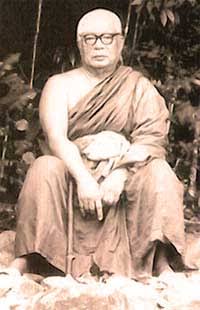
The Buddha is recorded as saying that anyone who gets rid of tanha (ignorant desire) is someone who eats time. Usually it's time that devours; it devours people and all other living things. Would anyone who puts an end to desire, that one turns around and eats time, which means that time becomes a small matter, something to smile at, an inconsequential matter that can't eat or bite us." Ajahn Buddhadasa Bhikku
Views: 11
Cathal Costello Costello
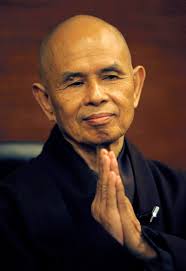
Our problems today are no longer as simple as those encountered by the Buddha. In the twenty-first century, we will have to practice meditation collectively as a family, a city, a nation, and a community of nations. The Buddha of the twenty-first century Maitreya, the Buddha of Love, may well be a community rather than an individual. Sanghas that practice loving kindness and compassion are the Buddha we need. We can prepare the ground for bringing that Buddha to life, for our sake and for the sake of countless others, by transforming our own suffering and cultivating the art of Sangha-building. It is the most important work we can do.” “Thich Nhat Hahn
Views: 17
Cathal Costello Costello
Views: 5
Cathal Costello Costello
Karma: The Choice Is Yours
BY AJAHN BUDDHADASA| OCTOBER 20, 2017

There are two ways to understand dependent origination, teaches Ajahn Buddhadasa. But only one leads to liberation.

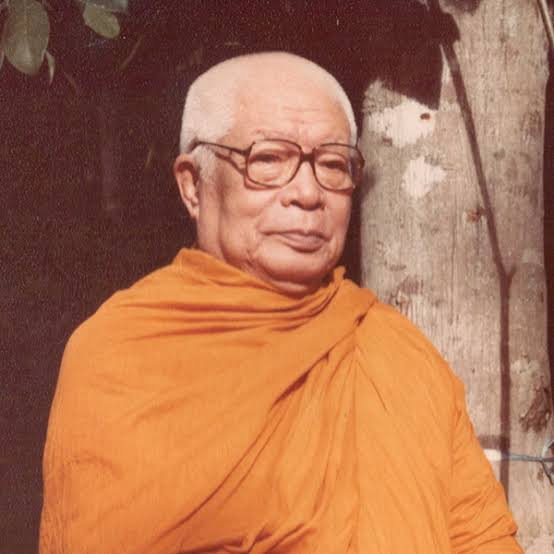
Ajahn Buddhadasa. Courtesy of Buddhadasa Indapanyo ArchIves (Bangkok).
In the Pali suttas there are two descriptions of what occurred under the Bodhi tree at the time of the Buddha’s great awakening. In one version, appearing in various texts, the Buddha realized the three supreme knowledges. In the first true knowing, as it is generally understood, he recollected his former lives. In this account, as traditionally understood, he is able to recall his own previous births far into the distant past. These are invariably described as happening to the same person. In the second true knowing, he reviewed how beings carry on according to their actions (cutupapatañana), how beings pass away and reappear according to the karma they have done. Through the third true knowing, he realized the destruction of the impulses (asavakkhyañana). The out-flowing fermentations (asavas) are the deepest level of defilement; when they are completely ended, no further defilement, egoism, or suffering is possible. This is the more commonly recounted description of the night of the Buddha’s awakening.
Elsewhere, the Pali texts state that the Buddha awakened to dependent co-arising. There also are accounts of the Buddha contemplating dependent co-arising immediately after his awakening, while he was still sitting under the Bodhi tree. Together, these give a second description of the Buddha’s great awakening. In the immediate aftermath, during the first four-hour watch one night, the Buddha examined dependent co-arising in the forward order, starting with ignorance, then concoctings, and so on, one after the other. During the second watch of the night, he reviewed dependent co-arising in the reverse order, starting from suffering, then birth, becoming, clinging, and so on all the way back to ignorance. Then for the third watch, he examined dependent co-arising in both forward and reverse orders until dawn.
Between these two versions, the second is more reasonable and acceptable in light of the overall themes and threads of the Pali suttas. In the other account, the first knowledge concerning the recollection of past lives is in the language of eternalism, just as in the pre-Buddhist Upanishads, which speak of a self or an individual being born again and again over many lives. The belief that the same person is repeatedly reborn is eternalism, which Buddhism aims to eliminate. This idea has more in common with popular beliefs and the philosophy of the Upanishads than with the core of the Buddha’s message.
At heart, Buddhism teaches the end of karma, living beyond karma, rather than carrying on according to karma.
The second knowledge is about beings passing away and reappearing according to karma. This is generally understood to mean that the same being disappears from one existence (bhava) and reappears in another according to karmic influences somehow carried over from one existence to the next. However, this is not directly or specifically a Buddhist teaching. At heart, Buddhism teaches the end of karma, living beyond karma, rather than carrying on according to karma. The noble path is for freedom from karma; living under the sway of karma is limiting, distressful, and burdensome. It is not good enough to merely surrender to karma, to die and be reborn according to the fruits of our actions. In Buddhism, liberating insight must go further than that.
Neither of these first two knowledges can be considered truly Buddhist principles. Why, then, are they included in the Pali scriptures? My own view is that perhaps the compilers of the discourses included these passages for the benefit of ordinary people. For those people unable to understand dependent co-arising and the end of karma, these passages were included for the sake of morality. Consequently, this is an account of the Buddha’s awakening for the moral benefit of ordinary people.
The second account puts dependent co-arising at the center of the Buddha’s awakening. Not only did he express his awakening in these terms but he also described how he pondered and contemplated dependent co-arising both before the awakening and immediately after. After experiencing the bliss of liberation for a week, he examined and investigated dependent co-arising throughout at least one night, the first watch of which focused on how dependent co-arising occurs. He repeatedly investigated this in the forward order from ignorance to concoctings on through suffering. He spent four full hours thoroughly penetrating this truth. In the next four hours, he investigated the causality of dukkha in careful detail all the way back to ignorance. In the final four hours, he examined dependent co-arising in both directions, forward and backward. This shows the central importance of dependent co-arising. The formula recorded is brief and succinct—the Buddha looked into it forward and backward for twelve hours without a break. He had the most profound spiritual experience of this through each of the watches: forward order, reverse order, and both forward and backward, each for four full hours. Please consider how profound, how difficult, how subtle, and how important this is. This ought to be of great interest to all serious meditators.
The words we have translated as “forward order” and “reverse order,” or “forward” and “backward”—anuloma and patiloma—can be understood rather broadly. Thus, for clarity’s sake, we can explain anuloma, “with the hairs,” as the examining of the arising sequence, that is, dependent co-arising. The reverse, patiloma, “against the hairs,” is the quenching of dependent co-arising, that is, dependent quenching. In the first watch, the Buddha investigated and reviewed how dependent co-arising arises. In the second watch, he investigated and reviewed how it quenches. In the final watch, he investigated and reviewed both. This understanding is eminently reasonable and fully supported by the core themes of the discourses.
Please consider this important question: Have you ever practiced like this? Have you ever investigated dependent co-arising in the way that the Buddha did before, during, and after his awakening? We suggest that you examine and scrutinize dependent co-arising in the same great detail, with the same sincerity and intensity. Then, you might understand it like he did. You will find it worth your while to follow the Buddha’s example.

Two Understandings of Karma
This is a good place to consider karma. After all, it parallels the dependent co-arising teaching, though with less precision and depth. In the first account of the Buddha’s awakening, the second knowledge suggests that beings carry on after death according to their karma. The difficulty with this understanding is that we cannot take this as the understanding of karma in line with core Buddhist principles. Rather, this understanding is simply the standard version of karma that existed in India before the Buddha’s time. Before the Buddha’s awakening, the Upanishads already taught that beings are reborn after death according to the workings of karma. Even Christianity, at least mainstream forms, teaches pretty much the same. If that is not the true Buddhist teaching, then what is?
In Buddhism, the central teaching on karma is about the practice that makes karma meaningless, “the karma that ends karma.” This karma transforms us beyond all the influences of karma, which is the unique, more profound aspect of the Buddha’s karma teaching. The idea that doing good deeds leads to good results and doing bad deeds leads to bad results was a general teaching that existed before the Buddha’s time. The Buddha did not deny or object to such karma doctrines, which were already common before he appeared and are found in some form in all religions. However, such teachings were not sufficient for his purpose: the end of suffering. Therefore, the Buddha went further. His real teaching is about not being trapped by karma, thus transcending karma and its consequences.
To be trapped forever in the prison of karma is not Buddhism. If everything constantly happens to us according to karma, there could never be any liberation.
Allow me to reiterate that most of the books on Buddhism with chapters on “Karma and Rebirth” are not correct, not if they really intend to represent Buddhism. If we are to explain “Karma in Buddhism,” it is not enough to teach that good actions bring good fruits, bad actions bring bad fruits, and we inevitably receive the fruits of our good and bad karma. Properly, a Buddhist explanation must focus on “the karma that ends all karma.” The practice of the noble eightfold path is that karma that ends all karma. The Buddha’s teaching on karma is to be free of karma, not trapped by it, so that karma has no more power over our lives.
The Buddha Perfected the Teaching of Karma
To be trapped forever in the prison of karma is not Buddhism. If everything constantly happens to us according to karma, there could never be any liberation. For a teaching and practice to be Buddhism, we must be liberated from the power and oppression of karma. A teaching that merely reiterates the old approach cannot be the true Buddhist teaching. It must be completed to the extent of liberation to be Buddhism. Thus, the Buddha needed to teach the karma that ends karma. He took the kind of karma that does not explain liberation and perfected it so that liberation from karma became the central point.
“Beyond karma” is a teaching above and beyond the world, or a lokuttara teaching. The ordinary karma teachings are part and parcel with the world (lokiya). Lokiyadhamma is for the mind still trapped in worldly conditions. Lokuttaradhamma is for the mind free of and beyond worldly conditions. The Buddha accepted a number of the old teachings, perfecting them within his lokuttaradhamma system as he did so. The Buddhist teaching on karma—the noble eightfold path that ends karma—is a perfect example of how the Buddha completed the old teachings and traditions.
The Buddha accepted some teachings that existed in India before his awakening, such as non-vengeance (avera), non-harming or nonviolence (avihimsa), the five sila, various samadhi practices, and the form and formless jhanas. All of these are older teachings and practices that he did not reject. Instead, he further developed, completed, and perfected them. Please be aware that Buddhism contains a certain amount of older teachings and practices that the Buddha included, deepened, and completed for the sake of quenching dukkha. Understanding this fact is important so that we will not confuse the old versions of such teachings with the new, perfected versions.
The Buddha completed the Upanishadic teaching on karma and the like. To do so, he taught the end of karma.
Two Levels of Teaching
These examples clearly show that there are two levels of teaching, both of which are necessary. One is for the sake of morality, for those who still believe in and hold to self. The moral level of teaching is necessary for those who can only understand things in terms of me and mine, who require moral and therapeutic teachings that operate on a worldly level. It teaches people how to live in the world morally and peacefully, to be less selfish about the selves to which they cling, and thereby suffer less.
You can continue rebirthing yourself in a worldly way, but with healthy morality, not harming others and living relatively peacefully.
For those aiming higher, the Buddha’s teaching focuses on letting go of self, that everything is not-self and nothing is worth clinging to as me or mine. This level does not ignore or reject the moral teachings; it simply goes beyond them. This is the more comprehensive transcendent level of ultimate truth that truly liberates from all suffering. If both levels are understood, there is no conflict between them. They can coexist for the sake of both those who want to live in and of the world (lokiya) and those aiming to live above and free of the world (lokuttara), in it but not of it.
Each person decides their own preference and way. If you want to travel the paths of the world and have no wish to transcend the world, you can follow the worldly teachings and receive the moralistic explanation of dependent co-arising given by various commentators. You can continue rebirthing yourself in a worldly way, but with healthy morality, not harming others and living relatively peacefully. If you want to be free, to transcend the world and no longer be caught by all its trappings, you must study the transcendent teachings such as “the end of karma” that do not involve self. For this, we have the dependent co-arising of ultimate truth that enables us to see through all the concoctings of self. Dependent co-arising also has these two levels or two models. The choice of which to follow is yours.
Adapted from Under the Bodhi Tree, from Wisdom Publications, 2017.
Views: 13
Cathal Costello Costello
Views: 10
Cathal Costello Costello
I’m not even sure she thinks about the way i’ll explain but she always makes something and then asks someone to offer it, instead of offering it herself which is interesting because here in thailand merit and merit making is such a big deal that anyone will happily jump on the immediate opportunity to ‘gain merit’ and I was confused about her but eventually realized that for her, her generosity is that she gives other people the opportunity to practice generosity, she has also said she’d been in temples for 17 years so she probably picked up a few good things and that in itself showed me that giving others the opporunity to grow is such a big deal, so profound that it goes right into the fundamental design of the sangha relationship to the laypeople, it is entirely about support, about helping each other from the point we’re at, whereas in the west it’s about who can win, who can be the best and who can be perfect, and if that’s true then the dissatisfaction of not being good enough is going to affect us and everyone around us, instead of happily enjoying where we are at and happily practicing the good way.
It seems when it comes to the Dhamma, it is impossible to teach in one sense, but it is possible to teach the intellectual stuff and give people an environment to realize it themselves.
We can in many ways refine our behaviours to both completely benefit from each other instead of the western way that always someone will be a loser, why don’t we just all be winners?

Views: 47
Cathal Costello Costello
Views: 32
Cathal Costello Costello
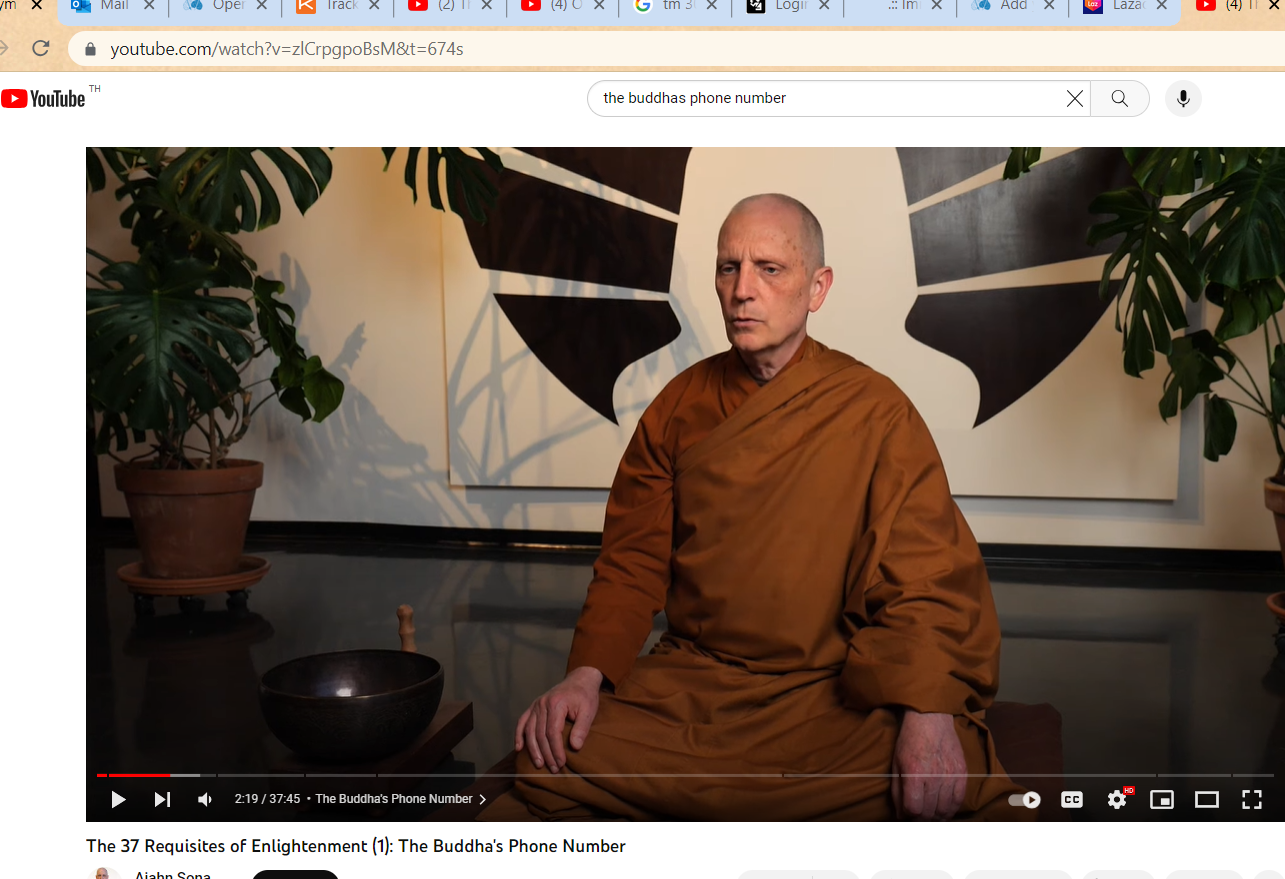
https://www.youtube.com/watch?v=zlCrpgpoBsM&t=674s
875444
Views: 37