You are not logged in

Dhammarato sa - Open Sangha Foundation

Author: Dhammarato sa

  • Thoughts are not me not mine

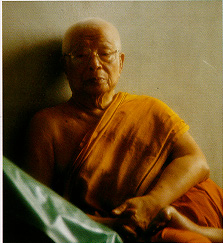
    Dhammarato sa

    david-haye-jizo

    This is ordinary western way to put up with the disease. This is not the cure for depression. Changing depressing thoughts one at a time, this one. That’s the noble cure. Whenever there is a video on yt as selling yet another cure is a high price for a placebo. The cure is always cheap and easy, but folks are not willing to take the repetitive cure, they want the Easy way out: a pill or a Dr or a JC to do the job for them. It’s better to post videos from monks who might knows the cure and give a miss to psychologist or lay Buddhist and charlatans that clog the web.
    8:30 PM
    Depression does not exist, it is a concept, a clinical concept. The reality is unwholesome thoughts are the issue. Drs using words like “depression” , at best only give the temporary hope “at least I know what’s wrong with me”. But labels and concepts can only give temporary relief, not a cure. Only the right noble practice of changing the thought process is a cure. No Dr can cure you no matter how much you pay m. Only you can cure yourself by changing you mind one thought at a time, starting with THIS ONE.

    The point is that the mind can change with right noble consistent effort, depression is nothing more than depressing thoughts. It’s inside the mind not out there in society.
    8:37 AM
    The point of managing the spiritual disease is not to just feel better it is a full cure. One must practice continuously to remove unwholesome thoughts untill they don’t come up anymore.
    9:08 AM
    yes, the point is consistent practice of removing unwholesome though, when ever they come. the more you practice the better skilled you get at seeing them and stopping them, for a while as the skill grows, one can see better and it looks like so many , that’s because we see better. and as the skills grow more, the unwholesome thoughts become less frequent, but one must still practice and soon all those unwholesome thoughts are replaced before they are full formed. ,

    when someone is hungry that is not depression, when no food, that is not depression, it is just hunger. Go find food happily. enjoy it all the more due to hunger.
    when you say depressed that misses the point, that means a personality trait, but personalities and not fixed they move around because of many influences. (hunger is not depression) One can change personality by changing thoughts, so there is no such person who is depressed only folks who have unwholesome depressing thoughts, while he/she is watching a movie completely absorbed in the move, no depressive unwholesome thoughts, only laughter at funny movie then and there that one is not depressed, only when the mind moves from movie to “poor me, I have no food” does depression set in. But depression does not set in, its just unwholesome depressive thought fill the mind.

    when someone is hungry that is not depression, when no food, that is not depression, it is just hunger. Go find food happily. enjoy it all the more due to hunger.
    when you say depressed that misses the point, that means a personality trait, but personalities and not fixed they move around because of many influences. (hunger is not depression) One can change personality by changing thoughts, so there is no such person who is depressed only folks who have unwholesome depressing thoughts, while he/she is watching a movie completely absorbed in the move, no depressive unwholesome thoughts, only laughter at funny movie then and there that one is not depressed, only when the mind moves from movie to “poor me, I have no food” does depression set in. But depression does not set in, its just unwholesome depressive thought fill the mind.

    this is a common issue in the west. Many times it is heard “I have wholesome thoughts but they don’t work because I don’t believe them.” That is not because of the wholesome thoughts are not true, but the student fails to see the thoughts right after the wholesome thoughts. The “I don’t believe it” is the new unwholesome thought that is not seen. They see wholesome thought as new, from the outside and not my thought, not me. Then the next thought “I don’t believe it” is old familiar seen as coming from the inside, it’s my thought, it is me the real me. But both the wholesome and the unwholesome thoughts are not me not mine, they are just thoughts. The student needs to be watchful as to what thoughts are seen as me, my thoughts, for they are the most unwholesome and often follow the wholesome thoughts.

    Email

    URL

    Views: 39

  • God is Great

    Dhammarato sa

    Email

    URL

    Views: 46

  • A-Buddhist-Charter-Buddhadasa

    https://opensanghafoundation.org/

    ajpoh1

    [pdfjs-viewer url=”https://opensanghafoundation.org/newsite/wp-content/uploads/2023/08/A-Buddhist-Charter-Buddhadasa.pdf” attachment_id=”7993″ viewer_width=100% viewer_height=800px fullscreen=true download=true print=true]

    Email

    URL

    Views: 70

  • Elders

    https://opensanghafoundation.org/

    Email

    URL

    Views: 73

  • palichanting

    [pdfjs-viewer url=”https://opensanghafoundation.org/newsite/wp-content/uploads/2023/08/palichanting_urw_csx_short.pdf” attachment_id=”8007″ viewer_width=100% viewer_height=800px fullscreen=true download=true print=true]

    Views: 75

  • Benefits of giving

    Benefits of giving

    https://opensanghafoundation.org/newsite/wp-content/uploads/2023/07/AN.5-35%20D%C4%81n%C4%81nisa%E1%B9%81sasutta%20The%20Benefits%20of%20Giving.txt

    Views: 34

  • Teacher Training

    Teacher Training

    [pdfjs-viewer url=”https://opensanghafoundation.org/newsite/wp-content/uploads/2023/08/Teachers Training.pdf” attachment_id=”663″ viewer_width=100% viewer_height=800px fullscreen=true download=true print=true]

    Views: 33

  • Only One Buddhism

    Only One Buddhism

    ONLY ONE BUDDHISM

    We are all One
    Mahayana, Western Buddhism and Theravada and all the Buddhisms all have the same taist, the taist of freedom.

    Buddhism really has no variety, It’s all about stop hurting

    One buddhism

    Views: 30

  • A Person of Integrity’s Gifts

    A Person of Integrity’s Gifts

    A Person of Integrity’s Gifts

    Views: 32

  • A Short Visit to Sunyata

    A Short Visit to Sunyata

    A Short Visit to Sunyata

    Sunyata – a small forest thai wat in Sixmilebridge, Co. Clare, Ireland – by Cathal

    I came to Sunyata for 5 days (1/12/2022-5/12/2022) and I was very impressed by how such a small
    monastery can have such a big impact. The schedule ran like the other wats in this forest thai tradition
    (with Ajahn Chah) such as Chithurst, Amavarati – there was about 3 hours work to be done the entire
    day with everything being ran off of dāna, breakfast, lunch, tea and the two daily hour pujas I attended.
    In the barren countryside of Ireland it’s very personal experience in polarity to the busyness of other
    wats, there was 3 other guys in the entire place so I was left alone for most of the day to the chatters of
    my mind, which proved to be a new experience and a very insightful to see my mind in such social
    seclusion. There was no monastics about although recently Ajahn Succito resided a while for a self-
    retreat, there are generally lay visitors coming and going and a couple dedicated long-term laypeople
    who stick around who worked quite a bit to maintain the place and keep up the handling of retreats and
    so on. It still somehow felt like a Sangha with those guys, we openly could talk and relate to each other
    on many levels of personal experience in life and our experiences in meditation, it felt really nice to be
    able to find a place in my home country who practiced, sharing connections and places to meet Sangha
    is pretty solid.
    The place itself is really very simple and after roaming around it is easy to tell they’ve spent a lot of time
    cultivating a very aesthetically beautiful place with a bit of land for herbs and vegetables, you have your
    room in a dormitory (although the entire dorm will likely be your room if you’re not in some
    retreat/event) and do whatever you want. There are free books to read if you like and a comfortable hall
    to sit in during the common showery cold Irish days and the only thing you’ll be disturbed by is a dog
    and a few cats. There is literally nothing to do and nowhere to go. (welcome to anapanasati)
    After the morning reflection, work begins, you will be likely off to do your own task and it is very nice to
    practice working meditation as that is something quite mentioned in this tradition, to approach
    absolutely everything with mindfulness even the most mundane of things. (where I saw my mind prefers
    to be the most active).
    It is good to bring any kind of dāna you can whether that be some groceries from the nearby town of
    Sixmilebridge or donations, this is a very small place and generally they have to do their own shopping
    from retreat donations, but don’t worry if you can’t because there is plenty of food to go around. Being
    no monastics has its downside of not being able to talk about your practice or observe long-term
    practitioners who can make great friends or teachers, so I suggest if you are a point you’d like a self-
    retreat this is definitely a good place to go or to join during some kind of retreat where you’ll be
    amongst more people, or to be in contact with the lay-manager as to when monastics are coming and
    going. I’ll absolutely be back and for anyone in Ireland this is certainly a place you’ll be glad to be able to
    visit often.

    Views: 36

  • My First Time Experience At a Wat

    My First Time Experience At a Wat

    This was written by a student of Dhammarato, author unknown

    My First Time Experience At a Wat

    After about a year of practice alone like a hermit in my studio apartment I remember at a time where it started to sink in that I couldn’t go on this journey alone and it became obvious I needed real guidance, community, like-minded people/other spiritual seekers to talk to and share with and I knew early on this was way more important than pushing longer hours or some other delusional idea. I grabbed a backpack and took a bus from Scotland directly to London, and found myself being accommodated for 3 months in Amavarati, a forest Thai wat in the tradition of Ajahn Chah located in Hertfordshire. I knew nothing of this place, carrying only the advice of an online Dhamma teacher, Dhammarato who visited it almost 30 years ago, my heart wavered a bit to discouragement but I had a lot of trust in him, so here I am writing this 3 months later.
    Some insight and story being there:
    The most no-brainer and important thing here that i’ve come to realize being at a wat, being around people who really practice sila is that without a good foundation of sila (morality) I was endessly going to be disturbed by my socially paranoid monkey mind each time I entered any social setting. Sometimes it feels like I really haven’t left high school here, sometimes it feels like I’m still an angry child blaming my family for everything and the need to project that pain or shut my mouth and remain miserable, put on a big persona to fit in, it’s kind of wild to see how much judgment and criticism resides inside of you on the level of just feeling when you begin to let go of the story constructs around them, it’s just a simple i like and i don’t like this person – for what reason?! it was obvious how important this was, it was fundamental.
    A lot of the time being alone and online, that didn’t seem to really ever rise to the surface so I concluded sometimes I had ‘detached’ and let go of a lot things over the years, I always this barrier of safety and cocoon with online communication (forum’s, servers, video chat etc…) . I never really understood how defiled my mind was, how being around others kept triggering the same old patterns that I didn’t even know still existed, the same hateful, sad, jealous, conceitful, validation needing character just came and came and came and I was vulnerable, and it’s being vulnerable that I was confronted by layers upon layers of these many characters popping into conscious laying inside of your unconscious, and in my unskillful ways found very difficult to dis-identify with.
    Actually living with 30-40 fairly like-minded people with whom I talked with, eat with, practiced with and shared with proved to me in order for me to understand how I am conditioned, I have to confront it, people are really just reflections of your own delusions for the most part, lighting up all the old dark corners, the basement left for 10-20 year it all comes out. I had both the constant cycle of guest’s coming and going to long term lay-residents, to practitioners to see these ‘personalities’ pop into conscious for a visit
    And in an environment catered to spiritual development you begin to see how much you just get played by your environment, that you simply are a product of your environment – that you are basically a slave to the cultural conditioning you’re brought up in. Amavarati is a really well constructed place and it will force the devil up onto you that simply wants to be lavish in selfish desire, “Huh?! Washing dishing every morning, I came here to do my meditation!” I found that a very important thing to see in my face.
    Being here 3 months or so, I’ve gotten to see the many layers of desire in which I habitually escaped into to avoid feeling of all those things, so it felt like they’re just always there on play in the backround lurking on me from the darkness of the subconscious waiting to strike in moments of weakness. I really struggled here, I was torn between two worlds, when you put a stop to desire you really see it does run the show like I was being pulled by two strong horses opposite ways and I was going to rip apart. I began to crave material things like never before, despite being so dissatisfied my mind made resorting to old habits making the simplest things appear like crack candy, now I see for most of my life, I was just a hungry ghost more or less.
    I was to prone to my own bullshit and I equate it like trying to see the outside of the very box you’re trapped in, the misguided ‘I/me/mine/self’ maker, the ego – defilements, delusion, which again it became obvious the more I practiced I needed some outside eyes to help me see what I was unable too, it wasn’t so much even asking for someone to point a finger or fix my problems but putting myself in choiceless situations where, the choice of bullshitting myself no longer existed and I had just to follow the steps without crying about what I did or didn’t like. In Amavarati, there are about 40 overall monks and nuns and the abbot (Ajahn Amaro) who himself would be sitting in the sala in the morning and the meditation hall right after the meal everyday where you can talk openly about whatever you want. I cannot stress how even a 5 minute conversation and drastically flip your perception and views on things that may have been driving you insane for years. The actual wisdom and experience of these people was undeniably invaluable.
    Being fairly involved with various online communities, forums, weekly video chat calls, talking to online teachers and so – on I began to notice on one hand, this was nice. I enjoyed it quite a bit, I felt a sense of having people to practice with, to share my struggles and inspirations with, guidance and to gain more insight – having the internet means unlimited access to whatever Dhamma I so needed, but relying entirely on me and the internet proved to be not what I really needed.
    Intuitively I knew I was very stagnant, not truly pushing myself, half asleep in the dullness of practice, settling with going through the motions of my 1 hour bell timer, not truly here with the here and now because whenever things got hard I had a mountain of distractions, whenever I had a very unpleasant mind state such as anger, boredom, dissatisfaction the gross and subtle layers of self-deception took over and to emphasis – Ah social media! Ah video games! Ah another podcast! Another new teacher to learn about! Another book! Another movie! anything but the long drawn out days of practice without the sensual experience here at the wat. It’s really not so hard to fulfill yourself with desire and practice than practice and practice then practice some more. It’s really here I got a taste of beginning to push up against those barriers, days where you actually have nothing to turn to, it can be really intense I must say.
    And speaking for myself, I knew deep down this was not going to work. I could not just sit at home and make real progression on this path surrounded by all of this seduction I was constantly being lost in and more aligned with being free and more content. To confront myself, I needed to get away from it for a while. I have a deep sense that it is better to practice away from these things for a little while, the next time you handle them they will likely less swallow up your less developed mind – that was my logic to it and so far returning back, it has been totally true. Even so, I found myself many days drinking a lot more tea, adding another few spoons of sugar, finding another new book to distract me, oh god anything to distract me… But slowly you get this feeling of drifting towards content with what is, a few minutes later you might find a dissatisfied mind seeking an object to plunge and penetrate itself into, but you again return to that contentment knowing it’s really not a big deal. But at least in my case, those emotions can be really overwhelming, it’s that ‘this is too much’ feeling and ‘I need a break’ voice appears.
    I really needed a nursery, a mind training school, a re-conditioning center… That’s really all this wat was in a nutshell, it is simply a re-conditioning center.
    The people really rub off on you and it lasts, it stays, it is like seeing another version of yourself who is a bit more awake than you and equally show you what not to do, those grumpy monks uninterested in the Dhamma or the strange ones preaching to you and so on, there is so much to see, so much insight into the human character. And a note on seeing dana (offering of almsfood) was a kind of eye-opener to the prospect of sharing. Each day a large buffet of offered food was there for me, nothing asked for in return, I would walk past the dana table almost daily and see quantities of food keeping the community running. It’s really that quality of sharing and giving, non-attachment, merit and acts of virtuous that touch you and make you remember how good and pure it feels to just give. How funny it is, that you feel so much more free.
    I really feel like there is no bulls*** here, it’s just a real quality Dhamma centre that I don’t think anyone can’t benefit to a degree from. Whether you want to remain in total silence and practice day in and out or have a chat with spiritual companions and an adventure across some english countryside, it’s really an easy going all-inclusive kind of place that allows everyone to come by and test the waters a bit of really simple living.

    Views: 36

  • These Kind of Dhamma Dudes Could Illuminate the Mossy Alder Tree Wood

    These Kind of Dhamma Dudes Could Illuminate the Mossy Alder Tree Wood

    These Kind of Dhamma Dudes Could Illuminate the Mossy Alder Tree Wood
    I saw the most fear I had ever seen during my first time in the woods which I had decided to do on my own for two weeks in the wilderness of Olympic National Forest happened when I walked back to camp in the complete blanket of darkness of the forest at night.
    And I was not alone that night.
    Prior to and at the beginning of this retreat in the woods, I had one fear that visited the mind from time to time, bears. A large vicious animal that might visit me in the dark of the night and see my tent as a meat filled burrito.
    Bear spray at every REI in Olympic? Sold out. It did not help that the first night had to be spent at a completely random spot off a main road because the path to my campsite had turned into a dead end.
    Everything about every horror movie I had ever seen about making a wrong turn flooded to my gut when I realized we would have to set up camp at an adjacent patch of land surrounded by the woods off the road leading to that dead end.
    It is hilarious now to recall the fantasies I had dreamt up about what could be out there in the dark of the woods. What might be behind the sheet of trees that surrounded us as night fell and all visibility was lost. “Us”, being my friend from the Sangha, Erik who had so generously offered to take me all the way from the Seattle, WA airport to my campsite in Olympic.
    I Skype called my other friend in the Dhamma, Dhammarato and expressed my concerns. He reminded me once again, that I would be better off actually listening to what was going on in the woods, rather than coming up with fantasies about what might be happening in the woods.
    I took this advice and instead of listening followed by talking myself into being afraid of what may or may not be out in the woods, I did what he said our ancestors did when they lived in the wilderness. I just listened.
    I went from: “oh no there might be bears out there” *hearing leaves crunching in the woods* – “oh no, is that a bear approaching?!”
    To: *listening* *hearing leaves crunching in the woods* *listening some more* hearing more crunching of leaves* *listening some more again* *crunching stops* *deep sigh of relief*
    And boy was I glad to have learned to listen instead of becoming afraid because the next day when we found my camp spot, I would truly be all on my own so I had better been able to handle at least the first night with my friend Erik present. Using my senses instead of talking myself into fear was a much welcomed skill.
    Erik was truly skilled in all things outdoors and seemingly fearless, which he demonstrated time and time again. He and Dhammarato even assured me that all of the noise I had heard in the woods came from small animals, or things falling, etc. If it were a large animal, we would KNOW for sure that it was a large animal. It could not be mistaken.
    The following day I did find my campsite and I did manage to successfully spend the night in the woods all on my own. Waking up feeling victorious to have made it through the night without the same fear I had the night prior. What an absolute success. I sat outside of my tent, relaxing, and all of a sudden I hear some more crunching of leaves. “Listen” I thought, “keep listening” I continued to think. And unlike the night before, the crunching did not stop…the crunching actually got louder, eventually it was clear, just as Erik had pointing out the night before, these thuds were NOT the thuds of a small animal….and from behind the bushes it emerged!….ERIK! This time holding a tarp in one arm and blanket in the other.
    I was elated and shouted with great enthusiastic joy both for seeing my friend and being relieved that it was a human that emerged from those bushes. I told him that I knew it was no small animal approaching, but I absolutely was not expecting him to come back. His return was a gift well received! Although I felt victorious for having successfully done one night on my own, I felt a great deal of relief that my friend in the Dhamma would at lease remain nearby.
    Erik and I would go on to spend the next two weeks together exploring and investigating our own minds and the woods.
    Erik had recommended we go for exploring more of the nearby trails and I agreed. All was well as we trekked through the beautiful forest, joyfully discussing the dhamma, thinking about the dhamma, breathing well, and taking brief breaks to sit and ensure the mind was fit for work.
    Eventually we started to gain some elevation. This was my first time ever in any kind of forest, I was totally new to this. The path opens up and we look around to find that the path we are on continues as a very narrow, two foot wide cliff. We were basically on the side of a mountain looking at a long drop down into a river. This time, a kind of fear I did not even know I had came over me and rushed to my gut. I managed to make it a little further crouching and hugging the wall. Pleading out of fear that we turn around, this was too much. All of the strength in my legs were gone. Erik, fearless as ever, encouraged me to continue on, and assured me that I could do this.
    I did not think it was possible but the path got even more sketchy as we approached a point in the mountain that required you to actually grab a rope and scale yourself up another 10 – 15 yards. At that point I became adamant about turning back. Erik however, pulled himself up and scaled the mountain a bit just to check it out but we eventually turned back around and headed back to camp.
    I was introduced to another kind of fear I did not even know I had, but by becoming aware of that fear, that was already half the battle. I called Dhammarato to report the news and he shared with me that the Buddha was reffered to as a “Lion” and a “Bull” (elephant). That actually, one of Dhammarato’s teachers and the most famous of monks in Thailand, Bikkhu Buddhadasa was known to be a lion as well. Tough dudes who weren’t afraid of nothing.
    We came up with a game plan for how I would conquer this mountain myself as a lion. That I could begin to practice my balance. That if I were able to practice balancing on trees and downed logs that were elevated off the ground, I could simulate and visualize successfully walking along the cliff edge of the mountain. And as I developed confidence in being able to walk the log forward, I would try it backwards, then I would close my eyes, then I would go backwards and close my eyes, then I would run on the log, then dance along the log, etc. Erik even put together a jungle gym for me that I could play on and that took me to balancing higher up over the ground. Just as Dhammarato pointed out with regard to listening vs being afraid, I had to learn to balance as opposed to being afraid. That when a big gust of wind hits the tight rope walker who is trying to walk between two skyscrapers, the tight rope walker can decide to either be afraid, or to attend to his balance. The decision he makes will determine if he survives or not. Choose balance over fear. Choose being a winner over being a victim.
    A few days after waltzing on every log I could find in the woods, we made our way back to the foot of the mountain. Erik and I had gotten into the habit of letting a loud yell whenever we were feeling on top of the world, announcing it to the entire forest. We sat for about 10 minutes, got the mind fit for work and did exactly that. “Woooooooo” I was ready for battle.
    I made my way up the mountain, no problem. When we got to the thin cliff area, I just balanced my way along the entire cliff. I came to the rope that I had previously declined to scale, and scaled up the mountain, and pulled my way up without any hesitation. The rest of the hike was a piece of cake and there were no issues making our way back down. What an absolute success. The feeling was that of being on top of the world.
    However, I would soon discovering another great fear. The incident I mentioned in the beginning that was truly one of the most fearful experinces of my life. Erik and I had made a breif trip to the nearby town to pick up groceries but after having a Sangha call in the car we did not make it back until after dark.
    However, this dark was different from any other kind of dark I had ever experienced. Growing up in a city and spending no time at all in the wilderness in my life, I had never experinced opening my eyes and not being able to discern the difference from having them closed.
    The feeling standing in what I knew to be a large open space that was the parking lot at the beginning of the trail surrounded by forest and truly not being able to see anything at all was incredibly confusing to the senses. Even though the ground was flat, I felt as though it was hard to balance and it brought an uneasy feeling to my stomach. No way I thought, no way I could do a 20 minute hike through the forest without being able to see. I hopped back in the car and said I need a minute.
    I knew we had to make this hike back. We had one headlamp that unbenounced to us, was incredibly low on battery. It was interesting how the light actually only illuminated the next step or two.
    As you could guess, I called Dhammarato to explain the dillema. He shared stories of having done a similar thing but for probably a longer distance and if I recall correctly, only using candlelight. His advice was that if you don’t know where you are going, just stop and stand. You are not lost if you are not moving anywhere. He also repeated the same advice as before to just use your senses instead of becoming afraid. Listen to what is going on around you. He let us know that our eyes would eventually adjust. That this was just another skill to be developed. This objective sensory way of looking at the situaiton certainly did help reduce some of the fear. It also helped that Erik was there to sing some wholesome songs as we walked
    As you could imagine, everything turned out just fine. And just like with the mountain, we had a new toy to play with. Darkness and the fear of the unknown. Erik had the idea, why not start standing outside the tent at night. We did just that and progressed to moving away from the tent to the path at night and just standing there in the dark. Letting the eyes adjust. It was around this time we started to hear Elk begin to pass though our area and we would wait up late to see if we might have an encounter.
    We progressed to actually walking in the forest and leaving the headlights behind to see how far we could make it along the path without light.
    Erik would take it a bit farther and go out even further on his own into the night without light, checking out the areas we thought there might have been Elk.
    Another success in befriending what used to be a great fear, turning it into a new curious toy to play with.
    The final hurdle I had encountered were horse flies. Although there weren’t too many mosquitos, the incessant buzzing by my ears and crawling on my hands really did not sit well with me when I was trying to meditate by my tent. For a third time I reached out to Dhammarato again. This time we spoke of the doppler effect. A real physical law that the flys were teaching me about everytime they buzzed by my ears. The flys were merely showing me the the truth about reality, in effect they were teaching me the dhamma. Instead of being annoyed that the flies were disrupting my meditation, instead of being agitated by the sensations of them landing and crawling on me, I switched my focus to their sounds and decided to percieve their sounds as merely information about the world we live in. Just another thing. Just more dhamma. No problems here. And boy did it feel good to just relax and not be annoyed and agitated by my new fly friends. Dhammarato frequently references the wisdom of the 12 step program. First and foremost the value of associating with like minded individuals, and secondly the serenity prayer, accepting the things we cannot change. Those flys were something I did not have much choice in changing, and beyond just accepting them, I went for getting comfortable and even enjoying their little song and dance. The thing that I could change was my own attitude.
    As I had gotten over a lot of the anxieties and fears of being in the forest, I switched my attention to getting comfortable in the forest. Making it my home and really starting to feel at home. Erik spoke of a time where he ventured a Mexican rainforest. The people in the nearby village spoke of many dangers that could be there, tigers, snakes, poisonous insects etc. But Erik wanted to do his own investigation. And when he did his own investigation. He spoke of becoming so comfortable in the forest, feeling so safe, so secure, that he had no other inclination other than to just lie on the ground because he felt so at home and eventually slept there.
    I did not quite end up lying in the forest we were in but I did progressively get more and more comfortable in the woods. I recall that eventually I would come across a tree stump or log and just sit there and relax and the feeling of being really whelmed came over me, whelmed, as in safe and secure, and cozy right in the forest sitting palms resting on the log. For that moment I truly felt at home.
    The lessons I had learned in summation was instead of being afraid, listen, instead of being afraid, balance, instead of being annoyed, feel, instead of getting lost, stop. The practice is really always the same, come out of your confirmation bias that the world is a dangerous and scary place and come into reality. Reality is that everything is fine right now, everything is alright. This is a skill to be developed. Keep practicing over and over again coming into this pleasant moment. As we gain the skill of coming out of our crap, and into how wonderful things are, over and over, we begin to spend more and more mind moments feeling the way we want to feel. When you are in control of your feelings you are in control of your life and you can make it a wonderful one.

    Views: 42

  • Buddhadasa

    Buddhadasa

    “Vedanā Is Something Important In Buddhism

    Even when ‘vedanā’ is not being spoken of in the context of ‘satipatthāna’ or foundation of mindfulness, generally speaking it is nevertheless an important matter in the Buddhist religion, for, actually it is one of the various matters that form the heart of the religion, because all the mental defilements, cravings, attachment (upādāna) and suffering all come from ‘vedanā’ or feelings. Happy feeling or ‘sukha-vedanā’ leads to one kind of defilement (kilesa) while unhappy feeling (dukkha-vedanā) leads to another kind of mental defilement. Mental defilement is a kind of craving and craving leads to the rise of the tendency to feel or to get attached to things and phenomena, and that in turn leads to suffering. Thus, ‘vedanā’ is a big issue and it is initially the igniting point of craving. It is the second of the Four Noble Truths—the ‘Samudaya’ or the origin of suffering. If you wish to know how craving arises, learn about ‘vedanā’ and you will come to know it well that ‘sukha-vedanā’ brings about one kind of mental defilement (kilesa or craving) while ‘dukha-vedanā’ causes another kind of craving. Do take some interest in this matter.” —Ajahn Buddhadasa Bhikku

    Views: 55

  • The nine days retreat

    The nine days retreat

    The nine days retreat was a profound experience. I had a really good time. The
    main theme was explorations of anatta but there were beautiful openings in
    samadhi, and interestingly without intentionally choosing so, the last two days
    were very imaginal.
    I – Anatta:
    I started by visiting each aggregate relaxing both identification and
    appropriation. When the experience did not relax or fade, I used analytical
    reasonings to incline the citta towards a fully sustained anatta view
    (impermanent, not in my full control, just a perception, fabricated because
    dependent on clinging).
    In the past, I had focused mostly on identification (not self) and you invited
    me last summer to investigate appropriation (not mine) in more depth. Relaxing
    appropriation worked particularly well for objects that were felt as external
    (sights and sounds) because the citta seems to reify them more as belonging to
    the self than as part of the self. The dukkha associated with appropriation
    could be felt and released. Particularly when contemplating nature with eye and
    ear, freeing a percept from the self increased its beauty and vibrance. Also
    looking at my loved ones through the lens of anatta brought a strong sense of
    freedom and love. I also started practicing in a receptive mode: in each
    arising perception, the object can be seen as not mine, subject as not self, and
    the action (such as seeing) as not mine. Seeing intentions, actions, and
    movements of the attention as not self was also incredibly beautiful and
    freeing. The interaction between anatta, clinging and the fading of perception
    was clear on every aggregate and sense sphere.
    A very significant discovery was seeing clearly that when anatta is applied
    on seeing, hearing, feeling, then the sense of the watcher in each sense sphere
    dissolves and at the end this unfolds in a way of looking where there is no
    center: vastness of awareness. Vastness of awareness had opened in previous
    retreats and it had become my main practice in previous years. But my
    understanding of the state was incomplete and I could not go further. That’s
    where you started working with me on one on one. Because vastness had opened,
    my understanding of anatta came mostly from vastness of awareness (just a
    perception) and not the other way around. Making the trip the other way from
    anatta to vastness of awareness step by step and working on each sense sphere,
    increased my understanding of the state, why it does open, and why the
    background feels as conscience. I understand what has to be removed from the
    “usual” selfing state to go to vastness of awareness; and that is a sense of a
    center / discrete watcher in all sense spheres. I’m very happy because my
    understanding of both anatta and vastness of awareness are much more precise and
    I can clearly discriminate and identify their particularities.
    This paved the way to a second important insight: before I was reifying
    consciousness as something containing experience. By seeing how vastness of
    awareness could be arrived at by dissolving the sense of the observer; and
    seeing the background as “just another perception”; I realized I was fabricating
    a big idea about consciousness which was not there. It became possible to
    contemplate consciousness as just the knowing of a perception and the knowing
    of knowing. Then the citta intuitively understood the co-arising between
    perception and consciousness: one cannot exist without the other.
    This brought a lot of freedom and much understanding: it clarified the
    aggregates of perception and consciousness which were still a bit unclear for
    me; it allowed to see consciousness as “just knowing” which made it less solid.
    One interesting side effect is that it removed my fear of the anicca practice.
    Before, I was afraid of anicca practice and tended to avoid it: in particular
    fast anicca where everything becomes vibratory and there are gaps in experience.
    Realizing the inseparability of consciousness and perception made anicca
    perfectly ok; there was no « big consciousness » that was going to be destroyed
    in the gaps. It allowed a beautiful way of looking where
    consciousness/world/self is born and dies hundreds of times a second at every
    arising and passing away. Rob warns in his book that this view is provisional
    because it reifies time, yet it felt very profound and beautiful. As a result,
    the fear of anhilation in anicca practice is gone and fear of death seems also
    weakened: nothing mine will be lost and I’m already dying all the time. After
    this view arose, I felt fearlessly equanimous.
    II – Samadhi:
    I used peace, joy and less fabrication as a guiding compass for correct
    practice. So whenever, the citta became attached or agitated, I practiced
    samadhi sometimes introducing a flavor or intention of metta. Because it was
    seen as a side practice, there was no pressure to perform. This
    allowed the samadhi to flower beautifully. During the retreat, I could revisit
    jhanas one and two which I know well and can reenter by recalling their felt
    sense. Jhana three is also accessible sometimes, I should spend more time to
    familiarize myself with it. There were some experimentations in entering first
    jhana through other sense doors; in particular sounds (fun) or sight (much much
    powerful for me than body jhana, but did not pursue it because I became
    over-energized and manic for the next walking period). Mostly I practiced with
    the breath and the body. I understand better now the movement of rest and
    relaxation that can be found in the jhanas; how each one is more subtle and more
    calming for the citta. In the middle of the retreat, it became clear that the citta
    aspired to more and more calm states, and both vipassana and samadhi were leading there
    and seen as a movement towards rest.
    Sometimes during samadhi, I used anatta to relax and unbind objects that were
    perceived as dukkha. At some point this opened a new state, much much much more
    restful than previous jhanas. This was new to me, there was a sense of “WOW”. It
    opened after I had dissolved the sense spheres and had let go the remanents of
    the sense of the body, I had to let go deeply of control; the state was not
    “perfect” (some of the sense spheres were not completely faded) but it was a
    profound experience. After checking Rob’s book, it could be the fifth jhana. I
    just stayed a few moments and got out into another jhana which I could not
    identify well (maybe four ? there was a sense of perfect neutrality). The after
    effect during the next walking period was one of perfection: everything seemed
    crystal clear and perfect as it was.
    III – Images:
    This report is too clinical to do justice to the imaginal play of shadows that
    happened in the last two days. I think after much shunyata, so much
    unbinding, the citta wanted to bind. There was a balancing movement towards form.
    I will only speak of one of the images which visited me, it’s a familiar image,
    primal, it smells of earth and blood, a powerful lion that comes from times
    before the words were spoken. This time it arose from deep down the belly,
    roaring, taking control of my mouth and biting through me. With it came a demand
    for expression, creation, and strong sexual desires.
    I did not feel respectful to the image to repress the sexual desires in classic
    “Theravada” fashion, yet I was still in retreat under nine precepts. Because
    the anatta way of looking was powerful, I just gave full autonomy to the image:
    not me, not mine. In particular, the sexual desires could be both accepted and
    seen as not mine. This was powerful because the desire/image “resolved” itself
    imaginally, it played its act, manifested its essence, and then unbinded.
    During the explorations with the sense of appropriation, I sometimes played
    around switching the sense of object and subject (which is a fun experiment).
    During the retreat I understood that we can do the same with images:
    either we see the image as ours; I have such familiar
    images that arise sometimes and that I see as a part of my psyche.
    either we see the image as not ours, fully autonomous, which can lead to what
    happened above.
    a third possibility which feels powerful and I want to try, giving ourselves
    to the image. Because self is fabricated we can see ourselves as belonging to the image.

    Views: 60