Author: Thomas Hammon

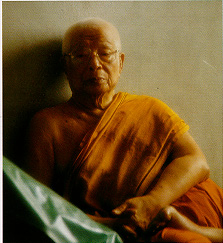
  • “TREAT EACH HUMAN FRIEND BY THINKING THAT:

    “TREAT EACH HUMAN FRIEND BY THINKING THAT:

    Thomas Hammon

    tjsick1.jpg

    “TREAT EACH HUMAN FRIEND BY THINKING THAT:

    • He’s our friend who was born to be old, become ill, and die, together with us.
    • He’s our friend swimming around in the changing cycles with us.
    • He’s under the power of defilements like us, hence sometimes he errs.
    • He also has lust, hatred, and delusion, no less than we.
    • He therefore errs sometimes, like us.
    • He neither knows why he was born nor knows nibbāna, just the same as us.
    • He is stupid in some things like we used to be.
    • He does some things accordingly to his own likes, the same as we used to do.
    • He also wants to be good, as well as we who want even more to be good — outstanding — famous.
    • He often takes much and much more from others whenever he has a chance, just like us.
    • He has the right to be madly good, drunkenly good, deludedly good, and drowning in good, just like us.
    • He is an ordinary man attached to many things, just like us.
    • He does not have the duty to suffer or die for us.
    • He is our friend of the same nation and religion.
    • He does things impetuously and abruptly just as we do.
    • He has the duty to be responsible for his own family, not for ours.
    • He has the right to his own tastes and preferences.
    • He has the right to choose anything (even a religion) for his own satisfaction.
    • He has a right to share equally with us the public property.
    • He has the right to be neurotic or mad as well as we.
    • He has the right to ask for help and sympathy from us.
    • He has the right to be forgiven by us according to the circumstances.
    • He has the right to be socialist or libertarian in accordance with his own disposition.
    • He has the right to be selfish before thinking of others.
    • He has the human right, equal to us, to be in this world.
    If we think in these ways, no conflicts will occur.

    Buddhadāsa Indapañño
    Mokkhabalārāma, Chaiya
    22 May, 2531

    (With confidence in Buddhadasa Bhikku’s great compassion and humanity, a Thai Buddhist has taken his permission for granted and translated the above message into English, with kind help from an American bhikku.)
    26 June, 2536”

    Email

    Views: 16

  • Title: The Unity of Buddhism: A Journey Through Mahayana and Theravada

    Title: The Unity of Buddhism: A Journey Through Mahayana and Theravada

    Thomas Hammon

    2023-05-24.jpg

    <h6>Title: The Unity of Buddhism: A Journey Through Mahayana and Theravada

    As someone with a deep appreciation for the teachings of Buddhism, I’ve spent a considerable amount of time exploring the various traditions and branches that have evolved from the Buddha’s original teachings. One aspect that has always fascinated me is the apparent differences and similarities between Mahayana and Theravada Buddhism.

    Many believe that Mahayana and Theravada are fundamentally different, but as I’ve delved deeper into the teachings and practices of both, I’ve come to realize that their core is, in fact, the same. The primary distinction between the two lies in how they interpret and apply the rules and precepts laid down by the Buddha.

    In Theravada Buddhism, there is an insistence on following the rules and maintaining the precepts with unwavering discipline. This adherence to the letter of the law can sometimes lead to an unwillingness to bend the rules when circumstances call for it. On the other hand, Mahayana Buddhism takes a more flexible approach, openly bending the rules when deemed necessary for the greater good or to help others on the path to enlightenment.

    However, the essence of the Buddha’s teachings remains the same in both branches. Whether it’s the practice of Zen in Mahayana or the strict discipline of Theravada, the ultimate goal is the same: to achieve a state of inner peace, wisdom, and enlightenment. Both traditions emphasize the importance of mindfulness, meditation, and the cultivation of compassion.

    In my own experience, I’ve found that those who practice Theravada Buddhism tend to have a deeper understanding of Zen than those who solely practice Zen. This is because Theravada practitioners often have a more comprehensive knowledge of the Buddha’s teachings, allowing them to grasp the principles of Zen more easily. However, there have been cases where practitioners of Zen have transitioned to Theravada and found it equally fulfilling.

    It’s important to remember that the teachings of the Buddha have transcended geographical and cultural boundaries, influencing various spiritual and philosophical traditions. In fact, Buddhist principles have made their way into psychology, the Catholic Church, and countless other domains. The teachings of the Buddha have permeated our world in ways we may not even realize, acting as a guiding force for those seeking inner peace and wisdom.

    In conclusion, whether one practices Mahayana, Theravada, or any other form of Buddhism, the essence of the teachings remains the same. The ultimate goal is to find true happiness and contentment within oneself, and to share that joy with others. As practitioners of Buddhism, we must remember that there is only one true Buddhism, and that is the teachings of the Buddha, which transcend all divisions and boundaries.<h6>

    Email

    Views: 6

  • My visit to Wat Pah Nanachat

    My visit to Wat Pah Nanachat

    Thomas Hammon

    BCV-FV-Logo-e1602465823774-150x150.jpg

    My visit to Wat Pah Nanachat
    Date of Arrival: 8 July 2023
    Date of Leaving: 24 July 2023

    My experience:
    Before I went to Wat Pah Nanachat I had to send them an email which can be found on the website. The request has to be 2 to 3 weeks before arrival, but I sent an email about a week and a half before the date of arrival I requested so I was unsure of them accepting me. But they did!
    The arrival is preferably in the morning and has to be before 4 pm.I arrived in Ubon a day before, spent a night in a hotel and went there at 10 am. The taxi was unsure if he can enter the temple so he dropped me outside the gate, but you can surely get in the temple with a car if you want to. When I got in I asked a lay guest I saw there about the guest monk because for anyone who wants to stay he has to ask the guest monk. So I followed him to the guest monk Ajahn Akaliko and I found that there is already someone who is going to join on the same day as me. We introduced ourselves and the guest monk saw no problem of taking us as lay guests so he got a copy of our passports id and we were welcome to stay! Staying in Wat Pah Nanachat has some rules, for example there is no use of any electronics so the day you join you have to give your phone (and my kindle too) or any electronic for safe keeping. You get them back when you?re leaving. I stayed the first three days or so without shaving. Usually the first days are to see yourself if you really want to stay for longer and I think also for the monks to see if you are ready for that. After that period, they would ask you to shave your head beard and eyebrows, usually on the weekly holy day (half moons, full moon and black moon)
    About my stay there:
    The day I joined it was me and James from the US who came also on the same day. While he was staying for 6 months I was staying for 2 weeks. We soon became friends and started to discover the place together. While staying we have to wear white clothes, if you didn?t bring some there are white clothes at the temple that you can borrow, then we went to the place where we sleep, there are kutis and some rooms, I stayed at the ?dorm? it?s an open area, I found it really nice, so I set up my place there.
    The daily routine: we wake up at 3 AM and go for the morning chanting and meditation in the sala at 3:30. The chanting is sometimes in Pali and English and sometimes only English. There is a book there we follow for the chant, I find it helpful to understand the meanings of what we?re saying. After chanting we do meditation. We are free to practice our own meditation method whether sitting or walking or standing meditation. After we finish at 5am we do sweeping the leaves until 6am. We have some free time until 6:45 when we come to help with putting the food we receive in its places, then we help with offering the food to monks, then we go to the sala where we see Thai people also join there and sometimes there is a short talk in Thai. Usually on Sunday it gets crowded as many people come and they take the precepts at the temple. After that finishes the monks leave the sala first then the pah kaws then we the lay guests leave and go to a room for lay guest?s meals. We sit in the order of joining. The guest monk comes everyday at that time to tell us the daily schedule and inform us if there is any unusual event. After we wait for the monks and the pah kaws to get their meals we go to fill our bowls, and after us the Thai lay people. In Wat Pah Nanachat we get only 1 meal a day. So it is the only meal for the day. The food is plenty thanks to the generosity of the Thai people. After the meal we clean the toilets. And then we have free time. I usually take a nap, then go practice on my own. At 3pm we have sweeping until 4pm. And at 4:30 we have drinks: some juice/pepsi/ hot chocolate/tea. Then at 6 pm there is the bell and the evening chanting and meditation at 6:15.
    On special occasions of Uposatha days we have a group Q&A with senior monks at night and we can join the Thai people who come to the temple for night chant which is in Pali and in Thai. We also have a special drinks time around midnight with the monks where we can have discussions and ask questions.

    What I liked:
    The environment is clean, peaceful and harmonious. The place is in the forest, and everybody monks lay guests and Thai people love it and respect it and they?re all taking care of it. In Wat Pah Nanachat you get to meet new people from all over the world, each with a different background. But everyone is there for the Dhamma. You get to know good people but make sure you are a genuine person yourself. In Wat Pah Nanachat it is the Dhamma 24h, but everybody is doing that willingfully. Only people interested in the Dhamma want to stay there. And you will find many guys among the lay guests interested in ordaining and becoming monks, maybe not at their current stay but some time in the future. The chores we do, everybody does it because they want to, there is no one who is watching to tell us we did something wrong but everybody follows the schedule. I personally enjoyed the afternoon sweeping, I felt I was doing something wholesome and it helped me clear my mind.
    The focus is on meditation. And we have contact with the monks and we can ask them questions when we want which I find it very helpful. Ajahn Siripannyo the acting abbot was a very warm and inspiring monk. The way he answers our questions is satisfying.
    The 1 meal a day can be hard at first but you can adjust and I find it really good because it gives us a lot more free time for practice, and it disciplines the mind: that there?s going to be only 1 meal each day at the same time. At first I took too much food because I was so hungry but I learnt by the end of my stay how much food I really need.
    The day before last I asked to go to alms round with the monks and they said yes. I didn?t do any work but I liked following the monks and see people offer them food. After alms round I saw many people line up in front of the temple gates to offer food. I helped collect the food from the monks and bring it inside the monastery. It was so wholesome and reminds me of the generosity of Thai people and their intentness to protect the practice and keep the Buddha?s teachings alive. Not just by words but by their devoted actions.

    During my stay there I was pleasantly surprised by the arrival of Ajahn Jayasaro, who is a famous monk, who lives in a quite secluded hermitage in Thailand. I used to watch his Dhamma talks on youtube so I was very delighted to see him and talk with him! He came with 1 day prior notice. We met him after the meal and had the chance to ask him questions.

    There are books for free distribution there that we can get and usually the guest monk gives us some more when we are ready to leave. I found some very interesting books there. There is also a library in the dorm with a variety of books but only for borrowing.

    The day I was leaving, I felt sad. It was very wholesome and I was happy being there. I do recommend it for people who are genuinely interested in the practice, people who want to learn and not to impose their views about Buddhism. It is peaceful, relaxed place for practice where the rules are being followed which makes the practice more genuine.

    Email

    Views: 39

  • When I first came across the story of Angulimala,

    When I first came across the story of Angulimala,

    Thomas Hammon

    Dollarphotoclub_65729073-683x1024.jpg

    When I first came across the story of Angulimala, I was immediately captivated by its powerful message of redemption and the potential for change within every individual. The tale not only resonated with me but also reminded me of the importance of understanding our own personal struggles and using them as a catalyst for growth. In this blog post, I will delve into the essence of pacing and leading in the story of Angulimala, and how it masterfully demonstrates that even the darkest of hearts can find the light.

    The story of Angulimala begins with a man who, consumed by ill will and greed, commits unspeakable acts of violence. Yet, when confronted by the Buddha, he embarks on a transformative journey that ultimately leads him to redemption. What makes this story so compelling is the subtle pacing and leading interplay between the Buddha and Angulimala, as well as its universal themes that resonate with the reader.

    As a master of pacing, the Buddha acknowledges the darkness within Angulimala and mirrors it back to him. When Angulimala demands the Buddha to “stop, monk,” the Buddha’s response – “I have stopped” – speaks volumes. This statement implies that, like Angulimala, the Buddha too was once caught in the web of delusion, yet he found the strength and wisdom to break free. By doing so, the Buddha establishes a connection with Angulimala, emphasizing their shared human experience.

    The brilliance of the Buddha’s leading technique lies in his gentle suggestion that Angulimala, too, can change his ways. When he tells Angulimala, “and now it is your turn to stop too,” he plants the seed of hope within the heart of the murderer. The Buddha’s own journey from darkness to light serves as an inspiring example that no one is beyond redemption, not even someone who has committed heinous acts like Angulimala.

    The story of Angulimala is not just about the transformation of a single man, but a reflection of the potential for change within each of us. We have all experienced moments of ill will, greed, and delusion – yet, like the Buddha and Angulimala, we have the power to break free from these destructive patterns and embrace a path of compassion and wisdom.

    In today’s world, where divisiveness and intolerance seem to be ever-present, the story of Angulimala serves as a timely reminder that every individual possesses the capacity for change and growth. By acknowledging our own struggles and connecting with others through shared experiences, we can pave the way for personal and collective transformation.

    So, let us take inspiration from the story of Angulimala and strive to see clearly through our own challenges, for in doing so, we can become a beacon of hope and light in the world around us.

    Email

    Views: 5

  • “Shifting Perspectives: Nurturing Wholesome Thoughts in the Cycle of Mindfulness”

    “Shifting Perspectives: Nurturing Wholesome Thoughts in the Cycle of Mindfulness”

    Thomas Hammon

    list-xl@1x.webp

    “Shifting Perspectives: Nurturing Wholesome Thoughts in the Cycle of Mindfulness”

    In our fast-paced world, we often seek closure and finality in various aspects of life. This pursuit is mirrored in the invention of the clock, a symbol of humanity’s quest for order and progression. However, it’s intriguing to consider that the invention of the clock might be the harbinger of both order and chaos. While the atomic bomb’s invention is widely regarded as a monumental turning point, the invention of the clock might bear even more significant consequences, reshaping our understanding of time and thought.

    The clock instills a notion of linear progression. A relentless march forward where our thoughts and actions must fit within the confines of this structured timeline. This concept is both a boon and a bane. On one hand, it propels us to accomplish goals and meet deadlines. Yet, it also creates the illusion that once our thoughts are redirected from unwholesome to wholesome, the clock’s hands move forward, and we’re on an uninterrupted journey into the future. In truth, life operates in cycles, and this realization unveils a deeper perspective on mindfulness.

    Cycles govern our existence in ways we often overlook. Just as we can fall back into old habits if we don’t actively cultivate change, we can lose skills we once mastered if we cease practicing. This applies not only to physical skills but also to the art of nurturing wholesome thoughts. A key point emerges: consistent practice is the bedrock of sustainable change. Arthur Rubinstein’s recognition that even at the peak of skill, practice remains essential holds a crucial lesson. Mindfulness is not a one-time feat; it’s an ongoing journey requiring constant nourishment.

    In this journey, the idea of urgency and emergencies takes on a new dimension. While societal norms push us to perceive urgency externally, the heart of urgency often rests within our emotional reactions. By discerning between true urgency and the urgency bred from our emotions, we unlock the power to respond wisely. This awareness ripples through our interactions, allowing us to face others’ negativity with empathy and tranquility.

    Central to this evolution is the practice of observation?of our thoughts, sensations, and emotions. This practice reveals the fleeting nature of these mental phenomena, aiding detachment and preventing their sway over us. This perspective shift permits us to pause, assess, and respond mindfully instead of reacting impulsively. This is the essence of mindfulness?cultivating a space between stimulus and response.

    Morning and nighttime become pivotal moments for this practice. By consciously tending to our thoughts before sleep and upon waking, we set the tone for our day. These moments of intention shape our mental landscape, transforming dread into contentment and anxiety into ease. Gradually, the art of steering our thoughts becomes second nature, fostering a sense of calm resilience.

    Yet, there’s no finish line in this journey. The fallacy of “arrival” permeates Western interpretations of Buddhism, obscuring the truth that practice is a constant companionship. Just as a child’s swing requires a gentle push to maintain momentum, our practice necessitates ongoing effort. Embracing this, we move beyond perfectionism and embrace the dance of progress.

    In closing, the journey of nurturing wholesome thoughts is a testament to the power of continuous cultivation. The clock’s hands might move inexorably forward, but our minds possess the agility to shift gears, steering us toward wisdom and serenity. As you persist in this journey, remember that each mindful breath, each redirecting thought, brings you closer to the profound liberation of self-discovery. Keep observing, keep nurturing, and keep evolving.

    Email

    Views: 5

  • Magical Powers

    Magical Powers

    Thomas Hammon

    goldWheel2bluesmall3.png

    <h6>The story starts with the statement that one is disappointed that Bhikkhu Buddhadasa did not teach magical powers. Next the question was asked: "Are you disappointed that the Buddha did not also as teach magical powers. While many who see the teachings of the Buddha as a religion that includes magical art and beliefs, there is clear evidence in the Vinia and the suttas that The Buddha was quite against such things.
    1.  DN 1 Bramajlaa sutta spends many pages teachings that good monks do not engage in fortune telling gambling or displays of power. 
    2.  Patimokkh explesuitity forbids such behaviors and claims of power. 
    3.  The Buddha explicitly warns monks "do not get reborn" MN20
    4.  Freedom is defined as freedom from the delusions and greed for powers
    
    Evidence of Magical Powers
    1. Catholic Church has long history of celibacy and a longer history of failure to locate miracles.
    2. Stage magic and Charlatan's all know that the power is in the delusional state of mind of the audience.
    3. James Randi bet
    4. Those who search for magic and find dhamma, and like dhamma better
    
    Disappointments of failures and hope for future powers
    1. wanting things we dont have
    2. Bodhisata ideal is a big disappointment leading to 
    3. tantra and @ 1 with All and controlling it all to make all be happy
    or 
    4. Gaining power and using it selfishly
    5. get caught cheating and lying about the power
    
    The real powers of a Buddha
    1. MN12 the Lions Roar  Sunakkhatta
    2. Power of this present moment.
    3. Power of observation
    4. Power of contentment and satisfaction. 
    5. friendly attitude   the power to win the peace is more power full than winning at war.
    
    MN12 the Lions Roar has 10 powers or knowledges
    1. what is possible and not possible
    2. Kamma operates on cause/effects
    3. world is divorce, understands where all paths of practice lead. 
    4. diverse attitudes and view of the many, the world with its many and diverse elements.
    5. faculties and abilities of others understands the diverse attitudes of folks sentient beings.
    6. understands the diverse attitudes of folks sentient beings.
    7. corruption, cleansing, and emergence leading to liberation (jhānavimokkhasamādhi)
    8. good memory, recollects the past.
    9. He understands how sentient beings are reborn according to their deeds. Since he truly understands this, this is a power of the Realized One. beings passing away and being reborn means we can see how folks moods change.  
    10. undefiled freedom of heart and freedom by wisdom in this very life, and lives having realized it with his own insight due to the ending of defilements.
    
    Since he truly understands this, this is a power of the Realized One. Relying on this he claims the bull’s place, roars his lion’s roar in the assemblies, and turns the holy wheel.
    
    Four kinds of self-assurance. I see no reason for anyone to legitimately scold me, saying: 
    ‘You claim to be fully awakened, but you don’t understand these things.’ 
    ‘You claim to have ended all defilements, but these defilements have not ended.’ 
    ‘The acts that you say are obstructions are not really obstructions.’ 
    ‘The teaching doesn’t lead those who practice it to the complete ending of suffering, the goal for which you taught it.’
    
    Since I see no such reason, I live secure, fearless, and assured.
    
    A Realized One has these four kinds of self-assurance. With these he claims the bull’s place, roars his lion’s roar in the assemblies, and turns the holy wheel.
    
    When I know and see in this way, suppose someone were to say this:
    ‘The ascetic Gotama has no superhuman distinction in knowledge and vision worthy of the noble ones …’  Unless they give up that speech and that thought, and let go of that view, they will be cast down to hell.

    Email

    Views: 1

  • here is the blog post:

    here is the blog post:

    Thomas Hammon

    306513206_400558502251463_5433614869153673193_n.jpg

    <h6>here is the blog post: 
    
    As I continue to explore the intricacies of my practice, I've reached yet another inflection point. Recently, I've been reflecting on some of Dhammarato' s reiterated teachings, which focus on:
    1. Cultivating a feminine, nurturing nature
    2. Delving into Patticca Sammupada, specifically regarding the curation and manipulation of the data we receive
    By integrating these two aspects—embracing feminine nurturing through our thoughts and relaxing our bodies, and persistently curating our experiences to emphasize nurturing inputs—we can profoundly impact our daily experiences, leading to immense satisfaction.
    Interestingly, my recent foray into computer programming and the inner workings of large language models (LLMs) has shed light on the significance of the quality of training data they receive. It appears that the efficacy of AI models hinges not only on their size but also on the quality of the data they consume. The experiences we encounter when interacting with an LLM are determined by the data it has been trained on, which is a vast and diverse collection gathered from the internet. As the creators of these models strive to provide high-quality, interesting, and useful data, they employ experts in various fields to guide the model's learning and development.
    This aspect of AI models parallels our own
    human capabilities. We, too, possess the ability to discern and curate only the highest quality inputs for our incredibly efficient and adaptable AGI—our brains. What a remarkable gift this is.
    The Dhamma teaches us that we can curate data not only at the intellectual level but also by cultivating wholesome thoughts, such as those of a motherly nurturing nature. By doing so, we can give rise to feelings of safety, satisfaction, security, and success, all of which contribute to our overall well-being.
    As a board member of the Open Sangha Foundation (OSF), I'm eager to expand on these fascinating parallels between the human brain, the Dhamma, and AI in upcoming blog posts. The connections between our ability to curate data for personal growth and our ongoing exploration of AI models could provide valuable insights into the interplay between technology and spirituality. Ultimately, this understanding could help us harness our unique human capabilities and foster a more harmonious balance between our intellectual pursuits and mental well-being.

    </h6>

    Email

    Views: 3