You are not logged in

Dhamma Lesson - Open Sangha Foundation

Category: Dhamma Lesson

These post contain quotes and dhamma stories

  • The Knower

    The Knower

    Theta Pati

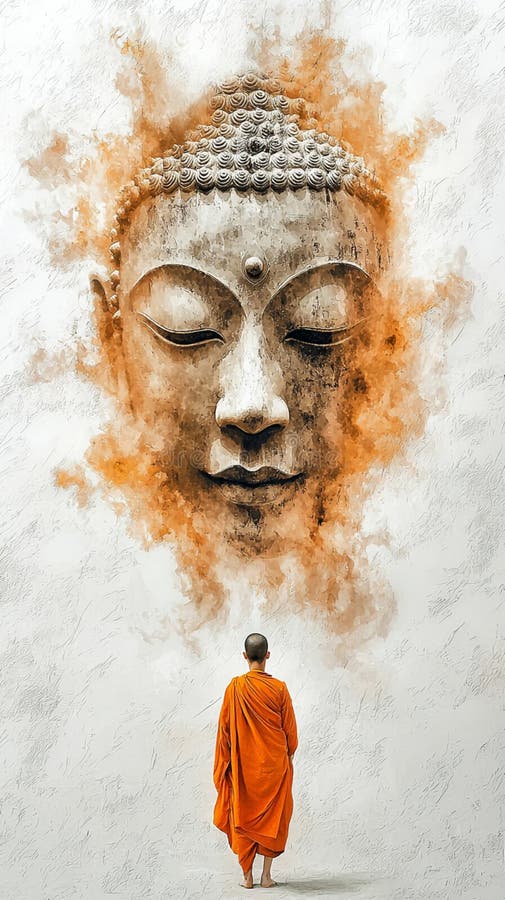
    buddhist-monk-contemplating-giant-buddha-face-watercolor-painting-artistic-watercolor-painting-buddhist-monk-standing-338303455.jpg

    THE KNOWER

    At start the ‘knower’ may be identified with some kind of entity or someone going through the process of knowing.

    But who is this someone ?
    This someone is the mind.

    Is the mind ours ?
    Yes or, better, we think so, because having a perception of it based on individuality, separation, difference and duality.

    But when the truth is seen through wisdom, then the mind becomes one with everything and any link to a self disappears, it cannot be identified with me, I or mine.

    How can a mind, that is everything, be identified with anything like a self ?

    That is not possible, so, when understanding the not-self or the mind, then the self or the mind disappears, in the same way like understanding the knower as not self, not us, not ours, then, the knower disappears.

    In order to know anything, one needs to examine it through right evaluation and the best or deeper way is surely through both samadhi-bhavana and sampajanna, both allowing to experience directly and to discern rightly between what is real or it is illusion, between what changes & finishes or it is eternal, between what seen as limitied or it is limitless, between what seen as self, linked to causes and conditions, or what it is the real self, that exists without them, but that it is totally hidden & imprisoned by them.

    The knower is neither a being nor an entity and it is not linked to any self.

    The knower is the result of a cause, i.e. understanding both what real suffering is and the escape from it.

    The knower rises through a wisdom based on virtue, that cleans the heart from the evil done in countless previous lives and sets us free from their endless consequences, allowing each of us to end any suffering forever, because trascending changement or impermanence.

    Wisdom, made as the cause, defeats ignorance, the true enemy, as the result.

    Why a cause is needed?

    Because, still being in samsara, we still need to use cause & result, but, when using them in the only right way, that is understanding the Dhamma of the Buddhas, then, any cause can be trascended and ended.

    For example, one makes a mistake based on ignorance, thinking that he made the mistake, assuming that ignorance is inside him, identifying himself as the cause.

    But ignorance, like wisdom or suffering or happiness or anything else, it is not something that one owns, it is outside each of us, in fact, it is because outside of us, that anyone can make it increase or decrease at will.

    The knower looks at things and uses the right evaluation process to see their true nature.

    We all start from the same point, that is the illusion to be someone or a self or a knower or a cause, but the more wisdom increases and the more comes the understanding of our own timeless and limitless nature.

    In other words, when understanding to be everything, how can anyone be classified as a self or as someone or as an entity or as a knower or as a cause?

    When the not-self is understood as everything, then the knower disappears and wisdom takes his place.

    This means that, when the knower understands the truth, then, that truth made of wisdom trascends the knower and the knower becomes just the all-inclusive wisdom or the pure truth.

    In the same way with each element, for example pure universal Metta trascends any love linked to an entity or a self, in the same way Karuna with compassion, in the same way going through past lives with self-consciousness and so on.

    The knower is pure wisdom, not linked to me or to you or to a self or to a consciousness, because wisdom it is not a learning process like the one of the world, that we may forget because linked to an entity or to a being or to a self.

    Once wisdom increases, it cannot be forgotten, it cannot dicrease and its result is always an increased wellness, that may be called unshakable neverending happiness, born from overcoming or trascending the suffering based on ignorance and duality.

    This is what & how i see & have understood the ‘knower’ and what i think useful to share, based on the little i got to know. 😅

    🙏❤️🙏
    Theta-Pati

    Email

    Views: 1

  • The self is never there.

    The self is never there.

    BurningCar.jpg

    First Post.
    Don’t take this self so personally. Mind above the flood. Whatever comes flushing. You can see all that is happening with curiosity.

    If there’s car burning outside. You can’t help but to observe with curiosity. But when the car you observe is “yours”. You begun to act frantic and panic. The “self” is suffering. But when is seen through as “not self” . You begin to enjoy the show ” wow, what’s happening? What’s the commotion?”

    This life becomes a journey of joyful investigation. No more “poor me” mindset. Is just this. You become a moving target. Getting ourselves outside the shooting range. No me there. Everything is just happening by itself.

    Wholesome change of just seeing what is happening with a smile. Relax. Can’t catch dukkha. See dukkha and start getting out the way. Not by aversion but wisdom.

    Email

    Views: 23

  • a short lesson in patience

    dhammadasa

    I just spent 15 minutes writing a very heartfelt essay, after which I posted,  only to read, error! Error! Tags required,  after I added some tags I returned to my post only to find it completely non existent lol 😆 😅,  but in a way this is far better than what I previously wrote,  because just like those Tibetan sand Mandalas , Things don’t last & this was a very good reminder 🤗😂☯️ & lesson,  in the Words of Bob Ross ” There are no mistakes,  only happy accidents “

    Email

    Views: 12

  • The effect of acceptance

    The effect of acceptance

    Cathal Costello Costello

    Screenshot_2024-11-19-17-08-14-927_jp.naver_.line_.android.jpg

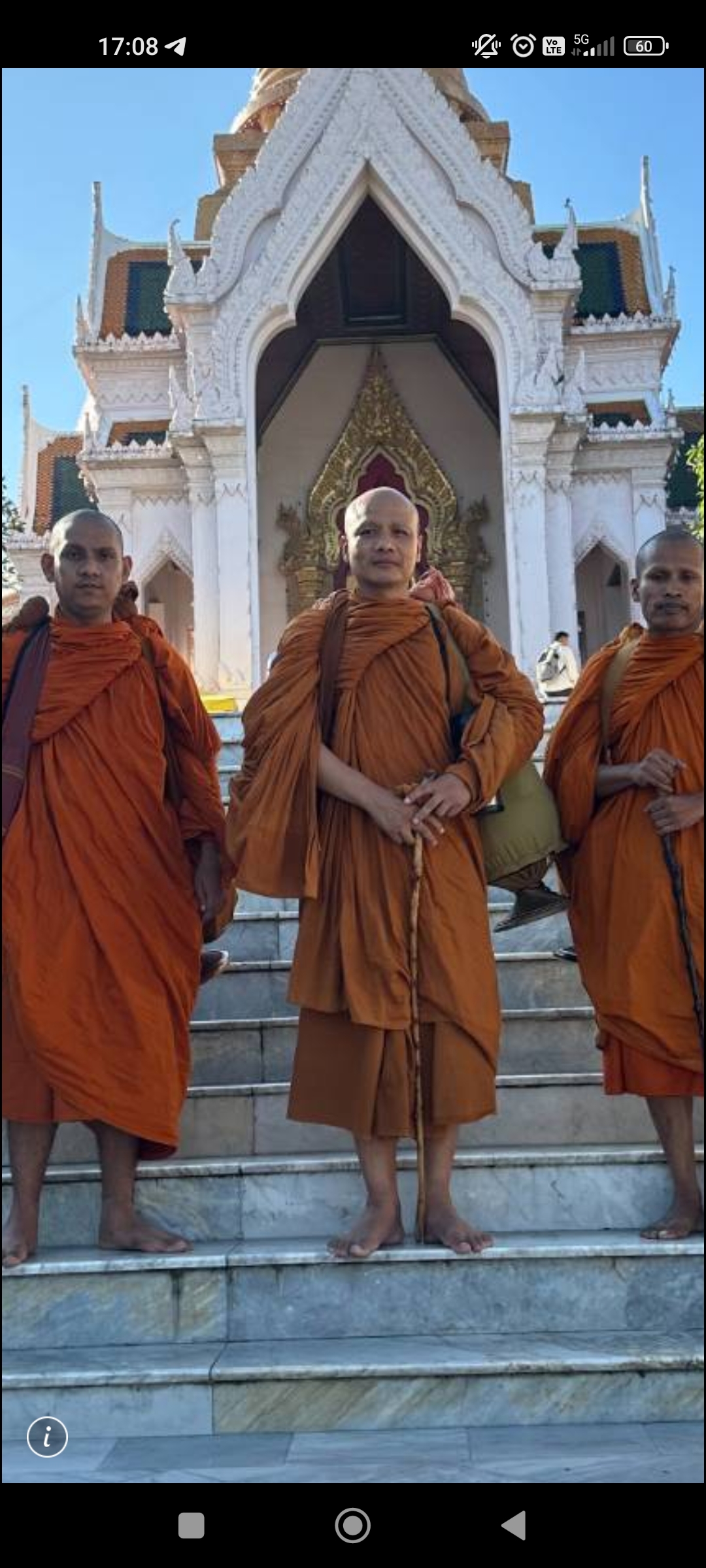
    Share a quick story of the monk in the middle. He was a big part of me having the balls to ordain as a monk. He was really a wild monk early on apparently(from what I was told) but the calmness and genuine metta he had really surprised me. I was around him a lot and got to see how accepting and caring he was yet I noticed his skillful way of not getting attached. I was very unfamiliar with someone who actually had genuine metta, who didn’t want anything from me but was sharing his state of enjoyment of life. I was way to use to ordinary stuff the smile on the outside fumes on the inside and the constant validstion seeking we partake in. I wondered how he was always In a easy going relaxed state despite whoeverr showed up to the wat.

    It only became surprising after a couple of months with him, it was the consistency and integrity that slowly that thought creeped up in me. I thought “Wow this is some high level monk” lol but most monks who hit 10+ years are like this at least the ones who put some work in themselves hangout noble ones Its fairly normal to me at this point.

    Hanging around those guys I guess hit me hard on a subconscious level or something that no matter how messed up I got especially with all my westerner baggage I can clear that out and enter into the state of wow life is good. I can accept myself as I have been accepted, I was never judged, I was always expecting to be judged but I wasnt. My mind slowly quietened down and it began overly obvious that the judgements I make are not only unnecessary pointless and hurtful but are just built on delusion.

    So i share that cos when you do hangout with guys who have done a lot of work within themselves it sort of affects you deep into the bone, marrow hits the marrow. Dhammarato taught me that he had it real good I think, being cared for in the right way can totally change you, waking up to caring for the right things and stop caring about nonsense. I feel almost sorry for those who are stuck around ordinary pissy unhappy people all day, that’s hard, you really have to commit to right effort right there. Its my idea of what a blessing is. Your life can change quickly for the good

    Email

    URL

    Views: 31

  • “Now what is unskillful?

    “Now what is unskillful?

    Waxhaw Luke

    Old-Kuti.gif

    “Now what is unskillful? Taking life is unskillful, taking what is not given… sexual misconduct… lying… abusive speech… divisive tale-bearing… idle chatter is unskillful. Covetousness… ill will… wrong views are unskillful. These things are termed unskillful.

    And what are the roots of what is unskillful? Greed is a root of what is unskillful, aversion is a root of what is unskillful, delusion is a root of what is unskillful. These are termed the roots of what is unskillful.

    And what is skillful? Abstaining from taking life is skillful, abstaining from taking what is not given… from sexual misconduct… from lying… from abusive speech… from divisive talebearing… abstaining from idle chatter is skillful. Lack of covetousness… lack of ill will… right views are skillful. These things are termed skillful.

    And what are the roots of what is skillful? Lack of greed is a root of what is skillful, lack of aversion is a root of what is skillful, lack of delusion is a root of what is skillful. These are termed the roots of what is skillful.” —MN 9

    Email

    URL

    Views: 6

  • Bāhiyasutta (Ud 1.10)

    Alexander Hipple

    “So I have heard. At one time the Buddha was staying near Sāvatthī in Jeta’s Grove, Anāthapiṇḍika’s monastery. Now at that time Bāhiya of the Bark Cloth was residing by Suppāraka on the ocean shore, where he was honored, respected, revered, venerated, and esteemed. And he received robes, almsfood, lodgings, and medicines and supplies for the sick. Then as he was in private retreat this thought came to his mind, ‘I am one of those in the world who are perfected or on the path to perfection.’

    Then a deity who was a former relative of Bāhiya, having sympathy and wanting what’s best for him, approached him and said: ‘Bāhiya, you’re not a perfected one, nor on the path to perfection. You don’t have the practice by which you might become a perfected one or one on the path to perfection.’

    ‘Then who exactly are those in the world who are perfected or on the path to perfection?’ ‘In the northern lands there is a city called Sāvatthī. There that Blessed One is now staying, the perfected one, the fully awakened Buddha. He is a perfected one and teaches the Dhamma for the sake of perfection.’

    Impelled by that deity, Bāhiya left Suppāraka right away. Sojourning no more than a single night in any place, he made his way to Anāthapiṇḍika’s Monastery in the Jeta Grove at Sāvatthī. At that time several mendicants were walking mindfully in the open air. Bāhiya approached them and said, ‘Sirs, where is the Blessed One at present, the perfected one, the fully awakened Buddha? For I want to see him.’ ‘He has entered an inhabited area for almsfood, Bāhiya.’

    Then Bāhiya rushed out of the Jeta Grove and entered Sāvatthī, where he saw the Buddha walking for alms. He was impressive and inspiring, with peaceful faculties and mind, attained to the highest self-control and serenity, like an elephant with tamed, guarded, and controlled faculties. Bāhiya went up to the Buddha, bowed down with his head at the Buddha’s feet, and said, ‘Sir, let the Blessed One teach me the Dhamma! Let the Holy One teach me the Dhamma! That would be for my lasting welfare and happiness.’ The Buddha said this: ‘It’s not the time, Bāhiya, so long as I have entered an inhabited area for almsfood.’

    For a second time, Bāhiya said, ‘But you never know, sir, when life is at risk, either the Buddha’s or my own. Let the Blessed One teach me the Dhamma! Let the Holy One teach me the Dhamma! That would be for my lasting welfare and happiness.’ For a second time, the Buddha said, ‘It’s not the time, Bāhiya, so long as I have entered an inhabited area for almsfood.’

    For a third time, Bāhiya said, ‘But you never know, sir, when life is at risk, either the Buddha’s or my own. Let the Blessed One teach me the Dhamma! Let the Holy One teach me the Dhamma! That would be for my lasting welfare and happiness.’

    ‘In that case, Bāhiya, you should train like this: ‘In the seen will be merely the seen; in the heard will be merely the heard; in the thought will be merely the thought; in the known will be merely the known.’ That’s how you should train. When you have trained in this way, you won’t be ‘by that’. When you’re not ‘by that’, you won’t be ‘in that’. When you’re not ‘in that’, you won’t be in this world or the world beyond or between the two. Just this is the end of suffering.’

    Then, due to this brief Dhamma teaching of the Buddha, Bāhiya’s mind was right away freed from defilements by not grasping.

    And when the Buddha had given Bāhiya this brief advice he left. But soon after the Buddha had left, a cow with a baby calf charged at Bāhiya and took his life.

    Then the Buddha wandered for alms in Sāvatthī. After the meal, on his return from almsround, he departed the city together with several mendicants and saw that Bāhiya had passed away. He said to the monks, ‘Mendicants, pick up Bāhiya’s corpse. Having lifted it onto a cot and carried it, cremate it and build a monument. Mendicants, one of your spiritual companions has passed away.’

    ‘Yes, sir,’ replied those mendicants. They did as the Buddha asked, then returned to the Buddha and said, ‘Sir, Bāhiya’s corpse has been cremated and a monument built for him. Where has he been reborn in his next life?’ ‘Mendicants, Bāhiya was astute. He practiced in line with the teachings, and did not trouble me about the teachings. Bāhiya of the Bark Cloth has become fully quenched.’

    Then, understanding this matter, on that occasion the Buddha expressed this heartfelt sentiment:

    ‘Where water and earth,
    fire and air find no footing:
    there no star does shine,
    nor does the sun shed its light;
    there the moon glows not,
    yet no darkness is found.

    And when a sage, a brahmin, finds understanding
    through their own sagacity,
    then from forms and formless,
    from pleasure and pain they are released.’

    This too is a heartfelt saying that was spoken by the Blessed One: that is what I heard.”

    —Ud 1.10

    Email

    URL

    Views: 4

  • Ānāpānassatisutta (MN 118)

    Alexander Hipple

    Introductory Section

    Thus have I heard. On one occasion the Blessed One was living at Sāvatthī in the Eastern Park, in the Palace of Migāra’s Mother, together with many very well known elder disciples—the venerable Sāriputta, the venerable Mahā Moggallāna, the venerable Mahā Kassapa, the venerable Mahā Kaccāna, the venerable Mahā Koṭṭhita, the venerable Mahā Kappina, the venerable Mahā Cunda, the venerable Anuruddha, the venerable Revata, the venerable Ānanda, and other very well known elder disciples.

    Now on that occasion elder bhikkhus had been teaching and instructing new bhikkhus; some elder bhikkhus had been teaching and instructing ten bhikkhus, some elder bhikkhus had been teaching and instructing twenty…thirty…forty bhikkhus. And the new bhikkhus, taught and instructed by the elder bhikkhus, had achieved successive stages of high distinction.

    On that occasion—the Uposatha day of the fifteenth, on the full-moon night of the Pavāraṇā ceremony—the Blessed One was seated in the open surrounded by the Sangha of bhikkhus. Then, surveying the silent Sangha of bhikkhus, he addressed them thus:

    ‘Bhikkhus, I am content with this progress. My mind is content with this progress. So arouse still more energy to attain the unattained, to achieve the unachieved, to realise the unrealised. I shall wait here at Sāvatthī for the Komudī full moon of the fourth month.’

    The bhikkhus of the countryside heard: ‘The Blessed One will wait there at Sāvatthī for the Komudī full moon of the fourth month.’ And the bhikkhus of the countryside left in due course for Sāvatthī to see the Blessed One.

    And elder bhikkhus still more intensively taught and instructed new bhikkhus; some elder bhikkhus taught and instructed ten bhikkhus, some elder bhikkhus taught and instructed twenty…thirty…forty bhikkhus. And the new bhikkhus, taught and instructed by the elder bhikkhus, achieved successive stages of high distinction.

    On that occasion—the Uposatha day of the fifteenth, the full-moon night of the Komudī full moon of the fourth month—the Blessed One was seated in the open surrounded by the Sangha of bhikkhus. Then, surveying the silent Sangha of bhikkhus, he addressed them thus:

    ‘Bhikkhus, this assembly is free from prattle, this assembly is free from chatter. It consists purely of heartwood. Such is this Sangha of bhikkhus, such is this assembly. Such an assembly as is worthy of gifts, worthy of hospitality, worthy of offerings, worthy of reverential salutation, an incomparable field of merit for the world—such is this Sangha of bhikkhus, such is this assembly. Such an assembly that a small gift given to it becomes great and a great gift greater—such is this Sangha of bhikkhus, such is this assembly. Such an assembly as is rare for the world to see—such is this Sangha of bhikkhus, such is this assembly. Such an assembly as would be worth journeying many leagues with a travel-bag to see—such is this Sangha of bhikkhus, such is this assembly.

    ‘In this Sangha of bhikkhus there are bhikkhus who are arahants with taints destroyed, who have lived the holy life, done what had to be done, laid down the burden, reached their own goal, destroyed the fetters of being, and are completely liberated through final knowledge—such bhikkhus are there in this Sangha of bhikkhus.

    ‘In this Sangha of bhikkhus there are bhikkhus who, with the destruction of the five lower fetters, are due to reappear spontaneously in the Pure Abodes and there attain final Nibbāna, without ever returning from that world—such bhikkhus are there in this Sangha of bhikkhus.

    ‘In this Sangha of bhikkhus there are bhikkhus who, with the destruction of three fetters and with the attenuation of lust, hate, and delusion, are once-returners, returning once to this world to make an end of suffering—such bhikkhus are there in this Sangha of bhikkhus.

    ‘In this Sangha of bhikkhus there are bhikkhus who, with the destruction of the three fetters, are stream-enterers, no longer subject to perdition, bound for deliverance, headed for enlightenment—such bhikkhus are there in this Sangha of bhikkhus.

    ‘In this Sangha of bhikkhus there are bhikkhus who abide devoted to the development of the four foundations of mindfulness—such bhikkhus are there in this Sangha of bhikkhus. In this Sangha of bhikkhus there are bhikkhus who abide devoted to the development of the four right kinds of striving…of the four bases for spiritual power…of the five faculties…of the five powers…of the seven enlightenment factors…of the Noble Eightfold Path—such bhikkhus are there in this Sangha of bhikkhus.

    ‘In this Sangha of bhikkhus there are bhikkhus who abide devoted to the development of loving-kindness …of compassion…of altruistic joy…of equanimity…of the meditation on foulness…of the perception of impermanence—such bhikkhus are there in this Sangha of bhikkhus. In this Sangha of bhikkhus there are bhikkhus who abide devoted to the development of mindfulness of breathing.

    Mindfulness of Breathing

    ‘Bhikkhus, when mindfulness of breathing is developed and cultivated, it is of great fruit and great benefit. When mindfulness of breathing is developed and cultivated, it fulfils the four foundations of mindfulness. When the four foundations of mindfulness are developed and cultivated, they fulfil the seven enlightenment factors. When the seven enlightenment factors are developed and cultivated, they fulfil true knowledge and deliverance.

    ‘And how, bhikkhus, is mindfulness of breathing developed and cultivated, so that it is of great fruit and great benefit?

    ‘Here a bhikkhu, gone to the forest or to the root of a tree or to an empty hut, sits down; having folded his legs crosswise, set his body erect, and established mindfulness in front of him, ever mindful he breathes in, mindful he breathes out.

    ‘Breathing in long, he understands: ‘I breathe in long’; or breathing out long, he understands: ‘I breathe out long.’ Breathing in short, he understands: ‘I breathe in short’; or breathing out short, he understands: ‘I breathe out short.’ He trains thus: ‘I shall breathe in experiencing the whole body of breath’; he trains thus: ‘I shall breathe out experiencing the whole body of breath.’ He trains thus: ‘I shall breathe in tranquillising the bodily formation’; he trains thus: ‘I shall breathe out tranquillising the bodily formation.’

    ‘He trains thus: ‘I shall breathe in experiencing rapture’; he trains thus: ‘I shall breathe out experiencing rapture.’ He trains thus: ‘I shall breathe in experiencing pleasure’; he trains thus: ‘I shall breathe out experiencing pleasure.’ He trains thus: ‘I shall breathe in experiencing the mental formation’; he trains thus: ‘I shall breathe out experiencing the mental formation. ’ He trains thus: ‘I shall breathe in tranquillising the mental formation’; he trains thus: ‘I shall breathe out tranquillising the mental formation.’

    ‘He trains thus: ‘I shall breathe in experiencing the mind’; he trains thus: ‘I shall breathe out experiencing the mind.’ He trains thus: ‘I shall breathe in gladdening the mind’; he trains thus: ‘I shall breathe out gladdening the mind.’ He trains thus: ‘I shall breathe in concentrating the mind’; he trains thus: ‘I shall breathe out concentrating the mind.’ He trains thus: ‘I shall breathe in liberating the mind’; he trains thus: ‘I shall breathe out liberating the mind.’

    ‘He trains thus: ‘I shall breathe in contemplating impermanence’; he trains thus: ‘I shall breathe out contemplating impermanence. ’ He trains thus: ‘I shall breathe in contemplating fading away’; he trains thus: ‘I shall breathe out contemplating fading away.’ He trains thus: ‘I shall breathe in contemplating cessation’; he trains thus: ‘I shall breathe out contemplating cessation.’ He trains thus: ‘I shall breathe in contemplating relinquishment’; he trains thus: ‘I shall breathe out contemplating relinquishment. ’

    ‘Bhikkhus, that is how mindfulness of breathing is developed and cultivated, so that it is of great fruit and great benefit.

    Fulfilment of the Four Foundations of Mindfulness

    ‘And how, bhikkhus, does mindfulness of breathing, developed and cultivated, fulfil the four foundations of mindfulness?

    ‘Bhikkhus, on whatever occasion a bhikkhu, breathing in long, understands: ‘I breathe in long,’ or breathing out long, understands: ‘I breathe out long’; breathing in short, understands: ‘I breathe in short,’ or breathing out short, understands: ‘I breathe out short’; trains thus: ‘I shall breathe in experiencing the whole body of breath’; trains thus: ‘I shall breathe out experiencing the whole body of breath’; trains thus: ‘I shall breathe in tranquillising the bodily formation’; trains thus: ‘I shall breathe out tranquillising the bodily formation’—on that occasion a bhikkhu abides contemplating the body as a body, ardent, fully aware, and mindful, having put away covetousness and grief for the world. I say that this is a certain body among the bodies, namely, in-breathing and out-breathing. That is why on that occasion a bhikkhu abides contemplating the body as a body, ardent, fully aware, and mindful, having put away covetousness and grief for the world.

    ‘Bhikkhus, on whatever occasion a bhikkhu trains thus: ‘I shall breathe in experiencing rapture’; trains thus: ‘I shall breathe out experiencing rapture’; trains thus: ‘I shall breathe in experiencing pleasure’; trains thus: ‘I shall breathe out experiencing pleasure’; trains thus: ‘I shall breathe in experiencing the mental formation’; trains thus: ‘I shall breathe out experiencing the mental formation’; trains thus: ‘I shall breathe in tranquillising the mental formation’; trains thus: ‘I shall breathe out tranquillising the mental formation’—on that occasion a bhikkhu abides contemplating feelings as feelings, ardent, fully aware, and mindful, having put away covetousness and grief for the world. I say that this is a certain feeling among the feelings, namely, giving close attention to in-breathing and out-breathing. That is why on that occasion a bhikkhu abides contemplating feelings as feelings, ardent, fully aware, and mindful, having put away covetousness and grief for the world.

    ‘Bhikkhus, on whatever occasion a bhikkhu trains thus: ‘I shall breathe in experiencing the mind’; trains thus: ‘I shall breathe out experiencing the mind’; trains thus: ‘I shall breathe in gladdening the mind’; trains thus: ‘I shall breathe out gladdening the mind’; trains thus: ‘I shall breathe in concentrating the mind’; trains thus: ‘I shall breathe out concentrating the mind’; trains thus: ‘I shall breathe in liberating the mind’; trains thus: ‘I shall breathe out liberating the mind’—on that occasion a bhikkhu abides contemplating mind as mind, ardent, fully aware, and mindful, having put away covetousness and grief for the world. I do not say that there is the development of mindfulness of breathing for one who is forgetful, who is not fully aware. That is why on that occasion a bhikkhu abides contemplating mind as mind, ardent, fully aware, and mindful, having put away covetousness and grief for the world.

    ‘Bhikkhus, on whatever occasion a bhikkhu trains thus: ‘I shall breathe in contemplating impermanence’; trains thus: ‘I shall breathe out contemplating impermanence’; trains thus: ‘I shall breathe in contemplating fading away’; trains thus: ‘I shall breathe out contemplating fading away’; trains thus: ‘I shall breathe in contemplating cessation’; trains thus: ‘I shall breathe out contemplating cessation’; trains thus: ‘I shall breathe in contemplating relinquishment’; trains thus: ‘I shall breathe out contemplating relinquishment’—on that occasion a bhikkhu abides contemplating mind-objects as mind-objects, ardent, fully aware, and mindful, having put away covetousness and grief for the world. Having seen with wisdom the abandoning of covetousness and grief, he closely looks on with equanimity. That is why on that occasion a bhikkhu abides contemplating mind-objects as mind-objects, ardent, fully aware, and mindful, having put away covetousness and grief for the world.

    ‘Bhikkhus, that is how mindfulness of breathing, developed and cultivated, fulfils the four foundations of mindfulness.

    Fulfilment of the Seven Enlightenment Factors

    ‘And how, bhikkhus, do the four foundations of mindfulness, developed and cultivated, fulfil the seven enlightenment factors?

    ‘Bhikkhus, on whatever occasion a bhikkhu abides contemplating the body as a body, ardent, fully aware, and mindful, having put away covetousness and grief for the world—on that occasion unremitting mindfulness is established in him. On whatever occasion unremitting mindfulness is established in a bhikkhu—on that occasion the mindfulness enlightenment factor is aroused in him, and he develops it, and by development, it comes to fulfilment in him.

    ‘Abiding thus mindful, he investigates and examines that state with wisdom and embarks upon a full inquiry into it. On whatever occasion, abiding thus mindful, a bhikkhu investigates and examines that state with wisdom and embarks upon a full inquiry into it—on that occasion the investigation-of-states enlightenment factor is aroused in him, and he develops it, and by development it comes to fulfilment in him.

    ‘In one who investigates and examines that state with wisdom and embarks upon a full inquiry into it, tireless energy is aroused. On whatever occasion tireless energy is aroused in a bhikkhu who investigates and examines that state with wisdom and embarks upon a full inquiry into it—on that occasion the energy enlightenment factor is aroused in him, and he develops it, and by development it comes to fulfilment in him.

    ‘In one who has aroused energy, unworldly rapture arises. On whatever occasion unworldly rapture arises in a bhikkhu who has aroused energy— on that occasion the rapture enlightenment factor is aroused in him, and he develops it, and by development it comes to fulfilment in him.

    ‘In one who is rapturous, the body and the mind become tranquil. On whatever occasion the body and the mind become tranquil in a bhikkhu who is rapturous—on that occasion the tranquillity enlightenment factor is aroused in him, and he develops it, and by development it comes to fulfilment in him.

    ‘In one whose body is tranquil and who feels pleasure, the mind becomes concentrated. On whatever occasion the mind becomes concentrated in a bhikkhu whose body is tranquil and who feels pleasure—on that occasion the concentration enlightenment factor is aroused in him, and he develops it, and by development it comes to fulfilment in him.

    ‘He closely looks on with equanimity at the mind thus concentrated. On whatever occasion a bhikkhu closely looks on with equanimity at the mind thus concentrated—on that occasion the equanimity enlightenment factor is aroused in him, and he develops it, and by development it comes to fulfilment in him.

    ‘Bhikkhus, on whatever occasion a bhikkhu abides contemplating feelings as feelings, ardent, fully aware, and mindful, having put away covetousness and grief for the world…repeat as at §§30–36…the equanimity enlightenment factor is aroused in him, and he develops it, and by development it comes to fulfilment in him.

    ‘Bhikkhus, on whatever occasion a bhikkhu abides contemplating mind as mind, ardent, fully aware, and mindful, having put away covetousness and grief for the world…repeat as at §§30–36…the equanimity enlightenment factor is aroused in him, and he develops it, and by development it comes to fulfilment in him.

    ‘Bhikkhus, on whatever occasion a bhikkhu abides contemplating mind-objects as mind-objects, ardent, fully aware, and mindful, having put away covetousness and grief for the world…repeat as at §§30–36… …the equanimity enlightenment factor is aroused in him, and he develops it, and by development it comes to fulfilment in him.

    ‘Bhikkhus, that is how the four foundations of mindfulness, developed and cultivated, fulfil the seven enlightenment factors.

    Fulfilment of True Knowledge and Deliverance

    ‘And how, bhikkhus, do the seven enlightenment factors, developed and cultivated, fulfil true knowledge and deliverance?

    ‘Here, bhikkhus, a bhikkhu develops the mindfulness enlightenment factor, which is supported by seclusion, dispassion, and cessation, and ripens in relinquishment. He develops the investigation-of-states enlightenment factor…the energy enlightenment factor…the rapture enlightenment factor…the tranquillity enlightenment factor…the concentration enlightenment factor…the equanimity enlightenment factor, which is supported by seclusion, dispassion, and cessation, and ripens in relinquishment.

    ‘Bhikkhus, that is how the seven enlightenment factors, developed and cultivated, fulfil true knowledge and deliverance.’

    That is what the Blessed One said. The bhikkhus were satisfied and delighted in the Blessed One’s words.”

    —MN 118

    Email

    URL

    Views: 8

  • Mahāsatipaṭṭhānasutta (MN 10)

    Alexander Hipple

    “So I have heard. At one time the Buddha was staying in the land of the Kurus, near the Kuru town named Kammāsadamma. There the Buddha addressed the mendicants, ‘Mendicants!’

    ‘Venerable sir,’ they replied. The Buddha said this:

    ‘Mendicants, the four kinds of mindfulness meditation are the path to convergence. They are in order to purify sentient beings, to get past sorrow and crying, to make an end of pain and sadness, to discover the system, and to realize extinguishment.

    What four? It’s when a mendicant meditates by observing an aspect of the body—keen, aware, and mindful, rid of covetousness and displeasure for the world. They meditate observing an aspect of feelings—keen, aware, and mindful, rid of covetousness and displeasure for the world. They meditate observing an aspect of the mind—keen, aware, and mindful, rid of covetousness and displeasure for the world. They meditate observing an aspect of principles—keen, aware, and mindful, rid of covetousness and displeasure for the world.

    1. Observing the Body

    1.1. Mindfulness of Breathing

    And how does a mendicant meditate observing an aspect of the body?

    It’s when a mendicant—gone to a wilderness, or to the root of a tree, or to an empty hut—sits down cross-legged, sets their body straight, and establishes mindfulness in their presence. Just mindful, they breathe in. Mindful, they breathe out.

    Breathing in heavily they know: ‘I’m breathing in heavily.’ Breathing out heavily they know: ‘I’m breathing out heavily.’

    When breathing in lightly they know: ‘I’m breathing in lightly.’ Breathing out lightly they know: ‘I’m breathing out lightly.’

    They practice like this: ‘I’ll breathe in experiencing the whole body.’ They practice like this: ‘I’ll breathe out experiencing the whole body.’

    They practice like this: ‘I’ll breathe in stilling the physical process.’ They practice like this: ‘I’ll breathe out stilling the physical process.’

    It’s like a deft carpenter or carpenter’s apprentice. When making a deep cut they know: ‘I’m making a deep cut,’ and when making a shallow cut they know: ‘I’m making a shallow cut.’

    And so they meditate observing an aspect of the body internally, externally, and both internally and externally. They meditate observing the body as liable to originate, as liable to vanish, and as liable to both originate and vanish. Or mindfulness is established that the body exists, to the extent necessary for knowledge and mindfulness. They meditate independent, not grasping at anything in the world.

    That’s how a mendicant meditates by observing an aspect of the body.

    1.2. The Postures

    Furthermore, when a mendicant is walking they know: ‘I am walking.’ When standing they know: ‘I am standing.’ When sitting they know: ‘I am sitting.’ And when lying down they know: ‘I am lying down.’ Whatever posture their body is in, they know it.

    And so they meditate observing an aspect of the body internally, externally, and both internally and externally. They meditate observing the body as liable to originate, as liable to vanish, and as liable to both originate and vanish. Or mindfulness is established that the body exists, to the extent necessary for knowledge and mindfulness. They meditate independent, not grasping at anything in the world.

    That too is how a mendicant meditates by observing an aspect of the body.

    1.3. Situational Awareness

    Furthermore, a mendicant acts with situational awareness when going out and coming back; when looking ahead and aside; when bending and extending the limbs; when bearing the outer robe, bowl and robes; when eating, drinking, chewing, and tasting; when urinating and defecating; when walking, standing, sitting, sleeping, waking, speaking, and keeping silent.

    And so they meditate observing an aspect of the body internally …

    That too is how a mendicant meditates by observing an aspect of the body.

    1.4. Focusing on the Repulsive

    Furthermore, a mendicant examines their own body, up from the soles of the feet and down from the tips of the hairs, wrapped in skin and full of many kinds of filth. ‘In this body there is head hair, body hair, nails, teeth, skin, flesh, sinews, bones, bone marrow, kidneys, heart, liver, diaphragm, spleen, lungs, intestines, mesentery, undigested food, feces, bile, phlegm, pus, blood, sweat, fat, tears, grease, saliva, snot, synovial fluid, urine.’

    It’s as if there were a bag with openings at both ends, filled with various kinds of grains, such as fine rice, wheat, mung beans, peas, sesame, and ordinary rice. And someone with clear eyes were to open it and examine the contents: ‘These grains are fine rice, these are wheat, these are mung beans, these are peas, these are sesame, and these are ordinary rice.’

    And so they meditate observing an aspect of the body internally …

    That too is how a mendicant meditates by observing an aspect of the body.

    1.5. Focusing on the Elements

    Furthermore, a mendicant examines their own body, whatever its placement or posture, according to the elements: ‘In this body there is the earth element, the water element, the fire element, and the air element.’

    It’s as if a deft butcher or butcher’s apprentice were to kill a cow and sit down at the crossroads with the meat cut into chops.

    And so they meditate observing an aspect of the body internally …

    That too is how a mendicant meditates by observing an aspect of the body.

    1.6. The Charnel Ground Contemplations

    Furthermore, suppose a mendicant were to see a corpse discarded in a charnel ground. And it had been dead for one, two, or three days, bloated, livid, and festering. They’d compare it with their own body: ‘This body is also of that same nature, that same kind, and cannot go beyond that.’ And so they meditate observing an aspect of the body internally …

    That too is how a mendicant meditates by observing an aspect of the body.

    Furthermore, suppose they were to see a corpse discarded in a charnel ground being devoured by crows, hawks, vultures, herons, dogs, tigers, leopards, jackals, and many kinds of little creatures. They’d compare it with their own body: ‘This body is also of that same nature, that same kind, and cannot go beyond that.’ And so they meditate observing an aspect of the body internally …

    That too is how a mendicant meditates by observing an aspect of the body.

    Furthermore, suppose they were to see a corpse discarded in a charnel ground, a skeleton with flesh and blood, held together by sinews …

    A skeleton without flesh but smeared with blood, and held together by sinews …

    A skeleton rid of flesh and blood, held together by sinews …

    Bones rid of sinews scattered in every direction. Here a hand-bone, there a foot-bone, here an ankle bone, there a shin-bone, here a thigh-bone, there a hip-bone, here a rib-bone, there a back-bone, here an arm-bone, there a neck-bone, here a jaw-bone, there a tooth, here the skull. …

    White bones, the color of shells …

    Decrepit bones, heaped in a pile …

    Bones rotted and crumbled to powder. They’d compare it with their own body: ‘This body is also of that same nature, that same kind, and cannot go beyond that.’

    And so they meditate observing an aspect of the body internally, externally, and both internally and externally. They meditate observing the body as liable to originate, as liable to vanish, and as liable to both originate and vanish. Or mindfulness is established that the body exists, to the extent necessary for knowledge and mindfulness. They meditate independent, not grasping at anything in the world.

    That too is how a mendicant meditates by observing an aspect of the body.

    2. Observing the Feelings

    And how does a mendicant meditate observing an aspect of feelings?

    It’s when a mendicant who feels a pleasant feeling knows: ‘I feel a pleasant feeling.’

    When they feel a painful feeling, they know: ‘I feel a painful feeling.’

    When they feel a neutral feeling, they know: ‘I feel a neutral feeling.’

    When they feel a pleasant feeling of the flesh, they know: ‘I feel a pleasant feeling of the flesh.’

    When they feel a pleasant feeling not of the flesh, they know: ‘I feel a pleasant feeling not of the flesh.’

    When they feel a painful feeling of the flesh, they know: ‘I feel a painful feeling of the flesh.’

    When they feel a painful feeling not of the flesh, they know: ‘I feel a painful feeling not of the flesh.’

    When they feel a neutral feeling of the flesh, they know: ‘I feel a neutral feeling of the flesh.’

    When they feel a neutral feeling not of the flesh, they know: ‘I feel a neutral feeling not of the flesh.’

    And so they meditate observing an aspect of feelings internally, externally, and both internally and externally. They meditate observing feelings as liable to originate, as liable to vanish, and as liable to both originate and vanish. Or mindfulness is established that feelings exist, to the extent necessary for knowledge and mindfulness. They meditate independent, not grasping at anything in the world.

    That’s how a mendicant meditates by observing an aspect of feelings.

    3. Observing the Mind

    And how does a mendicant meditate observing an aspect of the mind?

    It’s when a mendicant understands mind with greed as ‘mind with greed,’ and mind without greed as ‘mind without greed.’ They understand mind with hate as ‘mind with hate,’ and mind without hate as ‘mind without hate.’ They understand mind with delusion as ‘mind with delusion,’ and mind without delusion as ‘mind without delusion.’ They know constricted mind as ‘constricted mind,’ and scattered mind as ‘scattered mind.’ They know expansive mind as ‘expansive mind,’ and unexpansive mind as ‘unexpansive mind.’ They know mind that is not supreme as ‘mind that is not supreme,’ and mind that is supreme as ‘mind that is supreme.’ They know mind immersed in samādhi as ‘mind immersed in samādhi,’ and mind not immersed in samādhi as ‘mind not immersed in samādhi.’ They know freed mind as ‘freed mind,’ and unfreed mind as ‘unfreed mind.’

    And so they meditate observing an aspect of the mind internally, externally, and both internally and externally. They meditate observing the mind as liable to originate, as liable to vanish, and as liable to both originate and vanish. Or mindfulness is established that the mind exists, to the extent necessary for knowledge and mindfulness. They meditate independent, not grasping at anything in the world.

    That’s how a mendicant meditates by observing an aspect of the mind.

    4. Observing Principles

    4.1. The Hindrances

    And how does a mendicant meditate observing an aspect of principles?

    It’s when a mendicant meditates by observing an aspect of principles with respect to the five hindrances. And how does a mendicant meditate observing an aspect of principles with respect to the five hindrances?

    It’s when a mendicant who has sensual desire in them understands: ‘I have sensual desire in me.’ When they don’t have sensual desire in them, they understand: ‘I don’t have sensual desire in me.’ They understand how sensual desire arises; how, when it’s already arisen, it’s given up; and how, once it’s given up, it doesn’t arise again in the future.

    When they have ill will in them, they understand: ‘I have ill will in me.’ When they don’t have ill will in them, they understand: ‘I don’t have ill will in me.’ They understand how ill will arises; how, when it’s already arisen, it’s given up; and how, once it’s given up, it doesn’t arise again in the future.

    When they have dullness and drowsiness in them, they understand: ‘I have dullness and drowsiness in me.’ When they don’t have dullness and drowsiness in them, they understand: ‘I don’t have dullness and drowsiness in me.’ They understand how dullness and drowsiness arise; how, when they’ve already arisen, they’re given up; and how, once they’re given up, they don’t arise again in the future.

    When they have restlessness and remorse in them, they understand: ‘I have restlessness and remorse in me.’ When they don’t have restlessness and remorse in them, they understand: ‘I don’t have restlessness and remorse in me.’ They understand how restlessness and remorse arise; how, when they’ve already arisen, they’re given up; and how, once they’re given up, they don’t arise again in the future.

    When they have doubt in them, they understand: ‘I have doubt in me.’ When they don’t have doubt in them, they understand: ‘I don’t have doubt in me.’ They understand how doubt arises; how, when it’s already arisen, it’s given up; and how, once it’s given up, it doesn’t arise again in the future.

    And so they meditate observing an aspect of principles internally, externally, and both internally and externally. They meditate observing the principles as liable to originate, as liable to vanish, and as liable to both originate and vanish. Or mindfulness is established that principles exist, to the extent necessary for knowledge and mindfulness. They meditate independent, not grasping at anything in the world.

    That’s how a mendicant meditates by observing an aspect of principles with respect to the five hindrances.

    4.2. The Aggregates

    Furthermore, a mendicant meditates by observing an aspect of principles with respect to the five grasping aggregates. And how does a mendicant meditate observing an aspect of principles with respect to the five grasping aggregates? It’s when a mendicant contemplates: ‘Such is form, such is the origin of form, such is the ending of form. Such is feeling, such is the origin of feeling, such is the ending of feeling. Such is perception, such is the origin of perception, such is the ending of perception. Such are choices, such is the origin of choices, such is the ending of choices. Such is consciousness, such is the origin of consciousness, such is the ending of consciousness.’

    And so they meditate observing an aspect of principles internally …

    That’s how a mendicant meditates by observing an aspect of principles with respect to the five grasping aggregates.

    4.3. The Sense Fields

    Furthermore, a mendicant meditates by observing an aspect of principles with respect to the six interior and exterior sense fields. And how does a mendicant meditate observing an aspect of principles with respect to the six interior and exterior sense fields?

    It’s when a mendicant understands the eye, sights, and the fetter that arises dependent on both of these. They understand how the fetter that has not arisen comes to arise; how the arisen fetter comes to be abandoned; and how the abandoned fetter comes to not rise again in the future.

    They understand the ear, sounds, and the fetter …

    They understand the nose, smells, and the fetter …

    They understand the tongue, tastes, and the fetter …

    They understand the body, touches, and the fetter …

    They understand the mind, ideas, and the fetter that arises dependent on both of these. They understand how the fetter that has not arisen comes to arise; how the arisen fetter comes to be abandoned; and how the abandoned fetter comes to not rise again in the future.

    And so they meditate observing an aspect of principles internally …

    That’s how a mendicant meditates by observing an aspect of principles with respect to the six internal and external sense fields.

    4.4. The Awakening Factors

    Furthermore, a mendicant meditates by observing an aspect of principles with respect to the seven awakening factors. And how does a mendicant meditate observing an aspect of principles with respect to the seven awakening factors?

    It’s when a mendicant who has the awakening factor of mindfulness in them understands: ‘I have the awakening factor of mindfulness in me.’ When they don’t have the awakening factor of mindfulness in them, they understand: ‘I don’t have the awakening factor of mindfulness in me.’ They understand how the awakening factor of mindfulness that has not arisen comes to arise; and how the awakening factor of mindfulness that has arisen becomes fulfilled by development.

    When they have the awakening factor of investigation of principles … energy … rapture … tranquility … immersion … equanimity in them, they understand: ‘I have the awakening factor of equanimity in me.’ When they don’t have the awakening factor of equanimity in them, they understand: ‘I don’t have the awakening factor of equanimity in me.’ They understand how the awakening factor of equanimity that has not arisen comes to arise; and how the awakening factor of equanimity that has arisen becomes fulfilled by development.

    And so they meditate observing an aspect of principles internally, externally, and both internally and externally. They meditate observing the principles as liable to originate, as liable to vanish, and as liable to both originate and vanish. Or mindfulness is established that principles exist, to the extent necessary for knowledge and mindfulness. They meditate independent, not grasping at anything in the world.

    That’s how a mendicant meditates by observing an aspect of principles with respect to the seven awakening factors.

    4.5. The Truths

    Furthermore, a mendicant meditates by observing an aspect of principles with respect to the four noble truths.

    And how does a mendicant meditate observing an aspect of principles with respect to the four noble truths? It’s when a mendicant truly understands: ‘This is suffering’ … ‘This is the origin of suffering’ … ‘This is the cessation of suffering’ … ‘This is the practice that leads to the cessation of suffering.’

    And so they meditate observing an aspect of principles internally, externally, and both internally and externally. They meditate observing the principles as liable to originate, as liable to vanish, and as liable to both originate and vanish. Or mindfulness is established that principles exist, to the extent necessary for knowledge and mindfulness. They meditate independent, not grasping at anything in the world.

    That’s how a mendicant meditates by observing an aspect of principles with respect to the four noble truths.

    Anyone who develops these four kinds of mindfulness meditation in this way for seven years can expect one of two results: enlightenment in the present life, or if there’s something left over, non-return.

    Let alone seven years, anyone who develops these four kinds of mindfulness meditation in this way for six years … five years … four years … three years … two years … one year … seven months … six months … five months … four months … three months … two months … one month … a fortnight … Let alone a fortnight, anyone who develops these four kinds of mindfulness meditation in this way for seven days can expect one of two results: enlightenment in the present life, or if there’s something left over, non-return.

    ‘The four kinds of mindfulness meditation are the path to convergence. They are in order to purify sentient beings, to get past sorrow and crying, to make an end of pain and sadness, to discover the system, and to realize extinguishment.’ That’s what I said, and this is why I said it.’

    That is what the Buddha said. Satisfied, the mendicants approved what the Buddha said.”

    —MN 10

    Email

    URL

    Views: 1

  • Dvedhāvitakkasutta (MN 19)

    Alexander Hipple

    “Thus have I heard. On one occasion the Blessed One was living at Sāvatthī in Jeta’s Grove, Anāthapiṇḍika’s Park. There he addressed the bhikkhus thus: ‘Bhikkhus.’—’Venerable sir,’ they replied. The Blessed One said this:

    ‘Bhikkhus, before my enlightenment, while I was still only an unenlightened Bodhisatta, it occurred to me: ‘Suppose that I divide my thoughts into two classes. Then I set on one side thoughts of sensual desire, thoughts of ill will, and thoughts of cruelty, and I set on the other side thoughts of renunciation, thoughts of non-ill will, and thoughts of non-cruelty.

    ‘As I abided thus, diligent, ardent, and resolute, a thought of sensual desire arose in me. I understood thus: ‘This thought of sensual desire has arisen in me. This leads to my own affliction, to others’ affliction, and to the affliction of both; it obstructs wisdom, causes difficulties, and leads away from Nibbāna.’ When I considered: ‘This leads to my own affliction,’ it subsided in me; when I considered: ‘This leads to others’ affliction,’ it subsided in me; when I considered: ‘This leads to the affliction of both,’ it subsided in me; when I considered: ‘This obstructs wisdom, causes difficulties, and leads away from Nibbāna,’ it subsided in me. Whenever a thought of sensual desire arose in me, I abandoned it, removed it, did away with it.

    ‘As I abided thus, diligent, ardent, and resolute, a thought of ill will arose in me…a thought of cruelty arose in me. I understood thus: ‘This thought of cruelty has arisen in me. This leads to my own affliction, to others’ affliction, and to the affliction of both; it obstructs wisdom, causes difficulties, and leads away from Nibbāna.‘ When I considered thus…it subsided in me. Whenever a thought of cruelty arose in me, I abandoned it, removed it, did away with it.

    ‘Bhikkhus, whatever a bhikkhu frequently thinks and ponders upon, that will become the inclination of his mind. If he frequently thinks and ponders upon thoughts of sensual desire, he has abandoned the thought of renunciation to cultivate the thought of sensual desire, and then his mind inclines to thoughts of sensual desire. If he frequently thinks and ponders upon thoughts of ill will…upon thoughts of cruelty, he has abandoned the thought of non-cruelty to cultivate the thought of cruelty, and then his mind inclines to thoughts of cruelty.

    ‘Just as in the last month of the rainy season, in the autumn, when the crops thicken, a cowherd would guard his cows by constantly tapping and poking them on this side and that with a stick to check and curb them. Why is that? Because he sees that he could be flogged, imprisoned, fined, or blamed if he let them stray into the crops. So too I saw in unwholesome states danger, degradation, and defilement, and in wholesome states the blessing of renunciation, the aspect of cleansing.

    ‘As I abided thus, diligent, ardent, and resolute, a thought of renunciation arose in me. I understood thus: ‘This thought of renunciation has arisen in me. This does not lead to my own affliction, or to others’ affliction, or to the affliction of both; it aids wisdom, does not cause difficulties, and leads to Nibbāna. If I think and ponder upon this thought even for a night, even for a day, even for a night and day, I see nothing to fear from it. But with excessive thinking and pondering I might tire my body, and when the body is tired, the mind becomes strained, and when the mind is strained, it is far from concentration.’ So I steadied my mind internally, quieted it, brought it to singleness, and concentrated it. Why is that? So that my mind should not be strained.

    ‘As I abided thus, diligent, ardent, and resolute, a thought of non-ill will arose in me…a thought of non-cruelty arose in me. I understood thus: ‘This thought of non-cruelty has arisen in me. This does not lead to my own affliction, or to others’ affliction, or to the affliction of both; it aids wisdom, does not cause difficulties, and leads to Nibbāna. If I think and ponder upon this thought even for a night, even for a day, even for a night and day, I see nothing to fear from it. But with excessive thinking and pondering I might tire my body, and when the body is tired, the mind becomes strained, and when the mind is strained, it is far from concentration.’ So I steadied my mind internally, quieted it, brought it to singleness, and concentrated it. Why is that? So that my mind should not be strained.

    ‘Bhikkhus, whatever a bhikkhu frequently thinks and ponders upon, that will become the inclination of his mind. If he frequently thinks and ponders upon thoughts of renunciation, he has abandoned the thought of sensual desire to cultivate the thought of renunciation, and then his mind inclines to thoughts of renunciation. If he frequently thinks and ponders upon thoughts of non-ill will…upon thoughts of non-cruelty, he has abandoned the thought of cruelty to cultivate the thought of non-cruelty, and then his mind inclines to thoughts of non-cruelty.

    ‘Just as in the last month of the hot season, when all the crops have been brought inside the villages, a cowherd would guard his cows while staying at the root of a tree or out in the open, since he needs only to be mindful that the cows are there; so too, there was need for me only to be mindful that those states were there.

    ‘Tireless energy was aroused in me and unremitting mindfulness was established, my body was tranquil and untroubled, my mind concentrated and unified.

    ‘Quite secluded from sensual pleasures, secluded from unwholesome states, I entered upon and abided in the first jhāna…as Sutta 4, §§23—32…I directly knew: ‘Birth is destroyed, the holy life has been lived, what had to be done has been done, there is no more coming to any state of being.’

    ‘This was the third true knowledge attained by me in the last watch of the night. Ignorance was banished and true knowledge arose, darkness was banished and light arose, as happens in one who abides diligent, ardent, and resolute.

    ‘Suppose, bhikkhus, that in a wooded range there was a great low-lying marsh near which a large herd of deer lived. Then a man appeared desiring their ruin, harm, and bondage, and he closed off the safe and good path to be traveled joyfully, and he opened up a false path, and he put out a decoy and set up a dummy so that the large herd of deer might later come upon calamity, disaster, and loss. But another man came desiring their good, welfare, and protection, and he reopened the safe and good path that led to their happiness, and he closed off the false path, and he removed the decoy and destroyed the dummy, so that the large herd of deer might later come to growth, increase, and fulfilment.

    ‘Bhikkhus, I have given this simile in order to convey a meaning. This is the meaning: ‘The great low-lying marsh’ is a term for sensual pleasures. ‘The large herd of deer’ is a term for beings. ‘The man desiring their ruin, harm, and bondage’ is a term for Māra the Evil One. ‘The false path’ is a term for the wrong eightfold path, that is: wrong view, wrong intention, wrong speech, wrong action, wrong livelihood, wrong effort, wrong mindfulness, and wrong concentration. ‘The decoy’ is a term for delight and lust. ‘The dummy’ is a term for ignorance. ‘The man desiring their good, welfare, and protection’ is a term for the Tathāgata, accomplished and fully enlightened. ‘The safe and good path to be traveled joyfully’ is a term for the Noble Eightfold Path, that is: right view, right intention, right speech, right action, right livelihood, right effort, right mindfulness, and right concentration.

    ‘So, bhikkhus, the safe and good path to be traveled joyfully has been reopened by me, the wrong path has been closed off, the decoy removed, the dummy destroyed.

    ‘What should be done for his disciples out of compassion by a teacher who seeks their welfare and has compassion for them, that I have done for you, bhikkhus. There are these roots of trees, these empty huts. Meditate, bhikkhus, do not delay or else you will regret it later. This is our instruction to you.’

    That is what the Blessed One said. The bhikkhus were satisfied and delighted in the Blessed One’s words.”

    —MN 19

    Email

    URL

    Views: 0

  • Mahācattārīsakasutta (MN 117)

    Alexander Hipple

    “Thus have I heard. On one occasion the Blessed One was living at Sāvatthī in Jeta’s Grove, Anāthapiṇḍika’s Park. There he addressed the bhikkhus thus: ‘Bhikkhus.’—’Venerable sir,’ they replied. The Blessed One said this:

    ‘Bhikkhus, I shall teach you noble right concentration with its supports and its requisites. Listen and attend closely to what I shall say.’—’Yes, venerable sir,’ the bhikkhus replied. The Blessed One said this:

    ‘What, bhikkhus, is noble right concentration with its supports and its requisites, that is, right view, right intention, right speech, right action, right livelihood, right effort, and right mindfulness? Unification of mind equipped with these seven factors is called noble right concentration with its supports and its requisites.

    View
    ‘Therein, bhikkhus, right view comes first. And how does right view come first? One understands wrong view as wrong view and right view as right view: this is one’s right view.

    ‘And what, bhikkhus, is wrong view? ‘There is nothing given, nothing offered, nothing sacrificed; no fruit or result of good and bad actions; no this world, no other world; no mother, no father; no beings who are reborn spontaneously; no good and virtuous recluses and brahmins in the world who have realised for themselves by direct knowledge and declare this world and the other world.’ This is wrong view.

    ‘And what, bhikkhus, is right view? Right view, I say, is twofold: there is right view that is affected by taints, partaking of merit, ripening in the acquisitions; and there is right view that is noble, taintless, supramundane, a factor of the path.

    ‘And what, bhikkhus, is right view that is affected by the taints, partaking of merit, ripening in the acquisitions? ‘There is what is given and what is offered and what is sacrificed; there is fruit and result of good and bad actions; there is this world and the other world; there is mother and father; there are beings who are reborn spontaneously; there are in the world good and virtuous recluses and brahmins who have realised for themselves by direct knowledge and declare this world and the other world.’ This is right view affected by taints, partaking of merit, ripening in the acquisitions.

    ‘And what, bhikkhus, is right view that is noble, taintless, supramundane, a factor of the path? The wisdom, the faculty of wisdom, the power of wisdom, the investigation-of-states enlightenment factor, the path factor of right view in one whose mind is noble, whose mind is taintless, who possesses the noble path and is developing the noble path: this is right view that is noble, taintless, supramundane, a factor of the path.

    ‘One makes an effort to abandon wrong view and to enter upon right view: this is one’s right effort. Mindfully one abandons wrong view, mindfully one enters upon and abides in right view: this is one’s right mindfulness. Thus these three states run and circle around right view, that is, right view, right effort, and right mindfulness.

    Intention
    ‘Therein, bhikkhus, right view comes first. And how does right view come first? One understands wrong intention as wrong intention and right intention as right intention: this is one’s right view.

    ‘And what, bhikkhus, is wrong intention? The intention of sensual desire, the intention of ill will, and the intention of cruelty: this is wrong intention.

    ‘And what, bhikkhus, is right intention? Right intention, I say, is twofold: there is right intention that is affected by taints, partaking of merit, ripening in the acquisitions, and there is right intention that is noble, taintless, supramundane, a factor of the path.

    ‘And what, bhikkhus, is right intention that is affected by taints, partaking of merit, ripening in the acquisitions? The intention of renunciation, the intention of non-ill will, and the intention of non-cruelty: this is right intention that is affected by taints…ripening in the acquisitions.

    ‘And what, bhikkhus, is right intention that is noble, taintless, supramundane, a factor of the path? The thinking, thought, intention, mental absorption, mental fixity, directing of mind, verbal formation in one whose mind is noble, whose mind is taintless, who possesses the noble path and is developing the noble path: this is right intention that is noble…a factor of the path.

    ‘One makes an effort to abandon wrong intention and to enter upon right intention: this is one’s right effort. Mindfully one abandons wrong intention, mindfully one enters upon and abides in right intention: this is one’s right mindfulness. Thus these three states run and circle around right intention, that is, right view, right effort, and right mindfulness.

    Speech
    ‘Therein, bhikkhus, right view comes first. And how does right view come first? One understands wrong speech as wrong speech and right speech as right speech: this is one’s right view.

    ‘And what, bhikkhus, is wrong speech? False speech, malicious speech, harsh speech, and gossip: this is wrong speech.

    ‘And what, bhikkhus, is right speech? Right speech, I say, is twofold: there is right speech that is affected by taints, partaking of merit, ripening in the acquisitions; and there is right speech that is noble, taintless, supramundane, a factor of the path.

    ‘And what, bhikkhus, is right speech that is affected by taints, partaking of merit, ripening in the acquisitions? Abstinence from false speech, abstinence from malicious speech, abstinence from harsh speech, abstinence from gossip: this is right speech that is affected by taints…ripening in the acquisitions.

    ‘And what, bhikkhus, is right speech that is noble, taintless, supramundane, a factor of the path? The desisting from the four kinds of verbal misconduct, the abstaining, refraining, abstinence from them in one whose mind is noble, whose mind is taintless, who possesses the noble path and is developing the noble path: this is right speech that is noble…a factor of the path.

    ‘One makes an effort to abandon wrong speech and to enter upon right speech: this is one’s right effort. Mindfully one abandons wrong speech, mindfully one enters upon and abides in right speech: this is one’s right mindfulness. Thus these three states run and circle around right speech, that is, right view, right effort, and right mindfulness.

    Action
    ‘Therein, bhikkhus, right view comes first. And how does right view come first? One understands wrong action as wrong action and right action as right action: this is one’s right view.

    ‘And what, bhikkhus, is wrong action? Killing living beings, taking what is not given, and misconduct in sensual pleasures: this is wrong action.

    ‘And what, bhikkhus, is right action? Right action, I say, is twofold: there is right action that is affected by taints, partaking of merit, ripening in the acquisitions; and there is right action that is noble, taintless, supramundane, a factor of the path.

    ‘And what, bhikkhus, is right action that is affected by taints, partaking of merit, ripening in the acquisitions? Abstinence from killing living beings, abstinence from taking what is not given, abstinence from misconduct in sensual pleasures: this is right action that is affected by taints…ripening in the acquisitions.

    ‘And what, bhikkhus, is right action that is noble, taintless, supramundane, a factor of the path? The desisting from the three kinds of bodily misconduct, the abstaining, refraining, abstinence from them in one whose mind is noble, whose mind is taintless, who possesses the noble path and is developing the noble path: this is right action that is noble…a factor of the path.

    ‘One makes an effort to abandon wrong action and to enter upon right action: this is one’s right effort. Mindfully one abandons wrong action, mindfully one enters upon and dwells in right action: this is one’s right mindfulness. Thus these three states run and circle around right action, that is, right view, right effort, and right mindfulness.

    Livelihood
    ‘Therein, bhikkhus, right view comes first. And how does right view come first? One understands wrong livelihood as wrong livelihood and right livelihood as right livelihood: this is one’s right view.

    ‘And what, bhikkhus, is wrong livelihood? Scheming, talking, hinting, belittling, pursuing gain with gain: this is wrong livelihood.

    ‘And what, bhikkhus, is right livelihood? Right livelihood, I say, is twofold: there is right livelihood that is affected by taints, partaking of merit, ripening in the acquisitions; and there is right livelihood that is noble, taintless, supramundane, a factor of the path.

    ‘And what, bhikkhus, is right livelihood that is affected by taints, partaking of merit, ripening in the acquisitions? Here, bhikkhus, a noble disciple abandons wrong livelihood and gains his living by right livelihood: this is right livelihood that is affected by taints…ripening in the acquisitions.

    ‘And what, bhikkhus, is right livelihood that is noble, taintless, supramundane, a factor of the path? The desisting from wrong livelihood, the abstaining, refraining, abstinence from it in one whose mind is noble, whose mind is taintless, who possesses the noble path and is developing the noble path: this is right livelihood that is noble…a factor of the path.

    ‘One makes an effort to abandon wrong livelihood and to enter upon right livelihood: this is one’s right effort. Mindfully one abandons wrong livelihood, mindfully one enters upon and dwells in right livelihood: this is one’s right mindfulness. Thus these three states run and circle around right livelihood, that is, right view, right effort, and right mindfulness.

    The Great Forty
    ‘Therein, bhikkhus, right view comes first. And how does right view come first? In one of right view, right intention comes into being; in one of right intention, right speech comes into being; in one of right speech, right action comes into being; in one of right action, right livelihood comes into being; in one of right livelihood, right effort comes into being; in one of right effort, right mindfulness comes into being; in one of right mindfulness, right concentration comes into being; in one of right concentration, right knowledge comes into being; in one of right knowledge, right deliverance comes into being. Thus, bhikkhus, the path of the disciple in higher training possesses eight factors, the arahant possesses ten factors.

    ‘Therein, bhikkhus, right view comes first. And how does right view come first? In one of right view, wrong view is abolished, and the many evil unwholesome states that originate with wrong view as condition are also abolished, and the many wholesome states that originate with right view as condition come to fulfilment by development.

    ‘In one of right intention, wrong intention is abolished, and the many evil unwholesome states that originate with wrong intention as condition are also abolished, and the many wholesome states that originate with right intention as condition come to fulfilment by development.

    ‘In one of right speech, wrong speech is abolished…In one of right action, wrong action is abolished…In one of right livelihood, wrong livelihood is abolished …In one of right effort, wrong effort is abolished…In one of right mindfulness, wrong mindfulness is abolished…In one of right concentration, wrong concentration is abolished…In one of right knowledge, wrong knowledge is abolished…In one of right deliverance, wrong deliverance is abolished, and the many evil unwholesome states that originate with wrong deliverance as condition are also abolished, and the many wholesome states that originate with right deliverance as condition come to fulfilment by development.

    ‘Thus, bhikkhus, there are twenty factors on the side of the wholesome, and twenty factors on the side of the unwholesome. This Dhamma discourse on the Great Forty has been set rolling and cannot be stopped by any recluse or brahmin or god or Māra or Brahmā or anyone in the world.

    ‘Bhikkhus, if any recluse or brahmin thinks that this Dhamma discourse on the Great Forty should be censured and rejected, then there are ten legitimate deductions from his assertions that would provide grounds for censuring him here and now. If that worthy one censures right view, then he would honour and praise those recluses and brahmins who are of wrong view. If that worthy one censures right intention, then he would honour and praise those recluses and brahmins who are of wrong intention. If that worthy one censures right speech… right action…right livelihood…right effort…right mindfulness…right concentration…right knowledge…right deliverance, then he would honour and praise those recluses and brahmins who are of wrong deliverance. If any recluse or brahmin thinks that this Dhamma discourse on the Great Forty should be censured and rejected, then these are ten legitimate deductions from his assertions that would provide grounds for censuring him here and now.

    ‘Bhikkhus, even those teachers from Okkala, Vassa and Bhañña, who held the doctrine of non-causality, the doctrine of non-doing, and the doctrine of nihilism, would not think that this Dhamma discourse on the Great Forty should be censured and rejected. Why is that? For fear of blame, attack, and confutation.’

    That is what the Blessed One said. The bhikkhus were satisfied and delighted in the Blessed One’s words.”

    —MN 117

    Email

    URL

    Views: 0

  • Dhammacakkappavattanasutta (SN 56.11)

    Alexander Hipple

    “At one time the Buddha was staying near Varanasi, in the deer park at Isipatana. There the Buddha addressed the group of five mendicants:

    ‘Mendicants, these two extremes should not be cultivated by one who has gone forth. What two? Indulgence in sensual pleasures, which is low, crude, ordinary, ignoble, and pointless. And indulgence in self-mortification, which is painful, ignoble, and pointless. Avoiding these two extremes, the Realized One understood the middle way of practice, which gives vision and knowledge, and leads to peace, direct knowledge, awakening, and extinguishment.

    And what is that middle way of practice? It is simply this noble eightfold path, that is: right view, right thought, right speech, right action, right livelihood, right effort, right mindfulness, and right immersion. This is that middle way of practice, which gives vision and knowledge, and leads to peace, direct knowledge, awakening, and extinguishment.

    Now this is the noble truth of suffering. Rebirth is suffering; old age is suffering; illness is suffering; death is suffering; association with the disliked is suffering; separation from the liked is suffering; not getting what you wish for is suffering. In brief, the five grasping aggregates are suffering.

    Now this is the noble truth of the origin of suffering. It’s the craving that leads to future lives, mixed up with relishing and greed, taking pleasure wherever it lands. That is, craving for sensual pleasures, craving to continue existence, and craving to end existence.

    Now this is the noble truth of the cessation of suffering. It’s the fading away and cessation of that very same craving with nothing left over; giving it away, letting it go, releasing it, and not clinging to it.

    Now this is the noble truth of the practice that leads to the cessation of suffering. It is simply this noble eightfold path, that is: right view, right thought, right speech, right action, right livelihood, right effort, right mindfulness, and right immersion.

    ‘This is the noble truth of suffering.’ Such was the vision, knowledge, wisdom, realization, and light that arose in me regarding teachings not learned before from another. ‘This noble truth of suffering should be completely understood.’ Such was the vision that arose in me … ‘This noble truth of suffering has been completely understood.’ Such was the vision that arose in me …

    ‘This is the noble truth of the origin of suffering.’ Such was the vision that arose in me … ‘This noble truth of the origin of suffering should be given up.’ Such was the vision that arose in me … ‘This noble truth of the origin of suffering has been given up.’ Such was the vision that arose in me …

    ‘This is the noble truth of the cessation of suffering.’ Such was the vision that arose in me … ‘This noble truth of the cessation of suffering should be realized.’ Such was the vision that arose in me … ‘This noble truth of the cessation of suffering has been realized.’ Such was the vision that arose in me …

    ‘This is the noble truth of the practice that leads to the cessation of suffering.’ Such was the vision that arose in me … ‘This noble truth of the practice that leads to the cessation of suffering should be developed.’ Such was the vision that arose in me … ‘This noble truth of the practice that leads to the cessation of suffering has been developed.’ Such was the vision, knowledge, wisdom, realization, and light that arose in me regarding teachings not learned before from another.

    As long as my true knowledge and vision about these four noble truths was not fully purified in these three rounds and twelve aspects, I didn’t announce my supreme perfect awakening in this world with its gods, Māras, and Divinities, this population with its ascetics and brahmins, its gods and humans.

    But when my true knowledge and vision about these four noble truths was fully purified in these three rounds and twelve aspects, I announced my supreme perfect awakening in this world with its gods, Māras, and Divinities, this population with its ascetics and brahmins, its gods and humans.

    Knowledge and vision arose in me: ‘My freedom is unshakable; this is my last rebirth; now there’ll be no more future lives.’’

    That is what the Buddha said. Satisfied, the group of five mendicants approved what the Buddha said.

    And while this discourse was being spoken, the stainless, immaculate vision of the Dhamma arose in Venerable Koṇḍañña: ‘Everything that has a beginning has an end.’

    And when the Buddha rolled forth the Wheel of Dhamma, the earth gods raised the cry: ‘Near Varanasi, in the deer park at Isipatana, the Buddha has rolled forth the supreme Wheel of Dhamma. And that wheel cannot be rolled back by any ascetic or brahmin or god or Māra or divinity or by anyone in the world.’

    Hearing the cry of the earth gods, the gods of the four great kings … the gods of the thirty-three … the gods of Yama … the joyful gods … the gods who love to imagine … the gods who control what is imagined by others … the gods of the Divinity’s host raised the cry: ‘Near Varanasi, in the deer park at Isipatana, the Buddha has rolled forth the supreme Wheel of Dhamma. And that wheel cannot be rolled back by any ascetic or brahmin or god or Māra or divinity or by anyone in the world.’

    And so at that moment, that second, that hour, the cry soared up to the realm of divinity. And this ten-thousandfold galaxy shook and rocked and trembled. And an immeasurable, magnificent light appeared in the world, surpassing the glory of the gods.

    Then the Buddha expressed this heartfelt sentiment: ‘Koṇḍañña has really understood! Koṇḍañña has really understood!’

    And that’s how Venerable Koṇḍañña came to be known as ‘Koṇḍañña Who Understood’.”

    —SN 56.11

    Email

    URL

    Views: 2

  • Just breathe & relax

    dhammadasa

    In the beginning we head into seclusion and just breathe & relax & feel good here and now, in the middle we can do this anywhere,  in the end same, over time you will begin to realize all thoughts feelings and emotions are just impermanent,  if we cling to them to strongly we have dissatisfaction,  the ego character we created in our head with a past and a future story also does not last, it’s all an illusion,  you will see your days can go by perfectly fine with only breathing and relaxation here & now, it will become more clear with each moment,  you will notice how attached to the minds illusions you used to be & how silly it all was, how much energy was spent chasing liking & disliking,  good and evil,  adding or subtracting to your characters story, wow, how much lighter we feel putting all that garbage down,  no longer creating bad habits,  now go forward & sin no more, the kingdom of heaven is within u dude, so just chill the f out 😀🌊🏄🏽‍♂️☯️🌸🤗☺️

    Email

    Views: 22

  • Thoughts are not me not mine

    Dhammarato sa

    david-haye-jizo

    This is ordinary western way to put up with the disease. This is not the cure for depression. Changing depressing thoughts one at a time, this one. That’s the noble cure. Whenever there is a video on yt as selling yet another cure is a high price for a placebo. The cure is always cheap and easy, but folks are not willing to take the repetitive cure, they want the Easy way out: a pill or a Dr or a JC to do the job for them. It’s better to post videos from monks who might knows the cure and give a miss to psychologist or lay Buddhist and charlatans that clog the web.
    8:30 PM
    Depression does not exist, it is a concept, a clinical concept. The reality is unwholesome thoughts are the issue. Drs using words like “depression” , at best only give the temporary hope “at least I know what’s wrong with me”. But labels and concepts can only give temporary relief, not a cure. Only the right noble practice of changing the thought process is a cure. No Dr can cure you no matter how much you pay m. Only you can cure yourself by changing you mind one thought at a time, starting with THIS ONE.

    The point is that the mind can change with right noble consistent effort, depression is nothing more than depressing thoughts. It’s inside the mind not out there in society.
    8:37 AM
    The point of managing the spiritual disease is not to just feel better it is a full cure. One must practice continuously to remove unwholesome thoughts untill they don’t come up anymore.
    9:08 AM
    yes, the point is consistent practice of removing unwholesome though, when ever they come. the more you practice the better skilled you get at seeing them and stopping them, for a while as the skill grows, one can see better and it looks like so many , that’s because we see better. and as the skills grow more, the unwholesome thoughts become less frequent, but one must still practice and soon all those unwholesome thoughts are replaced before they are full formed. ,

    when someone is hungry that is not depression, when no food, that is not depression, it is just hunger. Go find food happily. enjoy it all the more due to hunger.
    when you say depressed that misses the point, that means a personality trait, but personalities and not fixed they move around because of many influences. (hunger is not depression) One can change personality by changing thoughts, so there is no such person who is depressed only folks who have unwholesome depressing thoughts, while he/she is watching a movie completely absorbed in the move, no depressive unwholesome thoughts, only laughter at funny movie then and there that one is not depressed, only when the mind moves from movie to “poor me, I have no food” does depression set in. But depression does not set in, its just unwholesome depressive thought fill the mind.

    when someone is hungry that is not depression, when no food, that is not depression, it is just hunger. Go find food happily. enjoy it all the more due to hunger.
    when you say depressed that misses the point, that means a personality trait, but personalities and not fixed they move around because of many influences. (hunger is not depression) One can change personality by changing thoughts, so there is no such person who is depressed only folks who have unwholesome depressing thoughts, while he/she is watching a movie completely absorbed in the move, no depressive unwholesome thoughts, only laughter at funny movie then and there that one is not depressed, only when the mind moves from movie to “poor me, I have no food” does depression set in. But depression does not set in, its just unwholesome depressive thought fill the mind.

    this is a common issue in the west. Many times it is heard “I have wholesome thoughts but they don’t work because I don’t believe them.” That is not because of the wholesome thoughts are not true, but the student fails to see the thoughts right after the wholesome thoughts. The “I don’t believe it” is the new unwholesome thought that is not seen. They see wholesome thought as new, from the outside and not my thought, not me. Then the next thought “I don’t believe it” is old familiar seen as coming from the inside, it’s my thought, it is me the real me. But both the wholesome and the unwholesome thoughts are not me not mine, they are just thoughts. The student needs to be watchful as to what thoughts are seen as me, my thoughts, for they are the most unwholesome and often follow the wholesome thoughts.

    Email

    URL

    Views: 39

  • Sammā-Sankappa

    alexander.hipple@gmail.com

    Translating sankappa from the Pali as “attitude” offers an interesting perspective on the Buddha’s teachings, particularly in how they emphasize the importance of the mind’s role in shaping our perceptions and guiding our actions.
    Traditionally, sankappa is often translated as “intention” or “thought,” and it forms the second factor of the Noble Eightfold Path, known as Sammā-Sankappa (Right Intention or Right Thought). This translation underscores the deliberate and conscious aspect of mental processes that influence behavior. However, when sankappa is translated as “attitude,” it shifts the focus slightly, suggesting that the Buddha’s teachings also emphasize the underlying mental orientation or disposition that one brings to situations in life.

    Implications of Translating Sankappa as “Attitude”

    • Inner Disposition Matters

      :

      Translating sankappa as “attitude” highlights the Buddha’s concern with our mental states, not just our actions. It suggests that the way we approach situations—our mental state or attitude—has a profound impact on our experience and conduct. A positive attitude aligns with the path to liberation, while a selfish or ignorant attitude perpetuates dissatisfaction.
    • Cultivation of Wholesome Attitudes:
      If we understand sankappa as “attitude,” it underscores the importance of correct practice in cultivating wholesome traits like loving-kindness (metta), compassion (karuna), and non-attachment. The Buddha’s teachings would then be seen as a guide to developing and maintaining these attitudes in all aspects of life, influencing both how we perceive the world and how we interact with it.
    • Attitude as a Foundation for Ethical Conduct
      The translation of sankappa as “attitude” suggests that our ethical behavior (Sīla) is deeply rooted in our attitude. For instance, an attitude of non-harm (ahimsa) leads to actions that avoid causing harm to others, while an attitude of generosity leads to acts of giving and sharing. Therefore, Right Attitude is foundational to living a happy life.
    • Mindfulness of Attitude
      : This translation might also encourage greater mindfulness of our attitude in daily life. Just as we have mindfulness of our body, feelings, and mental objects, we are also called to have mindfulness regarding our attitudes. This mindfulness identifies and transforms unwholesome attitudes that cause dissatisfaction for ourselves and others.

    • Attitude and Liberation
      : Finally, understanding sankappa as “attitude” reinforces the idea that liberation in Buddhism is not about rites or rituals but about a deep transformation of the mind and heart. It suggests that cultivating a champion’s attitude directly influences one’s ability to see clearly, free from delusion, and respond with wisdom to any circumstances.

    Conclusion

    Translating sankappa as “attitude” in the context of the Buddha’s teachings adds a layer of depth to our understanding of the Noble Eightfold Path. It emphasizes the importance of the mental orientation we bring to our practice and our lives. The Buddha’s teachings, therefore, can be seen as guiding not just our actions but also the foundational attitudes that shape our interactions with the world, leading us toward greater wisdom, compassion, and ultimately, liberation from dissatisfaction.

    Email

    URL

    Views: 96

  • Who eats time? By Bhikku Buddhadasa

    Who eats time? By Bhikku Buddhadasa

    Cathal Costello Costello

    images-26.jpeg

    The Buddha is recorded as saying that anyone who gets rid of tanha (ignorant desire) is someone who eats time. Usually it's time that devours; it devours people and all other living things. Would anyone who puts an end to desire, that one turns around and eats time, which means that time becomes a small matter, something to smile at, an inconsequential matter that can't eat or bite us." Ajahn Buddhadasa Bhikku

    Email

    URL

    Views: 11

  • Our problems today… Thich Nath Hahn

    Our problems today… Thich Nath Hahn

    Cathal Costello Costello

    images-25.jpeg

    Our problems today are no longer as simple as those encountered by the Buddha. In the twenty-first century, we will have to practice meditation collectively as a family, a city, a nation, and a community of nations. The Buddha of the twenty-first century Maitreya, the Buddha of Love, may well be a community rather than an individual. Sanghas that practice loving kindness and compassion are the Buddha we need. We can prepare the ground for bringing that Buddha to life, for our sake and for the sake of countless others, by transforming our own suffering and cultivating the art of Sangha-building. It is the most important work we can do.” “Thich Nhat Hahn

    Email

    URL

    Views: 17

  • If you know what he characteristics of….Ajahn Chah quote

    If you know what he characteristics of….Ajahn Chah quote

    Cathal Costello Costello

    lpchah.png

    If you know the characteristics of what is skillful and unskillful in physical and verbal behavior, you already see where to practice in order to give up what is unskillful and do what is good. When you give up wrong and set yourself right, the mind becomes firm, unswerving, concentrated. This concentration limits wavering and doubt as to body and speech. With the mind collected, when forms or sounds come, you can contemplate and see them clearly. By not letting your mind wander, you will see the nature of all experiences according to the truth. When this knowledge is continuous, wisdom arises. Virtue, concentration, and wisdom, then, can be taken together as one. When they mature, they become synonymous that is the Noble Path. When greed, hatred, and delusion arise, only this Noble Path is capable of destroying them.” Ajahn Chah

    Email

    URL

    Views: 5

  • Everything is ok

    dhammadasa

    Everything is just like this,  Everything is ok, resting gently in our relaxation & breathing,  Letting go, our true sweet nature is revealed

    Email

    Views: 5

  • Karma: The Choice is Yours, by Bhikku Buddhadasa

    Karma: The Choice is Yours, by Bhikku Buddhadasa

    Cathal Costello Costello

    images-24.jpeg

    Karma: The Choice Is Yours
    BY AJAHN BUDDHADASA| OCTOBER 20, 2017
    
    There are two ways to understand dependent origination, teaches Ajahn Buddhadasa. But only one leads to liberation.
    
    Ajahn Buddhadasa. Courtesy of Buddhadasa Indapanyo ArchIves (Bangkok).
    In the Pali suttas there are two descriptions of what occurred under the Bodhi tree at the time of the Buddha’s great awakening. In one version, appearing in various texts, the Buddha realized the three supreme knowledges. In the first true knowing, as it is generally understood, he recollected his former lives. In this account, as traditionally understood, he is able to recall his own previous births far into the distant past. These are invariably described as happening to the same person. In the second true knowing, he reviewed how beings carry on according to their actions (cutupapatañana), how beings pass away and reappear according to the karma they have done. Through the third true knowing, he realized the destruction of the impulses (asavakkhyañana). The out-flowing fermentations (asavas) are the deepest level of defilement; when they are completely ended, no further defilement, egoism, or suffering is possible. This is the more commonly recounted description of the night of the Buddha’s awakening.
    Elsewhere, the Pali texts state that the Buddha awakened to dependent co-arising. There also are accounts of the Buddha contemplating dependent co-arising immediately after his awakening, while he was still sitting under the Bodhi tree. Together, these give a second description of the Buddha’s great awakening. In the immediate aftermath, during the first four-hour watch one night, the Buddha examined dependent co-arising in the forward order, starting with ignorance, then concoctings, and so on, one after the other. During the second watch of the night, he reviewed dependent co-arising in the reverse order, starting from suffering, then birth, becoming, clinging, and so on all the way back to ignorance. Then for the third watch, he examined dependent co-arising in both forward and reverse orders until dawn.
    Between these two versions, the second is more reasonable and acceptable in light of the overall themes and threads of the Pali suttas. In the other account, the first knowledge concerning the recollection of past lives is in the language of eternalism, just as in the pre-Buddhist Upanishads, which speak of a self or an individual being born again and again over many lives. The belief that the same person is repeatedly reborn is eternalism, which Buddhism aims to eliminate. This idea has more in common with popular beliefs and the philosophy of the Upanishads than with the core of the Buddha’s message.
    At heart, Buddhism teaches the end of karma, living beyond karma, rather than carrying on according to karma.
    The second knowledge is about beings passing away and reappearing according to karma. This is generally understood to mean that the same being disappears from one existence (bhava) and reappears in another according to karmic influences somehow carried over from one existence to the next. However, this is not directly or specifically a Buddhist teaching. At heart, Buddhism teaches the end of karma, living beyond karma, rather than carrying on according to karma. The noble path is for freedom from karma; living under the sway of karma is limiting, distressful, and burdensome. It is not good enough to merely surrender to karma, to die and be reborn according to the fruits of our actions. In Buddhism, liberating insight must go further than that.
    Neither of these first two knowledges can be considered truly Buddhist principles. Why, then, are they included in the Pali scriptures? My own view is that perhaps the compilers of the discourses included these passages for the benefit of ordinary people. For those people unable to understand dependent co-arising and the end of karma, these passages were included for the sake of morality. Consequently, this is an account of the Buddha’s awakening for the moral benefit of ordinary people.
    The second account puts dependent co-arising at the center of the Buddha’s awakening. Not only did he express his awakening in these terms but he also described how he pondered and contemplated dependent co-arising both before the awakening and immediately after. After experiencing the bliss of liberation for a week, he examined and investigated dependent co-arising throughout at least one night, the first watch of which focused on how dependent co-arising occurs. He repeatedly investigated this in the forward order from ignorance to concoctings on through suffering. He spent four full hours thoroughly penetrating this truth. In the next four hours, he investigated the causality of dukkha in careful detail all the way back to ignorance. In the final four hours, he examined dependent co-arising in both directions, forward and backward. This shows the central importance of dependent co-arising. The formula recorded is brief and succinct—the Buddha looked into it forward and backward for twelve hours without a break. He had the most profound spiritual experience of this through each of the watches: forward order, reverse order, and both forward and backward, each for four full hours. Please consider how profound, how difficult, how subtle, and how important this is. This ought to be of great interest to all serious meditators.
    The words we have translated as “forward order” and “reverse order,” or “forward” and “backward”—anuloma and patiloma—can be understood rather broadly. Thus, for clarity’s sake, we can explain anuloma, “with the hairs,” as the examining of the arising sequence, that is, dependent co-arising. The reverse, patiloma, “against the hairs,” is the quenching of dependent co-arising, that is, dependent quenching. In the first watch, the Buddha investigated and reviewed how dependent co-arising arises. In the second watch, he investigated and reviewed how it quenches. In the final watch, he investigated and reviewed both. This understanding is eminently reasonable and fully supported by the core themes of the discourses.
    Please consider this important question: Have you ever practiced like this? Have you ever investigated dependent co-arising in the way that the Buddha did before, during, and after his awakening? We suggest that you examine and scrutinize dependent co-arising in the same great detail, with the same sincerity and intensity. Then, you might understand it like he did. You will find it worth your while to follow the Buddha’s example.
    
    Two Understandings of Karma
    This is a good place to consider karma. After all, it parallels the dependent co-arising teaching, though with less precision and depth. In the first account of the Buddha’s awakening, the second knowledge suggests that beings carry on after death according to their karma. The difficulty with this understanding is that we cannot take this as the understanding of karma in line with core Buddhist principles. Rather, this understanding is simply the standard version of karma that existed in India before the Buddha’s time. Before the Buddha’s awakening, the Upanishads already taught that beings are reborn after death according to the workings of karma. Even Christianity, at least mainstream forms, teaches pretty much the same. If that is not the true Buddhist teaching, then what is?
    In Buddhism, the central teaching on karma is about the practice that makes karma meaningless, “the karma that ends karma.” This karma transforms us beyond all the influences of karma, which is the unique, more profound aspect of the Buddha’s karma teaching. The idea that doing good deeds leads to good results and doing bad deeds leads to bad results was a general teaching that existed before the Buddha’s time. The Buddha did not deny or object to such karma doctrines, which were already common before he appeared and are found in some form in all religions. However, such teachings were not sufficient for his purpose: the end of suffering. Therefore, the Buddha went further. His real teaching is about not being trapped by karma, thus transcending karma and its consequences.
    To be trapped forever in the prison of karma is not Buddhism. If everything constantly happens to us according to karma, there could never be any liberation.
    Allow me to reiterate that most of the books on Buddhism with chapters on “Karma and Rebirth” are not correct, not if they really intend to represent Buddhism. If we are to explain “Karma in Buddhism,” it is not enough to teach that good actions bring good fruits, bad actions bring bad fruits, and we inevitably receive the fruits of our good and bad karma. Properly, a Buddhist explanation must focus on “the karma that ends all karma.” The practice of the noble eightfold path is that karma that ends all karma. The Buddha’s teaching on karma is to be free of karma, not trapped by it, so that karma has no more power over our lives.
    The Buddha Perfected the Teaching of Karma
    To be trapped forever in the prison of karma is not Buddhism. If everything constantly happens to us according to karma, there could never be any liberation. For a teaching and practice to be Buddhism, we must be liberated from the power and oppression of karma. A teaching that merely reiterates the old approach cannot be the true Buddhist teaching. It must be completed to the extent of liberation to be Buddhism. Thus, the Buddha needed to teach the karma that ends karma. He took the kind of karma that does not explain liberation and perfected it so that liberation from karma became the central point.
    “Beyond karma” is a teaching above and beyond the world, or a lokuttara teaching. The ordinary karma teachings are part and parcel with the world (lokiya). Lokiyadhamma is for the mind still trapped in worldly conditions. Lokuttaradhamma is for the mind free of and beyond worldly conditions. The Buddha accepted a number of the old teachings, perfecting them within his lokuttaradhamma system as he did so. The Buddhist teaching on karma—the noble eightfold path that ends karma—is a perfect example of how the Buddha completed the old teachings and traditions.
    The Buddha accepted some teachings that existed in India before his awakening, such as non-vengeance (avera), non-harming or nonviolence (avihimsa), the five sila, various samadhi practices, and the form and formless jhanas. All of these are older teachings and practices that he did not reject. Instead, he further developed, completed, and perfected them. Please be aware that Buddhism contains a certain amount of older teachings and practices that the Buddha included, deepened, and completed for the sake of quenching dukkha. Understanding this fact is important so that we will not confuse the old versions of such teachings with the new, perfected versions.
    The Buddha completed the Upanishadic teaching on karma and the like. To do so, he taught the end of karma.
    Two Levels of Teaching
    These examples clearly show that there are two levels of teaching, both of which are necessary. One is for the sake of morality, for those who still believe in and hold to self. The moral level of teaching is necessary for those who can only understand things in terms of me and mine, who require moral and therapeutic teachings that operate on a worldly level. It teaches people how to live in the world morally and peacefully, to be less selfish about the selves to which they cling, and thereby suffer less.
    You can continue rebirthing yourself in a worldly way, but with healthy morality, not harming others and living relatively peacefully.
    For those aiming higher, the Buddha’s teaching focuses on letting go of self, that everything is not-self and nothing is worth clinging to as me or mine. This level does not ignore or reject the moral teachings; it simply goes beyond them. This is the more comprehensive transcendent level of ultimate truth that truly liberates from all suffering. If both levels are understood, there is no conflict between them. They can coexist for the sake of both those who want to live in and of the world (lokiya) and those aiming to live above and free of the world (lokuttara), in it but not of it.
    Each person decides their own preference and way. If you want to travel the paths of the world and have no wish to transcend the world, you can follow the worldly teachings and receive the moralistic explanation of dependent co-arising given by various commentators. You can continue rebirthing yourself in a worldly way, but with healthy morality, not harming others and living relatively peacefully. If you want to be free, to transcend the world and no longer be caught by all its trappings, you must study the transcendent teachings such as “the end of karma” that do not involve self. For this, we have the dependent co-arising of ultimate truth that enables us to see through all the concoctings of self. Dependent co-arising also has these two levels or two models. The choice of which to follow is yours.
    Adapted from Under the Bodhi Tree, from Wisdom Publications, 2017.
    

    Email

    URL

    Views: 13