Category: Personal Experiences at retreats

Personal Experiences at retreats and on your own

  • Temple/Wat recommendation Chiang Mai – Thailand

    Bhikku Kittipuñño (Daniel van den Brink)

    Hi fellow dhamma enthusiasts 🙂
    My name is Kittipuñño bhikku. Two years ago I started my dhamma journey in Asia. I had a strong interest in staying somewhere long term. but it proved quite difficult to find a temple that was suitable for a westerner used to the comfort of life in the Netherlands. In Thailand the climate is much hotter, the food the locals eat is much spicier, there is the language barrier and plenty of nights were spent sleeping on the floor or thin mats. I am making this post to make dhamma practitioners aware of my recent residence; wat tam doi toan.

    Wat Tam Doi Toan
    Wat Tam Doi Toan is open to all practitioners who want to immerse themselves into the dhamma, there are no costs but donations are accepted. You can practice under guidance of the abbot with 40 years of experience or using your own technique. We ask all interested to first join a 7 day course that is held each month. Anyone serious about their practice is generally accepted to stay after the course with permission from the abbot. In the unlikely event that you’re not allowed to stay, there are a lot of other good temples you can stay nearby. We will help you find a comfortable temple to stay in any case.

    Life at wat tam doi toan
    The temple features a beautiful cave meditation hall, main Dhamma hall with two floors seperating men and women.

    two freshly cooked vegetarian meals a day with a lot of ingredients coming from our organic veggie garden. The food is very suitable for westerners, not too spicy and quite often we have things like pizza or croissants.

    The climate here is very comfortable (not too hot) as we’re located In the mountains outside the city.

    Your sleeping place (called kuti in Pali) is simple but clean. You will stay in a dormitory although sometimes there are secluded kuti’s available too, especially for those staying long term. Hot water is generally available for the female dorm but not in the male dorm.

    In the surrounding of the temple there are waterfalls, forests, river and mountain hiking trails and a lot of elephants. All in walking distance! You can explore this in your free time. The views are amazing as I will show in the photo’s.

    How to get to Wat Tam Doi Toan
    See; https://www.vimuttidhamma.net

    Photo’s see

    https://maps.app.goo.gl/P1VeuC1B1ccA3v4Z7?g_st=com.google.maps.preview.copy

    Visa
    Anyone wanting to stay long term we recommend to get a visa at hand2hand self defense school. Google it for more information. You can also do visa runs.

    Schedule
    Outside the course the schedule is very relaxed. You have plenty of time to enjoy your practice!
    6:30 breakfast
    11:00 lunch
    16:00-16:40 sweeping the temple grounds

    Ordaining
    While ordaining at Wat Tam Doi Toan is not possible, I have a lot of knowledge about how to do this in Thailand. Reach out to me if you need information. You can also get a monk visa in perpetuity this way.


    Email

    Views: 410

  • My visit to Wat Pah Nanachat

    My visit to Wat Pah Nanachat

    Thomas Hammon

    BCV-FV-Logo-e1602465823774-150x150.jpg

    My visit to Wat Pah Nanachat
    Date of Arrival: 8 July 2023
    Date of Leaving: 24 July 2023

    My experience:
    Before I went to Wat Pah Nanachat I had to send them an email which can be found on the website. The request has to be 2 to 3 weeks before arrival, but I sent an email about a week and a half before the date of arrival I requested so I was unsure of them accepting me. But they did!
    The arrival is preferably in the morning and has to be before 4 pm.I arrived in Ubon a day before, spent a night in a hotel and went there at 10 am. The taxi was unsure if he can enter the temple so he dropped me outside the gate, but you can surely get in the temple with a car if you want to. When I got in I asked a lay guest I saw there about the guest monk because for anyone who wants to stay he has to ask the guest monk. So I followed him to the guest monk Ajahn Akaliko and I found that there is already someone who is going to join on the same day as me. We introduced ourselves and the guest monk saw no problem of taking us as lay guests so he got a copy of our passports id and we were welcome to stay! Staying in Wat Pah Nanachat has some rules, for example there is no use of any electronics so the day you join you have to give your phone (and my kindle too) or any electronic for safe keeping. You get them back when you?re leaving. I stayed the first three days or so without shaving. Usually the first days are to see yourself if you really want to stay for longer and I think also for the monks to see if you are ready for that. After that period, they would ask you to shave your head beard and eyebrows, usually on the weekly holy day (half moons, full moon and black moon)
    About my stay there:
    The day I joined it was me and James from the US who came also on the same day. While he was staying for 6 months I was staying for 2 weeks. We soon became friends and started to discover the place together. While staying we have to wear white clothes, if you didn?t bring some there are white clothes at the temple that you can borrow, then we went to the place where we sleep, there are kutis and some rooms, I stayed at the ?dorm? it?s an open area, I found it really nice, so I set up my place there.
    The daily routine: we wake up at 3 AM and go for the morning chanting and meditation in the sala at 3:30. The chanting is sometimes in Pali and English and sometimes only English. There is a book there we follow for the chant, I find it helpful to understand the meanings of what we?re saying. After chanting we do meditation. We are free to practice our own meditation method whether sitting or walking or standing meditation. After we finish at 5am we do sweeping the leaves until 6am. We have some free time until 6:45 when we come to help with putting the food we receive in its places, then we help with offering the food to monks, then we go to the sala where we see Thai people also join there and sometimes there is a short talk in Thai. Usually on Sunday it gets crowded as many people come and they take the precepts at the temple. After that finishes the monks leave the sala first then the pah kaws then we the lay guests leave and go to a room for lay guest?s meals. We sit in the order of joining. The guest monk comes everyday at that time to tell us the daily schedule and inform us if there is any unusual event. After we wait for the monks and the pah kaws to get their meals we go to fill our bowls, and after us the Thai lay people. In Wat Pah Nanachat we get only 1 meal a day. So it is the only meal for the day. The food is plenty thanks to the generosity of the Thai people. After the meal we clean the toilets. And then we have free time. I usually take a nap, then go practice on my own. At 3pm we have sweeping until 4pm. And at 4:30 we have drinks: some juice/pepsi/ hot chocolate/tea. Then at 6 pm there is the bell and the evening chanting and meditation at 6:15.
    On special occasions of Uposatha days we have a group Q&A with senior monks at night and we can join the Thai people who come to the temple for night chant which is in Pali and in Thai. We also have a special drinks time around midnight with the monks where we can have discussions and ask questions.

    What I liked:
    The environment is clean, peaceful and harmonious. The place is in the forest, and everybody monks lay guests and Thai people love it and respect it and they?re all taking care of it. In Wat Pah Nanachat you get to meet new people from all over the world, each with a different background. But everyone is there for the Dhamma. You get to know good people but make sure you are a genuine person yourself. In Wat Pah Nanachat it is the Dhamma 24h, but everybody is doing that willingfully. Only people interested in the Dhamma want to stay there. And you will find many guys among the lay guests interested in ordaining and becoming monks, maybe not at their current stay but some time in the future. The chores we do, everybody does it because they want to, there is no one who is watching to tell us we did something wrong but everybody follows the schedule. I personally enjoyed the afternoon sweeping, I felt I was doing something wholesome and it helped me clear my mind.
    The focus is on meditation. And we have contact with the monks and we can ask them questions when we want which I find it very helpful. Ajahn Siripannyo the acting abbot was a very warm and inspiring monk. The way he answers our questions is satisfying.
    The 1 meal a day can be hard at first but you can adjust and I find it really good because it gives us a lot more free time for practice, and it disciplines the mind: that there?s going to be only 1 meal each day at the same time. At first I took too much food because I was so hungry but I learnt by the end of my stay how much food I really need.
    The day before last I asked to go to alms round with the monks and they said yes. I didn?t do any work but I liked following the monks and see people offer them food. After alms round I saw many people line up in front of the temple gates to offer food. I helped collect the food from the monks and bring it inside the monastery. It was so wholesome and reminds me of the generosity of Thai people and their intentness to protect the practice and keep the Buddha?s teachings alive. Not just by words but by their devoted actions.

    During my stay there I was pleasantly surprised by the arrival of Ajahn Jayasaro, who is a famous monk, who lives in a quite secluded hermitage in Thailand. I used to watch his Dhamma talks on youtube so I was very delighted to see him and talk with him! He came with 1 day prior notice. We met him after the meal and had the chance to ask him questions.

    There are books for free distribution there that we can get and usually the guest monk gives us some more when we are ready to leave. I found some very interesting books there. There is also a library in the dorm with a variety of books but only for borrowing.

    The day I was leaving, I felt sad. It was very wholesome and I was happy being there. I do recommend it for people who are genuinely interested in the practice, people who want to learn and not to impose their views about Buddhism. It is peaceful, relaxed place for practice where the rules are being followed which makes the practice more genuine.

    Email

    Views: 39

  • When I first came across the story of Angulimala,

    When I first came across the story of Angulimala,

    Thomas Hammon

    Dollarphotoclub_65729073-683x1024.jpg

    When I first came across the story of Angulimala, I was immediately captivated by its powerful message of redemption and the potential for change within every individual. The tale not only resonated with me but also reminded me of the importance of understanding our own personal struggles and using them as a catalyst for growth. In this blog post, I will delve into the essence of pacing and leading in the story of Angulimala, and how it masterfully demonstrates that even the darkest of hearts can find the light.

    The story of Angulimala begins with a man who, consumed by ill will and greed, commits unspeakable acts of violence. Yet, when confronted by the Buddha, he embarks on a transformative journey that ultimately leads him to redemption. What makes this story so compelling is the subtle pacing and leading interplay between the Buddha and Angulimala, as well as its universal themes that resonate with the reader.

    As a master of pacing, the Buddha acknowledges the darkness within Angulimala and mirrors it back to him. When Angulimala demands the Buddha to “stop, monk,” the Buddha’s response – “I have stopped” – speaks volumes. This statement implies that, like Angulimala, the Buddha too was once caught in the web of delusion, yet he found the strength and wisdom to break free. By doing so, the Buddha establishes a connection with Angulimala, emphasizing their shared human experience.

    The brilliance of the Buddha’s leading technique lies in his gentle suggestion that Angulimala, too, can change his ways. When he tells Angulimala, “and now it is your turn to stop too,” he plants the seed of hope within the heart of the murderer. The Buddha’s own journey from darkness to light serves as an inspiring example that no one is beyond redemption, not even someone who has committed heinous acts like Angulimala.

    The story of Angulimala is not just about the transformation of a single man, but a reflection of the potential for change within each of us. We have all experienced moments of ill will, greed, and delusion – yet, like the Buddha and Angulimala, we have the power to break free from these destructive patterns and embrace a path of compassion and wisdom.

    In today’s world, where divisiveness and intolerance seem to be ever-present, the story of Angulimala serves as a timely reminder that every individual possesses the capacity for change and growth. By acknowledging our own struggles and connecting with others through shared experiences, we can pave the way for personal and collective transformation.

    So, let us take inspiration from the story of Angulimala and strive to see clearly through our own challenges, for in doing so, we can become a beacon of hope and light in the world around us.

    Email

    Views: 5

  • The tales from the Crypt

    The tales from the Crypt

    Yesu Upasaka (Jesus)

    processed-c1de4c1c-8b74-46ea-9c1b-795e8f4c0c6a_7hXKiwjQ.jpeg

    Tales from the Crypt
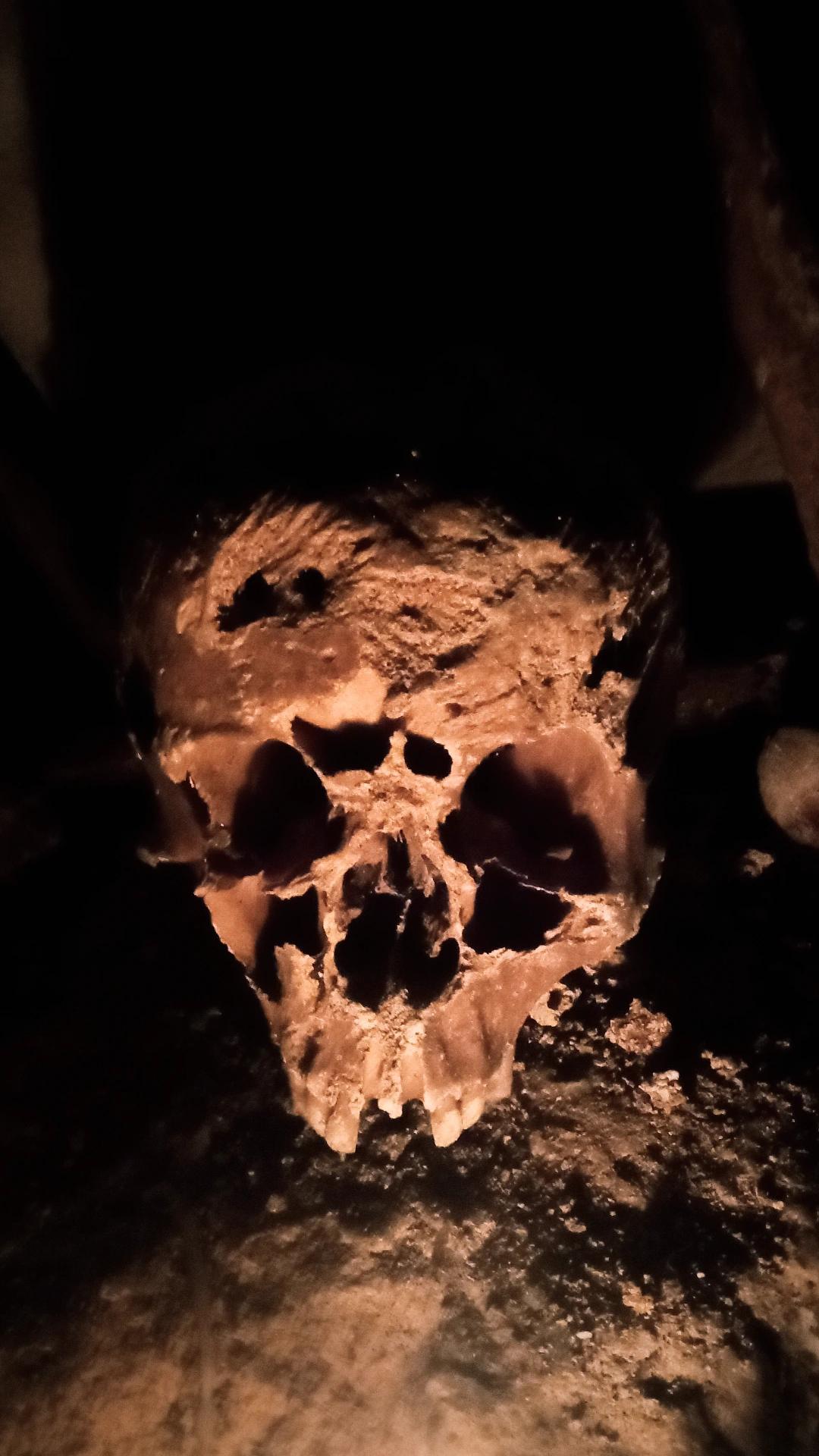
    One day, meanwhile walking in the wat’s forest, I I ended up finding a broken-down abandoned few hundred years old village nearby, with houses falling apart. The nature had retaken the place as trees where breaking through the old stone floor. As I kept going, I stumbled upon a graveyard that looked forgotten, with ancient tombstones. Some of them open, maybe thefts looking for jewels, some of them because time, and most of them still with their owners inside, forgotten by their loved ones.
    While I was checking out the old building, I found a small hole in the wall, like 50cm tall. Curiosity drove me inside, started crawling on the floor, avoiding sticky mold, roots, spiders and strange long legged insects. The place was dug on soft ground, about 15 metres deep in the wall. I went through it and discovered a room full of skeletons, placed in holes in the wall, and in the middle, a wooden meditation bench and old wet Bhikkhu colour blanket. Some candles were available. It was spooky, but I saw a great opportunity for maranasati meditation and to fear old fears from childhood, about death, ghosts, demons and stuff, I decided to sit and meditate among the bones
    In the dim light, an old candle started making weird loud sounds, I suppose because humidity. Even though my mind knew there was no real danger, I felt scared, a sensation of tightness in the chest and vision getting blurred. Because caution, I put of the candles and I left the place, but that fear stayed with me. During the night, in my kuti, the chest pain, the visions, fantasies, feeling presences near me haunted me for 3 nights, fear of ghosts, death, fear of going crazy, fear of my mind going against me. I even though of calling Dhammarato or talking to the Bhikkhus but the tricky mind was shy and embarrassed.. I went back three more times to that place, trying to face it. 2nd time I walked around the place but even the thought of entering the crypt was making me run away. Second time I entered, with decision and the help of the advice of the noble friends and Anapana Sati. The spine shivers were hard and some kind of neck throat blockage was releasing coughing, cramps, weird phenomena. The last time, I went full pitch black night and I invited a friend, a lay person who is living there for few years already. When I asked him if he wanted to come and spend the night with the dead, he said “you are the friend I was waiting for”. He led the way without a help of a torch, the half moon was enough to see. Meanwhile we walked, he chanted in pali with his old broken voice. I felt I was living a kind of lucid dream. It was fascinating
    We visited caves, cliffs, paths, strange trees and finally we got in the secret crypt. We sat down there quietly, so quiet that the inner sound of my own ears was so loud. There in the middle of the night. Surprisingly, it was peaceful. Since that night, I feel different, but in a good way. The scary feelings are gone, and I’ve found a sense of calm. The crypt’s story became my own tale of overcoming old fears and discovering peace in unexpected places.
    Thank you, J

    Email

    Views: 54

  • Keep practicing

    Corey Waterreus

    The dhamma is simple we just need to keep doing it, over and over!

    Email

    URL

    Views: 59

  • Experience at Sumedharama in Portugal

    Joe Stanski

    I would like to write about my experience staying at Sumedharama in Portugal for 2.5 weeks.

    This is a monastery in the Ajahn Chah Thai Forest tradition, usually with about 4-6 lay friends visiting, 8-12 monks, and a lot of people that come for the night meditation. Its a really nice environment to practice in for people that know how to practice already and don’t need a lot of guidance. Ajahn Vajiro and Ajahn Appamado were available for some discussions in the afternoon and I got a lot of benefit talking to them, as well as talking to some of the other monks and lay practitioners during my stay.

    It really gave me a lot of time to reflect with space from my life at home. Also in terms of personal practice, I noticed a willingness to let go of the physical sensation of the breath and fall more calmin and looking into the other aspects of the 16 steps of anapanasati; the vedana, citta, and dhamma. Opening more to the mind in this way, and really noticing where the thoughts were arising from really brought a lot of clarity and confidence to my practice.

    I would highly recommend a stay here to people; you can stay for one week on an initial visit, longer on subsequent visits.

    Email

    Views: 103