Tag: Community

Talking about a community.

  • Happiness & Suffering

    Theta Pati

    “Ask yourself…

    ‘What exactly does my HAPPINESS depend on?’

    Normally, people will allow their happiness to depend on a whole lot of conditions.

    And the more you think about those conditions, the more you realize that they’re totally beyond your control: the economy, the climate, the political situation, the continued beating of certain hearts, the stability of the ground beneath your feet, all of which are very uncertain.

    So what do you do?

    You learn to look inside.
    Try to create a sense of wellbeing that can come simply with being with the breath.

    Even though this isn’t the total cure, it’s the path toward the cure.”

    ~ Thanissaro Bhikkhu
    “Fears” Meditations1

    Good question, let me evaluate it too and share it with others…

    Having discerned any wordly happiness as changing with delusion and depending on conditions based on ignorance…

    How can I cling to it ?
    How can i crave for it ?
    How can i consider it real ?

    Happiness is not different from suffering, both give results involving the 6 senses and they can be both perceived as pleasing or unpleasing, it only depends on the individual view or habit and on the clinging to it as a craving.

    However, worldly suffering is felt as real by most and it affects many in different ways, unless the mind is duly trained with aware mindfulness and discernment based on right evaluation.

    Then, most do not know how to train or are not in the conditions to understand and suffering becomes the main problem in their life.

    Understanding the nature of suffering, it also means to see its root, that is ignorance, and how it affects us and others around us.

    Once the root is understood, then Metta and Karuna become the eyes looking at the living beings in the world, resulting in the uprooting of greed and hatred too.

    And when the wisdom born from mindful evaluation increases, then discernment takes to see the real happiness, totally void of conceit and craving, i.e. Mudita…

    Mudita has different intensity or levels :
    the 1st is to see others happy or not suffering;
    the 2nd is to see that others ask questions about suffering or about the spiritual path for the sake of understanding;
    the 3rd is to know about anyone putting effort in the training of taming their mind;
    the 4th and higher is when others get any better understanding of the Dhamma or, even better, when attaining any spiritual goal on the Noble Path.

    Mudita does not depend on conditions,
    it is not a craving,
    there is nothing to cling to,
    it is void of self and conceit,
    its nature never changes,
    it is simply the pure eternal happiness that everyone should look for,
    because it is outside of kamma and of becoming.

    ❤️🙏❤️

    Email

    Views: 4

  • Hey Boys

    Cathal Costello Costello

    Send me sweet love letters of Dhamma… DMs open

    Email

    URL

    Views: 6

  • The effect of acceptance

    The effect of acceptance

    Cathal Costello Costello

    Screenshot_2024-11-19-17-08-14-927_jp.naver_.line_.android.jpg

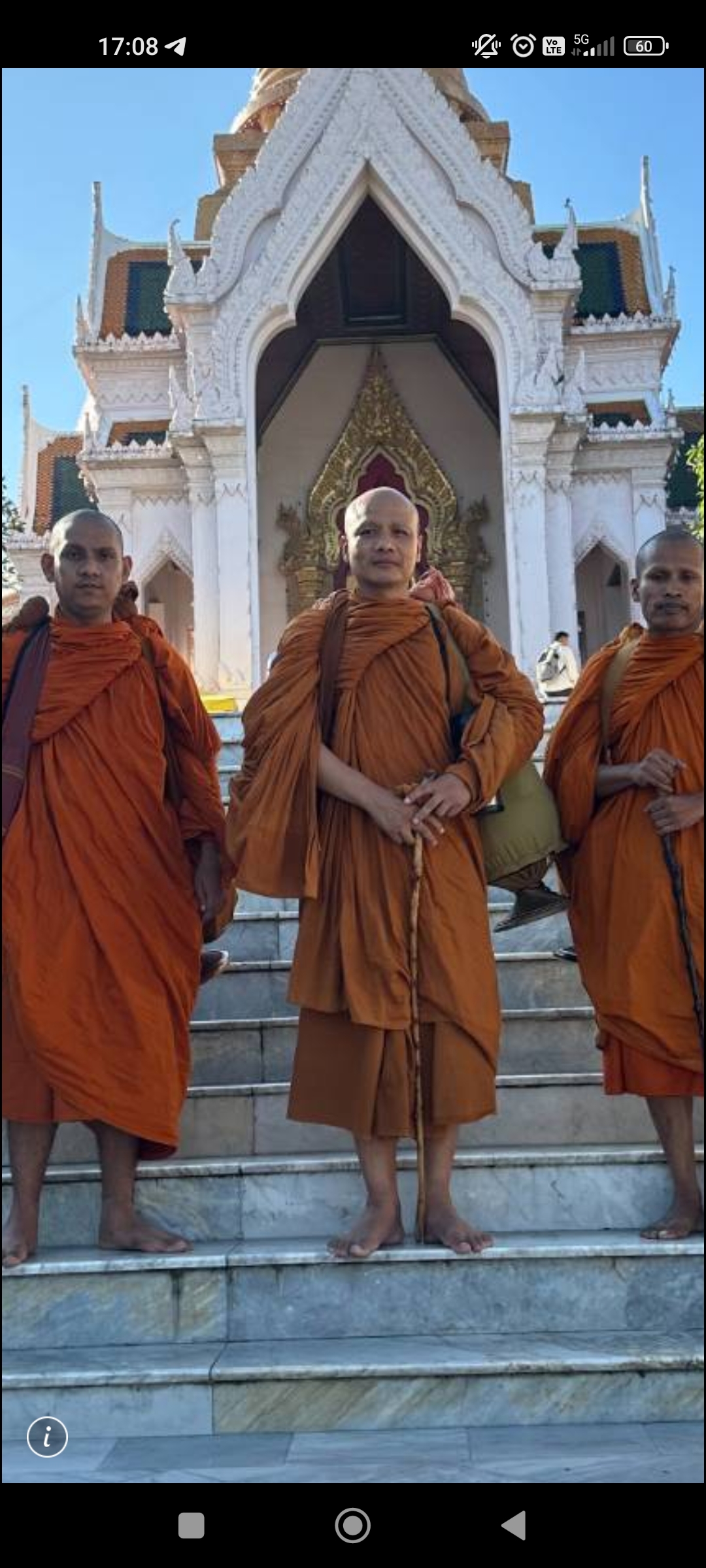
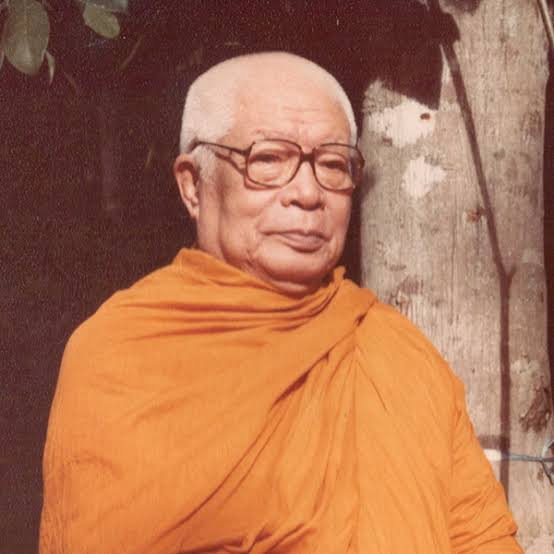
    Share a quick story of the monk in the middle. He was a big part of me having the balls to ordain as a monk. He was really a wild monk early on apparently(from what I was told) but the calmness and genuine metta he had really surprised me. I was around him a lot and got to see how accepting and caring he was yet I noticed his skillful way of not getting attached. I was very unfamiliar with someone who actually had genuine metta, who didn’t want anything from me but was sharing his state of enjoyment of life. I was way to use to ordinary stuff the smile on the outside fumes on the inside and the constant validstion seeking we partake in. I wondered how he was always In a easy going relaxed state despite whoeverr showed up to the wat.

    It only became surprising after a couple of months with him, it was the consistency and integrity that slowly that thought creeped up in me. I thought “Wow this is some high level monk” lol but most monks who hit 10+ years are like this at least the ones who put some work in themselves hangout noble ones Its fairly normal to me at this point.

    Hanging around those guys I guess hit me hard on a subconscious level or something that no matter how messed up I got especially with all my westerner baggage I can clear that out and enter into the state of wow life is good. I can accept myself as I have been accepted, I was never judged, I was always expecting to be judged but I wasnt. My mind slowly quietened down and it began overly obvious that the judgements I make are not only unnecessary pointless and hurtful but are just built on delusion.

    So i share that cos when you do hangout with guys who have done a lot of work within themselves it sort of affects you deep into the bone, marrow hits the marrow. Dhammarato taught me that he had it real good I think, being cared for in the right way can totally change you, waking up to caring for the right things and stop caring about nonsense. I feel almost sorry for those who are stuck around ordinary pissy unhappy people all day, that’s hard, you really have to commit to right effort right there. Its my idea of what a blessing is. Your life can change quickly for the good

    Email

    URL

    Views: 31

  • Title: The Unity of Buddhism: A Journey Through Mahayana and Theravada

    Title: The Unity of Buddhism: A Journey Through Mahayana and Theravada

    Thomas Hammon

    2023-05-24.jpg

    <h6>Title: The Unity of Buddhism: A Journey Through Mahayana and Theravada

    As someone with a deep appreciation for the teachings of Buddhism, I’ve spent a considerable amount of time exploring the various traditions and branches that have evolved from the Buddha’s original teachings. One aspect that has always fascinated me is the apparent differences and similarities between Mahayana and Theravada Buddhism.

    Many believe that Mahayana and Theravada are fundamentally different, but as I’ve delved deeper into the teachings and practices of both, I’ve come to realize that their core is, in fact, the same. The primary distinction between the two lies in how they interpret and apply the rules and precepts laid down by the Buddha.

    In Theravada Buddhism, there is an insistence on following the rules and maintaining the precepts with unwavering discipline. This adherence to the letter of the law can sometimes lead to an unwillingness to bend the rules when circumstances call for it. On the other hand, Mahayana Buddhism takes a more flexible approach, openly bending the rules when deemed necessary for the greater good or to help others on the path to enlightenment.

    However, the essence of the Buddha’s teachings remains the same in both branches. Whether it’s the practice of Zen in Mahayana or the strict discipline of Theravada, the ultimate goal is the same: to achieve a state of inner peace, wisdom, and enlightenment. Both traditions emphasize the importance of mindfulness, meditation, and the cultivation of compassion.

    In my own experience, I’ve found that those who practice Theravada Buddhism tend to have a deeper understanding of Zen than those who solely practice Zen. This is because Theravada practitioners often have a more comprehensive knowledge of the Buddha’s teachings, allowing them to grasp the principles of Zen more easily. However, there have been cases where practitioners of Zen have transitioned to Theravada and found it equally fulfilling.

    It’s important to remember that the teachings of the Buddha have transcended geographical and cultural boundaries, influencing various spiritual and philosophical traditions. In fact, Buddhist principles have made their way into psychology, the Catholic Church, and countless other domains. The teachings of the Buddha have permeated our world in ways we may not even realize, acting as a guiding force for those seeking inner peace and wisdom.

    In conclusion, whether one practices Mahayana, Theravada, or any other form of Buddhism, the essence of the teachings remains the same. The ultimate goal is to find true happiness and contentment within oneself, and to share that joy with others. As practitioners of Buddhism, we must remember that there is only one true Buddhism, and that is the teachings of the Buddha, which transcend all divisions and boundaries.<h6>

    Email

    Views: 6

  • “Shifting Perspectives: Nurturing Wholesome Thoughts in the Cycle of Mindfulness”

    “Shifting Perspectives: Nurturing Wholesome Thoughts in the Cycle of Mindfulness”

    Thomas Hammon

    list-xl@1x.webp

    “Shifting Perspectives: Nurturing Wholesome Thoughts in the Cycle of Mindfulness”

    In our fast-paced world, we often seek closure and finality in various aspects of life. This pursuit is mirrored in the invention of the clock, a symbol of humanity’s quest for order and progression. However, it’s intriguing to consider that the invention of the clock might be the harbinger of both order and chaos. While the atomic bomb’s invention is widely regarded as a monumental turning point, the invention of the clock might bear even more significant consequences, reshaping our understanding of time and thought.

    The clock instills a notion of linear progression. A relentless march forward where our thoughts and actions must fit within the confines of this structured timeline. This concept is both a boon and a bane. On one hand, it propels us to accomplish goals and meet deadlines. Yet, it also creates the illusion that once our thoughts are redirected from unwholesome to wholesome, the clock’s hands move forward, and we’re on an uninterrupted journey into the future. In truth, life operates in cycles, and this realization unveils a deeper perspective on mindfulness.

    Cycles govern our existence in ways we often overlook. Just as we can fall back into old habits if we don’t actively cultivate change, we can lose skills we once mastered if we cease practicing. This applies not only to physical skills but also to the art of nurturing wholesome thoughts. A key point emerges: consistent practice is the bedrock of sustainable change. Arthur Rubinstein’s recognition that even at the peak of skill, practice remains essential holds a crucial lesson. Mindfulness is not a one-time feat; it’s an ongoing journey requiring constant nourishment.

    In this journey, the idea of urgency and emergencies takes on a new dimension. While societal norms push us to perceive urgency externally, the heart of urgency often rests within our emotional reactions. By discerning between true urgency and the urgency bred from our emotions, we unlock the power to respond wisely. This awareness ripples through our interactions, allowing us to face others’ negativity with empathy and tranquility.

    Central to this evolution is the practice of observation?of our thoughts, sensations, and emotions. This practice reveals the fleeting nature of these mental phenomena, aiding detachment and preventing their sway over us. This perspective shift permits us to pause, assess, and respond mindfully instead of reacting impulsively. This is the essence of mindfulness?cultivating a space between stimulus and response.

    Morning and nighttime become pivotal moments for this practice. By consciously tending to our thoughts before sleep and upon waking, we set the tone for our day. These moments of intention shape our mental landscape, transforming dread into contentment and anxiety into ease. Gradually, the art of steering our thoughts becomes second nature, fostering a sense of calm resilience.

    Yet, there’s no finish line in this journey. The fallacy of “arrival” permeates Western interpretations of Buddhism, obscuring the truth that practice is a constant companionship. Just as a child’s swing requires a gentle push to maintain momentum, our practice necessitates ongoing effort. Embracing this, we move beyond perfectionism and embrace the dance of progress.

    In closing, the journey of nurturing wholesome thoughts is a testament to the power of continuous cultivation. The clock’s hands might move inexorably forward, but our minds possess the agility to shift gears, steering us toward wisdom and serenity. As you persist in this journey, remember that each mindful breath, each redirecting thought, brings you closer to the profound liberation of self-discovery. Keep observing, keep nurturing, and keep evolving.

    Email

    Views: 5

  • Magical Powers

    Magical Powers

    Thomas Hammon

    goldWheel2bluesmall3.png

    <h6>The story starts with the statement that one is disappointed that Bhikkhu Buddhadasa did not teach magical powers. Next the question was asked: "Are you disappointed that the Buddha did not also as teach magical powers. While many who see the teachings of the Buddha as a religion that includes magical art and beliefs, there is clear evidence in the Vinia and the suttas that The Buddha was quite against such things.
    1.  DN 1 Bramajlaa sutta spends many pages teachings that good monks do not engage in fortune telling gambling or displays of power. 
    2.  Patimokkh explesuitity forbids such behaviors and claims of power. 
    3.  The Buddha explicitly warns monks "do not get reborn" MN20
    4.  Freedom is defined as freedom from the delusions and greed for powers
    
    Evidence of Magical Powers
    1. Catholic Church has long history of celibacy and a longer history of failure to locate miracles.
    2. Stage magic and Charlatan's all know that the power is in the delusional state of mind of the audience.
    3. James Randi bet
    4. Those who search for magic and find dhamma, and like dhamma better
    
    Disappointments of failures and hope for future powers
    1. wanting things we dont have
    2. Bodhisata ideal is a big disappointment leading to 
    3. tantra and @ 1 with All and controlling it all to make all be happy
    or 
    4. Gaining power and using it selfishly
    5. get caught cheating and lying about the power
    
    The real powers of a Buddha
    1. MN12 the Lions Roar  Sunakkhatta
    2. Power of this present moment.
    3. Power of observation
    4. Power of contentment and satisfaction. 
    5. friendly attitude   the power to win the peace is more power full than winning at war.
    
    MN12 the Lions Roar has 10 powers or knowledges
    1. what is possible and not possible
    2. Kamma operates on cause/effects
    3. world is divorce, understands where all paths of practice lead. 
    4. diverse attitudes and view of the many, the world with its many and diverse elements.
    5. faculties and abilities of others understands the diverse attitudes of folks sentient beings.
    6. understands the diverse attitudes of folks sentient beings.
    7. corruption, cleansing, and emergence leading to liberation (jhānavimokkhasamādhi)
    8. good memory, recollects the past.
    9. He understands how sentient beings are reborn according to their deeds. Since he truly understands this, this is a power of the Realized One. beings passing away and being reborn means we can see how folks moods change.  
    10. undefiled freedom of heart and freedom by wisdom in this very life, and lives having realized it with his own insight due to the ending of defilements.
    
    Since he truly understands this, this is a power of the Realized One. Relying on this he claims the bull’s place, roars his lion’s roar in the assemblies, and turns the holy wheel.
    
    Four kinds of self-assurance. I see no reason for anyone to legitimately scold me, saying: 
    ‘You claim to be fully awakened, but you don’t understand these things.’ 
    ‘You claim to have ended all defilements, but these defilements have not ended.’ 
    ‘The acts that you say are obstructions are not really obstructions.’ 
    ‘The teaching doesn’t lead those who practice it to the complete ending of suffering, the goal for which you taught it.’
    
    Since I see no such reason, I live secure, fearless, and assured.
    
    A Realized One has these four kinds of self-assurance. With these he claims the bull’s place, roars his lion’s roar in the assemblies, and turns the holy wheel.
    
    When I know and see in this way, suppose someone were to say this:
    ‘The ascetic Gotama has no superhuman distinction in knowledge and vision worthy of the noble ones …’  Unless they give up that speech and that thought, and let go of that view, they will be cast down to hell.

    Email

    Views: 1

  • On Concentrating: A Misunderstood Practice

    Alexander Hipple

    When we talk about “concentration” within the context of meditation practice, the term isn’t quite right for us English speakers. A more accurate way to describe this might be “repeating,” where we repeatedly apply the mind to an object and sustain the mind on an object. This process is “applied and sustained thought” (vitakka and vicāra), two qualities found in the first jhāna. The other three qualities of the first jhāna are best talked about in English as something like “success” (pīti), “satisfaction” (sukkha, the opposite of dukkha or “dissatisfaction”), and “going at once to the object”, doing this “in one go”, directly (ekaggatā).
    The word “concentration” in English tends to suggest a kind of reduction or division, think of concentrated orange juice, where the water is removed. No one drinks concentrated orange juice straight from the package though; they add water back to make it whole once again. Similarly, in meditation practice, what we call “concentration” could be better understood and talked about as repeatedly “collecting” or “calming” the activities of the body and the mind.
    Personally, I refer to samatha as “stopping.”
    Samādhi, often translated as “concentration”, is more about the unification of the mind—a gathering together of scattered activities into a cohesive whole. It doesn’t fully arise until the second jhāna, when applied and sustained thought cease. So instead of thinking of samādhi as a “concentrated” or “one-pointed” mind, it’s more helpful to think of it as a “collected” or “unified” mind.
    This understanding also frees us from the pressure to focus on nostrils, count breaths, or chase a “peak meditation experience” in hopes of achieving some grand cessation of experience and earning a fancy title. Some people don’t like hearing this and may cling to their rituals or techniques, pretending they didn’t hear it at all.
    On a related note, it’s not easy to make a living by teaching to practice this way. It doesn’t lend itself to selling books or hosting retreats because if you learn to solve your own problems, you won’t need to follow a guru or buy the next $19.99 miracle technique. Perhaps this is why effective teachings are shared between friends rather than sold in the marketplace. But I digress…
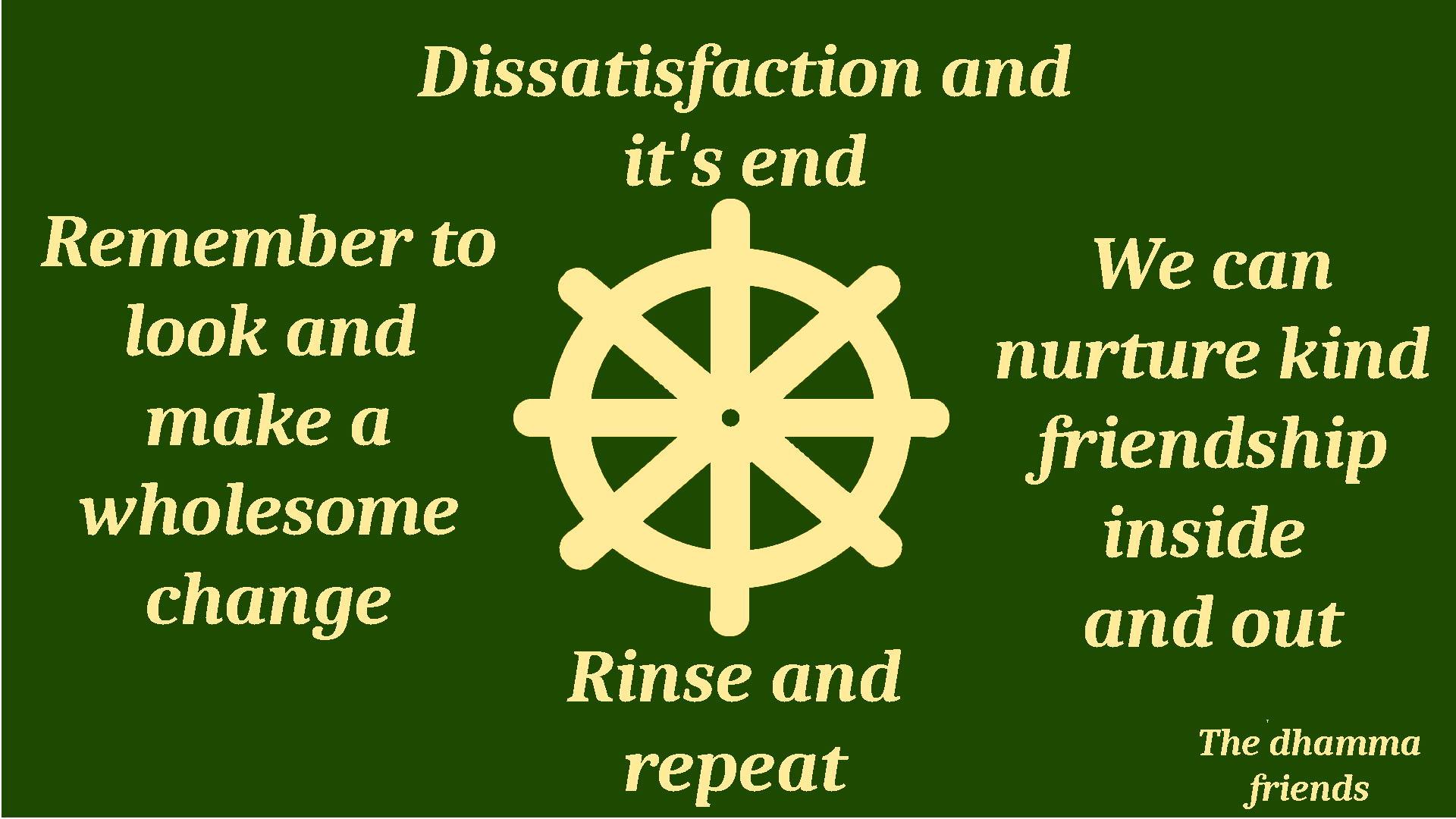
    I’ve said this before and I’ll say it again: dissatisfaction and the end of dissatisfaction—that’s all there is to it. It’s simple. Dissatisfaction is duality. Step out of it, right here and right now, and there’s nothing more to do. When the mind is free from dissatisfaction, the work is done, and life unfolds naturally.
    If you find yourself slipping back into dissatisfaction (as we often do, we could even call it a bad habit), it’s a wake-up call. Take a look at your state of mind (your attitude) and make a change. Shift from an unwholesome mental state of dissatisfaction to a wholesome state of satisfaction, and then congratulate yourself for doing so.
    This is one’s right noble effort.
    “Lather, rinse, repeat.” When adventitious defilements arise in the mind, clean them out immediately. The Dhamma is everywhere, even on your shampoo bottle, if you’re paying attention.
    Once the mind is free from the five hindrances, it’s fit for work. What work? The work of seeing clearly (vipassanā) the true nature of things. Stopping (samatha) and seeing (vipassanā) are not separate; they are two parts of the same path (or “method”). A mind burdened by hindrances can’t see clearly—by definition, it’s hindered!
    So, remember to stop chasing stories and see reality for what it is, as often as you can. This is the essence of correct practice. It’s why you’ll hear people say, “the first jhāna is the path”—if you’re associating with good friends who practice effectively and understand the way.
    This brings us to the importance of good friends. After his awakening, the Buddha didn’t write books or establish retreats; he built a community of practitioners. Through effective practice, this community transmits the Buddha’s teachings with minimal distortion, ensuring the door to liberation remains open for all who seek it.

    Email

    URL

    Views: 38

  • Can “just say no” Be effective

    I think with time, practice, restraint, and discipline(and 8FNM) the practice of “Just say no” can be a good method.

    If it’s not working for u yet…don’t say no…just say later. Or not now.
    Let me see if I can wait 10 more mins and not do that behavior which is causing more suffering….and see if I can imagine being ok if I do it, or if I don’t. It’s okay either way.
    From that okayness saying no becomes easier. Cultivate good feelings and right action. Its also about what you do leading up to trying to Saying no to immaturely following sense desires…get some momentum with the easy “No’s” and then when the hard ones come you will have a stronger foundation to help u ride the wave.

    Email

    Views: 14

  • Our problems today… Thich Nath Hahn

    Our problems today… Thich Nath Hahn

    Cathal Costello Costello

    images-25.jpeg

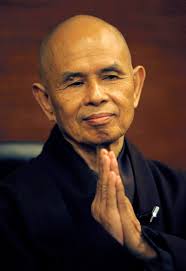
    Our problems today are no longer as simple as those encountered by the Buddha. In the twenty-first century, we will have to practice meditation collectively as a family, a city, a nation, and a community of nations. The Buddha of the twenty-first century Maitreya, the Buddha of Love, may well be a community rather than an individual. Sanghas that practice loving kindness and compassion are the Buddha we need. We can prepare the ground for bringing that Buddha to life, for our sake and for the sake of countless others, by transforming our own suffering and cultivating the art of Sangha-building. It is the most important work we can do.” “Thich Nhat Hahn

    Email

    URL

    Views: 17

  • Karma: The Choice is Yours, by Bhikku Buddhadasa

    Karma: The Choice is Yours, by Bhikku Buddhadasa

    Cathal Costello Costello

    images-24.jpeg

    Karma: The Choice Is Yours
    BY AJAHN BUDDHADASA| OCTOBER 20, 2017
    
    There are two ways to understand dependent origination, teaches Ajahn Buddhadasa. But only one leads to liberation.
    
    Ajahn Buddhadasa. Courtesy of Buddhadasa Indapanyo ArchIves (Bangkok).
    In the Pali suttas there are two descriptions of what occurred under the Bodhi tree at the time of the Buddha’s great awakening. In one version, appearing in various texts, the Buddha realized the three supreme knowledges. In the first true knowing, as it is generally understood, he recollected his former lives. In this account, as traditionally understood, he is able to recall his own previous births far into the distant past. These are invariably described as happening to the same person. In the second true knowing, he reviewed how beings carry on according to their actions (cutupapatañana), how beings pass away and reappear according to the karma they have done. Through the third true knowing, he realized the destruction of the impulses (asavakkhyañana). The out-flowing fermentations (asavas) are the deepest level of defilement; when they are completely ended, no further defilement, egoism, or suffering is possible. This is the more commonly recounted description of the night of the Buddha’s awakening.
    Elsewhere, the Pali texts state that the Buddha awakened to dependent co-arising. There also are accounts of the Buddha contemplating dependent co-arising immediately after his awakening, while he was still sitting under the Bodhi tree. Together, these give a second description of the Buddha’s great awakening. In the immediate aftermath, during the first four-hour watch one night, the Buddha examined dependent co-arising in the forward order, starting with ignorance, then concoctings, and so on, one after the other. During the second watch of the night, he reviewed dependent co-arising in the reverse order, starting from suffering, then birth, becoming, clinging, and so on all the way back to ignorance. Then for the third watch, he examined dependent co-arising in both forward and reverse orders until dawn.
    Between these two versions, the second is more reasonable and acceptable in light of the overall themes and threads of the Pali suttas. In the other account, the first knowledge concerning the recollection of past lives is in the language of eternalism, just as in the pre-Buddhist Upanishads, which speak of a self or an individual being born again and again over many lives. The belief that the same person is repeatedly reborn is eternalism, which Buddhism aims to eliminate. This idea has more in common with popular beliefs and the philosophy of the Upanishads than with the core of the Buddha’s message.
    At heart, Buddhism teaches the end of karma, living beyond karma, rather than carrying on according to karma.
    The second knowledge is about beings passing away and reappearing according to karma. This is generally understood to mean that the same being disappears from one existence (bhava) and reappears in another according to karmic influences somehow carried over from one existence to the next. However, this is not directly or specifically a Buddhist teaching. At heart, Buddhism teaches the end of karma, living beyond karma, rather than carrying on according to karma. The noble path is for freedom from karma; living under the sway of karma is limiting, distressful, and burdensome. It is not good enough to merely surrender to karma, to die and be reborn according to the fruits of our actions. In Buddhism, liberating insight must go further than that.
    Neither of these first two knowledges can be considered truly Buddhist principles. Why, then, are they included in the Pali scriptures? My own view is that perhaps the compilers of the discourses included these passages for the benefit of ordinary people. For those people unable to understand dependent co-arising and the end of karma, these passages were included for the sake of morality. Consequently, this is an account of the Buddha’s awakening for the moral benefit of ordinary people.
    The second account puts dependent co-arising at the center of the Buddha’s awakening. Not only did he express his awakening in these terms but he also described how he pondered and contemplated dependent co-arising both before the awakening and immediately after. After experiencing the bliss of liberation for a week, he examined and investigated dependent co-arising throughout at least one night, the first watch of which focused on how dependent co-arising occurs. He repeatedly investigated this in the forward order from ignorance to concoctings on through suffering. He spent four full hours thoroughly penetrating this truth. In the next four hours, he investigated the causality of dukkha in careful detail all the way back to ignorance. In the final four hours, he examined dependent co-arising in both directions, forward and backward. This shows the central importance of dependent co-arising. The formula recorded is brief and succinct—the Buddha looked into it forward and backward for twelve hours without a break. He had the most profound spiritual experience of this through each of the watches: forward order, reverse order, and both forward and backward, each for four full hours. Please consider how profound, how difficult, how subtle, and how important this is. This ought to be of great interest to all serious meditators.
    The words we have translated as “forward order” and “reverse order,” or “forward” and “backward”—anuloma and patiloma—can be understood rather broadly. Thus, for clarity’s sake, we can explain anuloma, “with the hairs,” as the examining of the arising sequence, that is, dependent co-arising. The reverse, patiloma, “against the hairs,” is the quenching of dependent co-arising, that is, dependent quenching. In the first watch, the Buddha investigated and reviewed how dependent co-arising arises. In the second watch, he investigated and reviewed how it quenches. In the final watch, he investigated and reviewed both. This understanding is eminently reasonable and fully supported by the core themes of the discourses.
    Please consider this important question: Have you ever practiced like this? Have you ever investigated dependent co-arising in the way that the Buddha did before, during, and after his awakening? We suggest that you examine and scrutinize dependent co-arising in the same great detail, with the same sincerity and intensity. Then, you might understand it like he did. You will find it worth your while to follow the Buddha’s example.
    
    Two Understandings of Karma
    This is a good place to consider karma. After all, it parallels the dependent co-arising teaching, though with less precision and depth. In the first account of the Buddha’s awakening, the second knowledge suggests that beings carry on after death according to their karma. The difficulty with this understanding is that we cannot take this as the understanding of karma in line with core Buddhist principles. Rather, this understanding is simply the standard version of karma that existed in India before the Buddha’s time. Before the Buddha’s awakening, the Upanishads already taught that beings are reborn after death according to the workings of karma. Even Christianity, at least mainstream forms, teaches pretty much the same. If that is not the true Buddhist teaching, then what is?
    In Buddhism, the central teaching on karma is about the practice that makes karma meaningless, “the karma that ends karma.” This karma transforms us beyond all the influences of karma, which is the unique, more profound aspect of the Buddha’s karma teaching. The idea that doing good deeds leads to good results and doing bad deeds leads to bad results was a general teaching that existed before the Buddha’s time. The Buddha did not deny or object to such karma doctrines, which were already common before he appeared and are found in some form in all religions. However, such teachings were not sufficient for his purpose: the end of suffering. Therefore, the Buddha went further. His real teaching is about not being trapped by karma, thus transcending karma and its consequences.
    To be trapped forever in the prison of karma is not Buddhism. If everything constantly happens to us according to karma, there could never be any liberation.
    Allow me to reiterate that most of the books on Buddhism with chapters on “Karma and Rebirth” are not correct, not if they really intend to represent Buddhism. If we are to explain “Karma in Buddhism,” it is not enough to teach that good actions bring good fruits, bad actions bring bad fruits, and we inevitably receive the fruits of our good and bad karma. Properly, a Buddhist explanation must focus on “the karma that ends all karma.” The practice of the noble eightfold path is that karma that ends all karma. The Buddha’s teaching on karma is to be free of karma, not trapped by it, so that karma has no more power over our lives.
    The Buddha Perfected the Teaching of Karma
    To be trapped forever in the prison of karma is not Buddhism. If everything constantly happens to us according to karma, there could never be any liberation. For a teaching and practice to be Buddhism, we must be liberated from the power and oppression of karma. A teaching that merely reiterates the old approach cannot be the true Buddhist teaching. It must be completed to the extent of liberation to be Buddhism. Thus, the Buddha needed to teach the karma that ends karma. He took the kind of karma that does not explain liberation and perfected it so that liberation from karma became the central point.
    “Beyond karma” is a teaching above and beyond the world, or a lokuttara teaching. The ordinary karma teachings are part and parcel with the world (lokiya). Lokiyadhamma is for the mind still trapped in worldly conditions. Lokuttaradhamma is for the mind free of and beyond worldly conditions. The Buddha accepted a number of the old teachings, perfecting them within his lokuttaradhamma system as he did so. The Buddhist teaching on karma—the noble eightfold path that ends karma—is a perfect example of how the Buddha completed the old teachings and traditions.
    The Buddha accepted some teachings that existed in India before his awakening, such as non-vengeance (avera), non-harming or nonviolence (avihimsa), the five sila, various samadhi practices, and the form and formless jhanas. All of these are older teachings and practices that he did not reject. Instead, he further developed, completed, and perfected them. Please be aware that Buddhism contains a certain amount of older teachings and practices that the Buddha included, deepened, and completed for the sake of quenching dukkha. Understanding this fact is important so that we will not confuse the old versions of such teachings with the new, perfected versions.
    The Buddha completed the Upanishadic teaching on karma and the like. To do so, he taught the end of karma.
    Two Levels of Teaching
    These examples clearly show that there are two levels of teaching, both of which are necessary. One is for the sake of morality, for those who still believe in and hold to self. The moral level of teaching is necessary for those who can only understand things in terms of me and mine, who require moral and therapeutic teachings that operate on a worldly level. It teaches people how to live in the world morally and peacefully, to be less selfish about the selves to which they cling, and thereby suffer less.
    You can continue rebirthing yourself in a worldly way, but with healthy morality, not harming others and living relatively peacefully.
    For those aiming higher, the Buddha’s teaching focuses on letting go of self, that everything is not-self and nothing is worth clinging to as me or mine. This level does not ignore or reject the moral teachings; it simply goes beyond them. This is the more comprehensive transcendent level of ultimate truth that truly liberates from all suffering. If both levels are understood, there is no conflict between them. They can coexist for the sake of both those who want to live in and of the world (lokiya) and those aiming to live above and free of the world (lokuttara), in it but not of it.
    Each person decides their own preference and way. If you want to travel the paths of the world and have no wish to transcend the world, you can follow the worldly teachings and receive the moralistic explanation of dependent co-arising given by various commentators. You can continue rebirthing yourself in a worldly way, but with healthy morality, not harming others and living relatively peacefully. If you want to be free, to transcend the world and no longer be caught by all its trappings, you must study the transcendent teachings such as “the end of karma” that do not involve self. For this, we have the dependent co-arising of ultimate truth that enables us to see through all the concoctings of self. Dependent co-arising also has these two levels or two models. The choice of which to follow is yours.
    Adapted from Under the Bodhi Tree, from Wisdom Publications, 2017.

    

    Email

    URL

    Views: 13

  • Thailand Travel Info & Traveling to Koh Pha ngan

    David Matte

    Greetings dhamma pals!


    If you’re planning a trip to come to the land of smiles (Thailand), I wrote a brief guide containing information and tips on your travels here. See you here soon! 🙂

    Thailand Travel Info & Traveling to Koh Pha ngan.docx

    Email

    URL

    Views: 25

  • The Saturday Night Sangha

    The Saturday Night Sangha

    David James Bennison

    DhammaFriendsWhole.png

    Hosting the Saturday sangha call on Discord has been beneficial beyond measure.

    The mind comes back again and again to Dhamma, and enthusiasm honing the skills of the Noble Eightfold Path.

    Not only for myself but for others as well. Being able to share this wisdom is a blessing in itself.

    It’s wonderful to talk to people who understand this wisdom and share it. We cultivate and grow together with noble friendship.


    If you are interested in joining the meetings it’s at 7 pm EST on Discord. Link below

    https://discord.gg/VzczkNX63v


    Email

    URL

    Views: 49

  • Best thing iv ever done

    Dean gardiner

    Meeting Dhammarato and practicing the real teachings of the buddha is one of the greatest things I have ever done 🤜🤛

    Email

    Views: 52

  • Hello everybody

    Mikhail Churilov

    Test! 🙂

    Email

    Views: 57

  • Check out the Dhamma Friends Discord

    Check out the Dhamma Friends Discord

    David James Bennison

    File_Dec_21_2022_10_17_02.jpeg

    One of the benefits of Discord is that it allows there to be rooms where folks can join and voice chat. You don’t need to call anyone and it operates like a virtual space where members can join and talk about the dhamma. I have been hosting Saturday night sangha meetings and there are also several forms where people can post. One of my favorites is for sharing wholesome thoughts to help remember to gladden the mind.

    Here is a link to the Dhamma Friends discord if you are interested in an open space to share Dhamma.

    https://discord.gg/qQ2Mquk5dn

    Email

    URL

    Views: 67

  • Mission statement – letter to Alex

    PietroDN

    Dear alex, today i had a beautiful and inspiring conversation with dhammarato with the purpose of clarifying the points about the mission statement for the OSF, in addition to the recordings that he will make available for transcription, i took some notes with what i regarded as important and could be helpful for the document.

    We started from the concept of triple gem, in which dhammarato said that the most important of the three is actually the sangha, that in fact had originated at the time of the Buddha, when bhikkhus started to get along in nobility and friendship with one another. The triple gem is in fact being friend on the inside, friend on the outside and so developing the qualities of the buddha. In fact we heard many times how buddhism and dharma is based upon friendship, noble friendship.

    So then we came to the mission itself, which is about networking for people who want to join or continue to stay on the path, facilitating them with some structure as a reference point and facilitating major life changes that many people are going through in their lives.

    In fact the OSF will reach:

    Monks (ajahn, – some names are in the recording) who already teach the noble dharma to add sangha to their teaching equation.

    Affirmed western teacher to bring in the dana orientation

    But also: aspiring teachers or teachers that want to get established, so that they can find a context of support and reference point trough “eastern oriented” existing buddhist structures

    The idea is to remove the exchange of money

    But also: people who want to go to asia, to give them support finding facilities, friends, monks, noble monks and learn from the asian perspective.

    But also: people who just google dharma

    Then we went again through the importance of friendship on how the OSF will bring together different buddhist traditions and people will have the possibility to get along for similarities rather than arguing on the differences, accumulated by the movement of change that is going through their lives.

    Here some other features of the website:

    website meetings, groups, spread the dharma, contact teachers, meet and greet—meet friends and stay. western community.

    website helping people find temples, clubs, organizations near them and map it.

    profile of volunteers with bio.

    donation

    Here some values: Morality (came after wisdom) Joy, friendship

    To say that the community is already forming, and this website will facilitate.

    In the end, personally I would say that this is the opportunity for people to jump, or follow the stream. change ther lives, let go of their job and the bank account and jump right in completely.

    Dhammarato picks up new people, but there will come a point when he will not have the power to help us further, and so the network will be of primary importance. again for this reason is a pleasure for me to help build and develop the sangha. HAVE A GREAT DAY, SEE YOU SOON FRIEND!


    Email

    URL

    Views: 48