You are not logged in

Meditation technique - Open Sangha Foundation

Tag: Meditation technique

Talking about a meditation technique such as anapanasati.

  • Mindfulness with breathing online

    djbennison@gmail.com

    Check out this website that I put together a while ago to aid in the development of Anapanasati(Mindfulness with breathing)

    https://djbennison.github.io/Mindfulness-with-breathing-Online/

    Email

    URL

    Views: 9

  • The self is never there.

    The self is never there.

    BurningCar.jpg

    First Post.
    Don’t take this self so personally. Mind above the flood. Whatever comes flushing. You can see all that is happening with curiosity.

    If there’s car burning outside. You can’t help but to observe with curiosity. But when the car you observe is “yours”. You begun to act frantic and panic. The “self” is suffering. But when is seen through as “not self” . You begin to enjoy the show ” wow, what’s happening? What’s the commotion?”

    This life becomes a journey of joyful investigation. No more “poor me” mindset. Is just this. You become a moving target. Getting ourselves outside the shooting range. No me there. Everything is just happening by itself.

    Wholesome change of just seeing what is happening with a smile. Relax. Can’t catch dukkha. See dukkha and start getting out the way. Not by aversion but wisdom.

    Email

    Views: 23

  • On your topic of “looking”

    On your topic of “looking”

    Waxhaw Luke

    greatface.gif

    On your topic of “looking”
    I find Bhante Punnaji’s translations to be useful. He translates sati/Satipatthana as “introspection” (looking within), which is step 1 on the “seven steps to awakening” (his words) and then he translates Upekka as “apperception” (seeing within). So the process of awakening begins with looking within and culminates in seeing within. And what is seen? That the world is not out there. It is in literally in here. In this process of perception. When seen clearly in this way, mind “awakens from the dream of existence” (his words again) and has a “paradigm shift from existential thinking to experiential thinking” Point being that it begins and ends with looking and seeing clearly so that, as Dhammarato would say, “we don’t step in any cow pies as we cross the pasture” For me, this upekka is the direct seeing that what we call the world is a projection of the ignorant, desire-driven mind. When it sees, it simply knows and lets go. “It realizes the reality of non-grasping” (Ajahn Chah) This present awareness un-intoxicated is bright and blissful, needing nothing added.

    Email

    URL

    Views: 4

  • On Concentrating: A Misunderstood Practice

    Alexander Hipple

    When we talk about “concentration” within the context of meditation practice, the term isn’t quite right for us English speakers. A more accurate way to describe this might be “repeating,” where we repeatedly apply the mind to an object and sustain the mind on an object. This process is “applied and sustained thought” (vitakka and vicāra), two qualities found in the first jhāna. The other three qualities of the first jhāna are best talked about in English as something like “success” (pīti), “satisfaction” (sukkha, the opposite of dukkha or “dissatisfaction”), and “going at once to the object”, doing this “in one go”, directly (ekaggatā).
    The word “concentration” in English tends to suggest a kind of reduction or division, think of concentrated orange juice, where the water is removed. No one drinks concentrated orange juice straight from the package though; they add water back to make it whole once again. Similarly, in meditation practice, what we call “concentration” could be better understood and talked about as repeatedly “collecting” or “calming” the activities of the body and the mind.
    Personally, I refer to samatha as “stopping.”
    Samādhi, often translated as “concentration”, is more about the unification of the mind—a gathering together of scattered activities into a cohesive whole. It doesn’t fully arise until the second jhāna, when applied and sustained thought cease. So instead of thinking of samādhi as a “concentrated” or “one-pointed” mind, it’s more helpful to think of it as a “collected” or “unified” mind.
    This understanding also frees us from the pressure to focus on nostrils, count breaths, or chase a “peak meditation experience” in hopes of achieving some grand cessation of experience and earning a fancy title. Some people don’t like hearing this and may cling to their rituals or techniques, pretending they didn’t hear it at all.
    On a related note, it’s not easy to make a living by teaching to practice this way. It doesn’t lend itself to selling books or hosting retreats because if you learn to solve your own problems, you won’t need to follow a guru or buy the next $19.99 miracle technique. Perhaps this is why effective teachings are shared between friends rather than sold in the marketplace. But I digress…
    I’ve said this before and I’ll say it again: dissatisfaction and the end of dissatisfaction—that’s all there is to it. It’s simple. Dissatisfaction is duality. Step out of it, right here and right now, and there’s nothing more to do. When the mind is free from dissatisfaction, the work is done, and life unfolds naturally.
    If you find yourself slipping back into dissatisfaction (as we often do, we could even call it a bad habit), it’s a wake-up call. Take a look at your state of mind (your attitude) and make a change. Shift from an unwholesome mental state of dissatisfaction to a wholesome state of satisfaction, and then congratulate yourself for doing so.
    This is one’s right noble effort.
    “Lather, rinse, repeat.” When adventitious defilements arise in the mind, clean them out immediately. The Dhamma is everywhere, even on your shampoo bottle, if you’re paying attention.
    Once the mind is free from the five hindrances, it’s fit for work. What work? The work of seeing clearly (vipassanā) the true nature of things. Stopping (samatha) and seeing (vipassanā) are not separate; they are two parts of the same path (or “method”). A mind burdened by hindrances can’t see clearly—by definition, it’s hindered!
    So, remember to stop chasing stories and see reality for what it is, as often as you can. This is the essence of correct practice. It’s why you’ll hear people say, “the first jhāna is the path”—if you’re associating with good friends who practice effectively and understand the way.
    This brings us to the importance of good friends. After his awakening, the Buddha didn’t write books or establish retreats; he built a community of practitioners. Through effective practice, this community transmits the Buddha’s teachings with minimal distortion, ensuring the door to liberation remains open for all who seek it.

    Email

    URL

    Views: 38

  • Thoughts are not me not mine

    Dhammarato sa

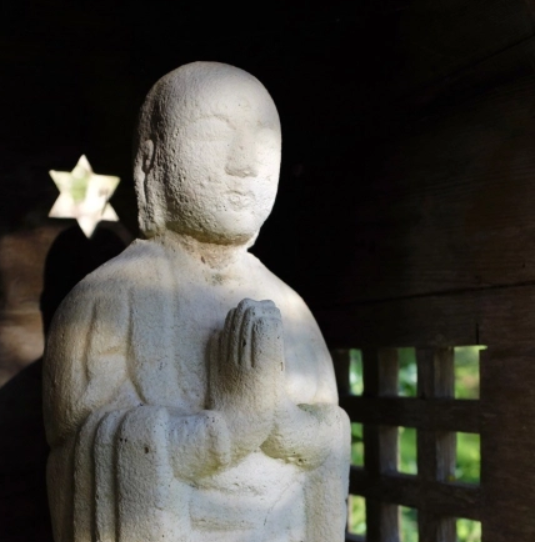
    david-haye-jizo

    This is ordinary western way to put up with the disease. This is not the cure for depression. Changing depressing thoughts one at a time, this one. That’s the noble cure. Whenever there is a video on yt as selling yet another cure is a high price for a placebo. The cure is always cheap and easy, but folks are not willing to take the repetitive cure, they want the Easy way out: a pill or a Dr or a JC to do the job for them. It’s better to post videos from monks who might knows the cure and give a miss to psychologist or lay Buddhist and charlatans that clog the web.
    8:30 PM
    Depression does not exist, it is a concept, a clinical concept. The reality is unwholesome thoughts are the issue. Drs using words like “depression” , at best only give the temporary hope “at least I know what’s wrong with me”. But labels and concepts can only give temporary relief, not a cure. Only the right noble practice of changing the thought process is a cure. No Dr can cure you no matter how much you pay m. Only you can cure yourself by changing you mind one thought at a time, starting with THIS ONE.

    The point is that the mind can change with right noble consistent effort, depression is nothing more than depressing thoughts. It’s inside the mind not out there in society.
    8:37 AM
    The point of managing the spiritual disease is not to just feel better it is a full cure. One must practice continuously to remove unwholesome thoughts untill they don’t come up anymore.
    9:08 AM
    yes, the point is consistent practice of removing unwholesome though, when ever they come. the more you practice the better skilled you get at seeing them and stopping them, for a while as the skill grows, one can see better and it looks like so many , that’s because we see better. and as the skills grow more, the unwholesome thoughts become less frequent, but one must still practice and soon all those unwholesome thoughts are replaced before they are full formed. ,

    when someone is hungry that is not depression, when no food, that is not depression, it is just hunger. Go find food happily. enjoy it all the more due to hunger.
    when you say depressed that misses the point, that means a personality trait, but personalities and not fixed they move around because of many influences. (hunger is not depression) One can change personality by changing thoughts, so there is no such person who is depressed only folks who have unwholesome depressing thoughts, while he/she is watching a movie completely absorbed in the move, no depressive unwholesome thoughts, only laughter at funny movie then and there that one is not depressed, only when the mind moves from movie to “poor me, I have no food” does depression set in. But depression does not set in, its just unwholesome depressive thought fill the mind.

    when someone is hungry that is not depression, when no food, that is not depression, it is just hunger. Go find food happily. enjoy it all the more due to hunger.
    when you say depressed that misses the point, that means a personality trait, but personalities and not fixed they move around because of many influences. (hunger is not depression) One can change personality by changing thoughts, so there is no such person who is depressed only folks who have unwholesome depressing thoughts, while he/she is watching a movie completely absorbed in the move, no depressive unwholesome thoughts, only laughter at funny movie then and there that one is not depressed, only when the mind moves from movie to “poor me, I have no food” does depression set in. But depression does not set in, its just unwholesome depressive thought fill the mind.

    this is a common issue in the west. Many times it is heard “I have wholesome thoughts but they don’t work because I don’t believe them.” That is not because of the wholesome thoughts are not true, but the student fails to see the thoughts right after the wholesome thoughts. The “I don’t believe it” is the new unwholesome thought that is not seen. They see wholesome thought as new, from the outside and not my thought, not me. Then the next thought “I don’t believe it” is old familiar seen as coming from the inside, it’s my thought, it is me the real me. But both the wholesome and the unwholesome thoughts are not me not mine, they are just thoughts. The student needs to be watchful as to what thoughts are seen as me, my thoughts, for they are the most unwholesome and often follow the wholesome thoughts.

    Email

    URL

    Views: 39

  • Sammā-Sankappa

    alexander.hipple@gmail.com

    Translating sankappa from the Pali as “attitude” offers an interesting perspective on the Buddha’s teachings, particularly in how they emphasize the importance of the mind’s role in shaping our perceptions and guiding our actions.
    Traditionally, sankappa is often translated as “intention” or “thought,” and it forms the second factor of the Noble Eightfold Path, known as Sammā-Sankappa (Right Intention or Right Thought). This translation underscores the deliberate and conscious aspect of mental processes that influence behavior. However, when sankappa is translated as “attitude,” it shifts the focus slightly, suggesting that the Buddha’s teachings also emphasize the underlying mental orientation or disposition that one brings to situations in life.

    Implications of Translating Sankappa as “Attitude”

    • Inner Disposition Matters

      :

      Translating sankappa as “attitude” highlights the Buddha’s concern with our mental states, not just our actions. It suggests that the way we approach situations—our mental state or attitude—has a profound impact on our experience and conduct. A positive attitude aligns with the path to liberation, while a selfish or ignorant attitude perpetuates dissatisfaction.
    • Cultivation of Wholesome Attitudes:
      If we understand sankappa as “attitude,” it underscores the importance of correct practice in cultivating wholesome traits like loving-kindness (metta), compassion (karuna), and non-attachment. The Buddha’s teachings would then be seen as a guide to developing and maintaining these attitudes in all aspects of life, influencing both how we perceive the world and how we interact with it.
    • Attitude as a Foundation for Ethical Conduct
      The translation of sankappa as “attitude” suggests that our ethical behavior (Sīla) is deeply rooted in our attitude. For instance, an attitude of non-harm (ahimsa) leads to actions that avoid causing harm to others, while an attitude of generosity leads to acts of giving and sharing. Therefore, Right Attitude is foundational to living a happy life.
    • Mindfulness of Attitude
      : This translation might also encourage greater mindfulness of our attitude in daily life. Just as we have mindfulness of our body, feelings, and mental objects, we are also called to have mindfulness regarding our attitudes. This mindfulness identifies and transforms unwholesome attitudes that cause dissatisfaction for ourselves and others.

    • Attitude and Liberation
      : Finally, understanding sankappa as “attitude” reinforces the idea that liberation in Buddhism is not about rites or rituals but about a deep transformation of the mind and heart. It suggests that cultivating a champion’s attitude directly influences one’s ability to see clearly, free from delusion, and respond with wisdom to any circumstances.

    Conclusion

    Translating sankappa as “attitude” in the context of the Buddha’s teachings adds a layer of depth to our understanding of the Noble Eightfold Path. It emphasizes the importance of the mental orientation we bring to our practice and our lives. The Buddha’s teachings, therefore, can be seen as guiding not just our actions but also the foundational attitudes that shape our interactions with the world, leading us toward greater wisdom, compassion, and ultimately, liberation from dissatisfaction.

    Email

    URL

    Views: 96

  • First Jhāna’s All You Need

    alexander.hipple@gmail.com

    So now I Wake up, take a look, make a change.
    I stop right here, right now, whatever thing I am doing, I can remember to consciously stop and see: what is happening right now? How do I feel? Which thoughts am I having? Then I enter the doors of the senses, how do my clothes feel on my skin? The feet on the floor? The butt on the chair? Can I take some deep breaths and remind myself how I can feel good with very little, because I believe that is enough, that I have arrived, that there is nothing to do and nowhere to go? I can be alive here and now, I let the chest expand with inhalation and contract with exhalation, such a gift that it is! Feeling safe, secure, wholesome on the inside, and satisfied. 
    Then first jhāna arises, I come to the state of the plateau, my homebase, the always on time train of the present moment. I let go of the worries, the neediness, the complaining, and the wanting for something more, for something next. Here the fire of the wholesome has started, from a little sparkle of intention, now the logs are on fire and it warms me up, what a joy to nourish it and keep it alive!
    I will abide in the wholesome, I will get to know my mind and its mysteries because from here everything looks more clear and the clouds of doubt are far away, blown by the winds of conscious decision. Right effort and awesome thoughts in line, born one after another, from the womb of nourishment and awareness of my sweetest behalf, the one I call when I need to come to understand that this moment is all I have and I will be relaxed and chilled, swimming in an ocean of wholesomeness. 
    My safe environment is a state of mind that doesn't need boundaries to be protected, that I don't have to put a guard on, that I don't have to defend. It's an expanded light of softness that embraces all there is right here, right now. 
    Such a delight to abide in first jhāna.
    Such a delight to be here and now.
    In noble wisdom I trust, and I let myself flow in the stream of the never-ending present moment.

    Email

    URL

    Views: 12

  • Autobiography In 5 Short Chapters

    Callum

    Chapter I:

    I walk down the street. There is a deep hole in the sidewalk. I fall in. I am lost… I am hopeless. It isn’t my fault. It takes forever to find a way out.

    Chapter II:

    I walk down the same street. There is a deep hole in the sidewalk. I pretend I don’t see it. I fall in again. I can’t believe I am in this same place. But it isn’t my fault. It still takes a long time to get out.

    Chapter III:

    I walk down the same street. There is a deep hole in the sidewalk. I see it there. I still fall in… it’s a habit… but, my eyes are open. I know where I am. It is my fault. I get out immediately.

    Chapter IV:

    I walk down the same street. There is a deep hole in the sidewalk. I walk around it.

    Chapter V:

    I walk down another street.

    Email

    Views: 27

  • Remaining calm

    dhammadasa

    There’s a Quote by Sri Ramana Maharshi that is used & taught often by His student Robert Adams,  it basically goes like this,  ” Whatever occurs,  don’t react, good or bad,   remain calm in all situations,  this is the only practice one needs , is  not react”   , I Love this Wholesome Thought so much,  especially for it’s straightforward message & brilliant simplicity,  often it remains in the forefront of my mind as a Mantra,  it has become a very important cure all Wholesome thought that transforms any dissatisfaction into pure joy & peace,  also i enjoy meditating on Silence of the heart,  an Actual Title of one of Robert Adams Books, we don’t necessarily have to be quite in outward speech,  but it does help,  when not only our speech but especially our heart is Silent,  all negativity,  all dissatisfaction seems to be burnt up in the beautiful flame of pure unborn awareness,  gladening the mind here n now, questions don’t even arise,  answers don’t mean anything,  self, not self, soul no soul doesn’t even appear anywhere in the clear waters of the Mind , all is well 💙

    Email

    Views: 49

  • Be here Last Tuesday

    Dhamma Dasa

    The ego aka character we develop can only appear to exists in the past or future,  this false idol is the Dukkha creator,  remembering to look for dog dookie on our island 🏝 walk is great Sati as we walk around the dookie staying shining & clean,  but I have experienced a deeper level,  as Buddhadasa Bhikkhu spoke of, the head of the snake,  the Dukkha creator,  the ego self character,  the ” I, my, me mind” , in the island 🏝 dookie analogy,  this would be a dirty dog on our island shitting everywhere,  avoiding the Dukkha is great,  but I have found also sending the ego false self dog on a boat 🐕 to another island is also a great solution because sure other animals may leave some droppings around,  but once the main culprit is gone,  avoiding the dookie is much easier with no dookie creator insight,  & for this I use the wholesome thought of remembering there is no ego character of me, it exsist only in a false ghostly past and future biological thought pattern,  a story that builds momentum & strength only if we allow it, only if we forget to remember to look lol😂,  our true nature is not a self really,  it’s like emptiness,  Silence of the heart,  peace,  pure unborn ever present awareness,  unattached to cognitive biological functions,  the the Dhamma,  Truth, nature shines bright right here,  right now,  in one sense it can be described as just this, here, like this now, very plain , unexciting,  yet on the other yinyang hand it is completely mind blowing,  Magikal & miraculous,  yet also none of these things ☯️☺️

    Email

    Views: 43

  • What is going on right now

    Corey Lupo

    What is going on around you right now?

    I will tell you what is going on around me right now. I am sitting at home, it’s late at night. It’s a bit cold, but the heater will kick on soon enough. And I can always grab a blanket. There is a light next to me, and a wood wall behind the computer. I feel good.

    Now that we have a little bit of raw data to examine. Let’s consider why it’s important to be here now.

    Our memory is fallible, but what you are aware of and can sense around you right now is freely available. It’s a direct experience. No need to remember anything, no need to rely on memory. Not until we really want to or feel like it at least.

    If you try and hold on to a single thought… lets try and do a little peter pan exercise, think of a single happy thought. and try to hold on to it.

    Of course you’ll probably want to close your eyes, since it’s easier that way. But even with eyes closed, it’s quickly obvious just how difficult and slippery memory is. How rapidly a thought can fade into memory, and how hard we have to focus in order for it not to.


    But when you open your eyes, and you just look around. When you are just aware of what is here now, you can feel there is no strain. And there is no fallibility like with memory… lol, well if you are the philosopher type you might draw swords with me there on the “no fallibility” statement. But let me have it, and I will concede that the sense are…pretty much infallible 🙂

    And if you are skilled, you should also be able to feel peace. Memory is where most of our pain comes from. Books have been written about pain, so I won’t go much into it. But just try to analyze pain while you are practicing these things we talked about. Try to see, in real time and direct experience, how your ability to be here now is directly related to the pain felt from memory. The more skilled you are at being here now, the less pain you feel from memory.

    -Corey Lupo

    Email

    Views: 49

  • A Little summary of the teachings: Dissatisfaction and its end.

    A Little summary of the teachings: Dissatisfaction and its end.

    David James Bennison

    6gzn2h.jpg

    Dissatisfaction and its end, this is the core of the truly awake teaching!

    The cause of dissatisfaction is wanting unwisely. When we stop wanting unwisely dissatisfaction ends.

    The method to stop wanting unwisely is The Noble eightfold path.
    This includes the skills to Remember, look, and change.
    Remember to look at what you are doing and make a wholesome change.
    These 3 qualities run circles around each other and the rest of the path.

    Practice remembering in or out breathing. To develop R.L.C (Remember, Look, Change) as well as the whole Noble Eightfold Method. Remembering the in and out breath as an anchor to wake up, look, and direct the mind away from the unwholesome and to the wholesome.
    Getting into seclusion helps develop these skills, into a spot that is safe. Makes it easy to talk yourself into feeling safe, secure, and satisfied when it’s the reality. It’s very beneficial to develop these skills because the mind can run off into Dissatisfaction Town very quickly, so it’s of great benefit to keep the practice in mind and return home here and now often.

    One wholesome thought after another leads to
    A wholesome attitude.
    Then the mind becomes unified, whole, and Free from dissatisfaction.
    When the mind is whole we speak, act, and live kindly and skillfully.

    I have seen this work again and again directly. I have full confidence in the method and the Four Noble Truths. They are just that Noble and True!

    You can do this! Simply remember to look, make wholesome Change, and Congratulate yourself for doing so! Recognizing that this truly is enough, dissatisfaction ends!

    Thank you, Buddha, Dhamma, and Sangha.

    Email

    URL

    Views: 84