Normally, people will allow their happiness to depend on a whole lot of conditions.
And the more you think about those conditions, the more you realize that they’re totally beyond your control: the economy, the climate, the political situation, the continued beating of certain hearts, the stability of the ground beneath your feet, all of which are very uncertain.
So what do you do?
You learn to look inside.
Try to create a sense of wellbeing that can come simply with being with the breath.
Even though this isn’t the total cure, it’s the path toward the cure.”
~ Thanissaro Bhikkhu
“Fears” Meditations1
—
Good question, let me evaluate it too and share it with others…
Having discerned any wordly happiness as changing with delusion and depending on conditions based on ignorance…
How can I cling to it ?
How can i crave for it ?
How can i consider it real ?
Happiness is not different from suffering, both give results involving the 6 senses and they can be both perceived as pleasing or unpleasing, it only depends on the individual view or habit and on the clinging to it as a craving.
However, worldly suffering is felt as real by most and it affects many in different ways, unless the mind is duly trained with aware mindfulness and discernment based on right evaluation.
Then, most do not know how to train or are not in the conditions to understand and suffering becomes the main problem in their life.
Understanding the nature of suffering, it also means to see its root, that is ignorance, and how it affects us and others around us.
Once the root is understood, then Metta and Karuna become the eyes looking at the living beings in the world, resulting in the uprooting of greed and hatred too.
And when the wisdom born from mindful evaluation increases, then discernment takes to see the real happiness, totally void of conceit and craving, i.e. Mudita…
Mudita has different intensity or levels :
the 1st is to see others happy or not suffering;
the 2nd is to see that others ask questions about suffering or about the spiritual path for the sake of understanding;
the 3rd is to know about anyone putting effort in the training of taming their mind;
the 4th and higher is when others get any better understanding of the Dhamma or, even better, when attaining any spiritual goal on the Noble Path.
Mudita does not depend on conditions,
it is not a craving,
there is nothing to cling to,
it is void of self and conceit,
its nature never changes,
it is simply the pure eternal happiness that everyone should look for,
because it is outside of kamma and of becoming.
Hi fellow dhamma enthusiasts 🙂
My name is Kittipuñño bhikku. Two years ago I started my dhamma journey in Asia. I had a strong interest in staying somewhere long term. but it proved quite difficult to find a temple that was suitable for a westerner used to the comfort of life in the Netherlands. In Thailand the climate is much hotter, the food the locals eat is much spicier, there is the language barrier and plenty of nights were spent sleeping on the floor or thin mats. I am making this post to make dhamma practitioners aware of my recent residence; wat tam doi toan.
Wat Tam Doi Toan
Wat Tam Doi Toan is open to all practitioners who want to immerse themselves into the dhamma, there are no costs but donations are accepted. You can practice under guidance of the abbot with 40 years of experience or using your own technique. We ask all interested to first join a 7 day course that is held each month. Anyone serious about their practice is generally accepted to stay after the course with permission from the abbot. In the unlikely event that you’re not allowed to stay, there are a lot of other good temples you can stay nearby. We will help you find a comfortable temple to stay in any case.
Life at wat tam doi toan
The temple features a beautiful cave meditation hall, main Dhamma hall with two floors seperating men and women.
two freshly cooked vegetarian meals a day with a lot of ingredients coming from our organic veggie garden. The food is very suitable for westerners, not too spicy and quite often we have things like pizza or croissants.
The climate here is very comfortable (not too hot) as we’re located In the mountains outside the city.
Your sleeping place (called kuti in Pali) is simple but clean. You will stay in a dormitory although sometimes there are secluded kuti’s available too, especially for those staying long term. Hot water is generally available for the female dorm but not in the male dorm.
In the surrounding of the temple there are waterfalls, forests, river and mountain hiking trails and a lot of elephants. All in walking distance! You can explore this in your free time. The views are amazing as I will show in the photo’s.
How to get to Wat Tam Doi Toan
See; https://www.vimuttidhamma.net
Visa
Anyone wanting to stay long term we recommend to get a visa at hand2hand self defense school. Google it for more information. You can also do visa runs.
Schedule
Outside the course the schedule is very relaxed. You have plenty of time to enjoy your practice!
6:30 breakfast
11:00 lunch
16:00-16:40 sweeping the temple grounds
Ordaining
While ordaining at Wat Tam Doi Toan is not possible, I have a lot of knowledge about how to do this in Thailand. Reach out to me if you need information. You can also get a monk visa in perpetuity this way.
First Post.
Don’t take this self so personally. Mind above the flood. Whatever comes flushing. You can see all that is happening with curiosity.
If there’s car burning outside. You can’t help but to observe with curiosity. But when the car you observe is “yours”. You begun to act frantic and panic. The “self” is suffering. But when is seen through as “not self” . You begin to enjoy the show ” wow, what’s happening? What’s the commotion?”
This life becomes a journey of joyful investigation. No more “poor me” mindset. Is just this. You become a moving target. Getting ourselves outside the shooting range. No me there. Everything is just happening by itself.
Wholesome change of just seeing what is happening with a smile. Relax. Can’t catch dukkha. See dukkha and start getting out the way. Not by aversion but wisdom.
<h6>here is the blog post:

As I continue to explore the intricacies of my practice, I've reached yet another inflection point. Recently, I've been reflecting on some of Dhammarato' s reiterated teachings, which focus on:
1. Cultivating a feminine, nurturing nature
2. Delving into Patticca Sammupada, specifically regarding the curation and manipulation of the data we receive
By integrating these two aspects—embracing feminine nurturing through our thoughts and relaxing our bodies, and persistently curating our experiences to emphasize nurturing inputs—we can profoundly impact our daily experiences, leading to immense satisfaction.
Interestingly, my recent foray into computer programming and the inner workings of large language models (LLMs) has shed light on the significance of the quality of training data they receive. It appears that the efficacy of AI models hinges not only on their size but also on the quality of the data they consume. The experiences we encounter when interacting with an LLM are determined by the data it has been trained on, which is a vast and diverse collection gathered from the internet. As the creators of these models strive to provide high-quality, interesting, and useful data, they employ experts in various fields to guide the model's learning and development.
This aspect of AI models parallels our own
human capabilities. We, too, possess the ability to discern and curate only the highest quality inputs for our incredibly efficient and adaptable AGI—our brains. What a remarkable gift this is.
The Dhamma teaches us that we can curate data not only at the intellectual level but also by cultivating wholesome thoughts, such as those of a motherly nurturing nature. By doing so, we can give rise to feelings of safety, satisfaction, security, and success, all of which contribute to our overall well-being.
As a board member of the Open Sangha Foundation (OSF), I'm eager to expand on these fascinating parallels between the human brain, the Dhamma, and AI in upcoming blog posts. The connections between our ability to curate data for personal growth and our ongoing exploration of AI models could provide valuable insights into the interplay between technology and spirituality. Ultimately, this understanding could help us harness our unique human capabilities and foster a more harmonious balance between our intellectual pursuits and mental well-being.
The truth is we are all still little children of this mysterious thing we call ‘Nature.’
We are trying our best, given the information we have so far through our unique individual experience. If we can recognise that fundamental innocence within ourselves, within all beings, we are coming to relinquish blame of rights and wrongs. So what will this result in? Friendliness, compassion and quite a bit of joy. We can say forgiveness is more of a wise attitude we have even when we see others people hurting each other, trying to hurt us, and even when we ignorantly do so as they ignorantly do so.
Hell I don’t know! That’s okay. And I’m okay with you, brother, sister, you don’t know and you are confused as much as me and I celebrate your clarity. I know deep down we both want to be free, we want to be truly happy beyond any bounds we have and continue to sin and make our mistakes and errors, thats OK, may we together in this learning process learn to hold to truth, value truth, give it all up for the truth for our own good sake.
Thanksgiving to all beings who have made our way easier.
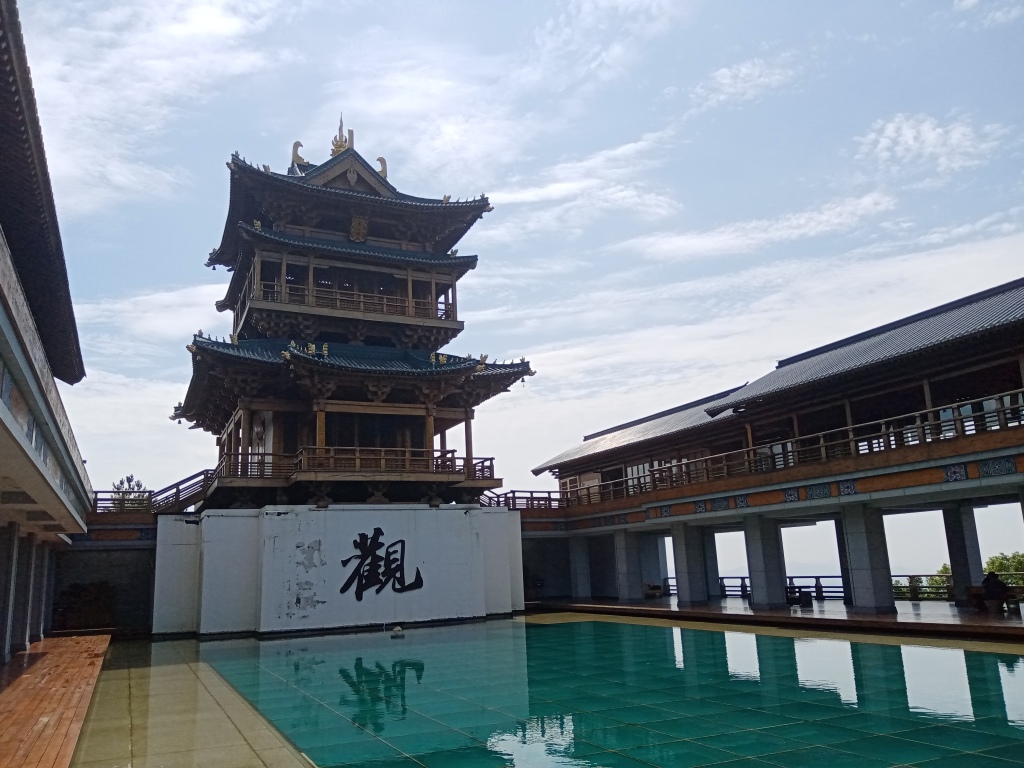
During the summer of 2022, I went to visit Huangmei (黄梅) in Hubei, China, which is apparently famous for two things, its opera (one of the five major Chinese opera styles) and for having the first Chan/Zen monastaries.
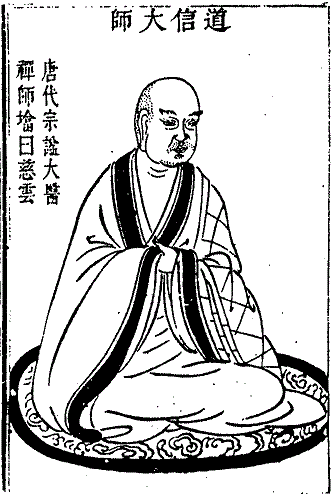
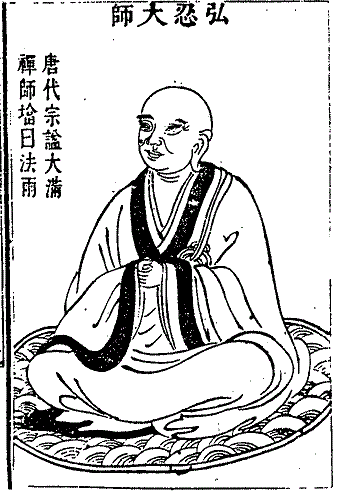
It was in hills of Huangmei that the fourth Chan patriarch, Dayi Daoxin (大毉道信), founded what is now referred to as Sizu Si (Fourth Patriarch Temple) in AD624. One of his disciples and Dharma heir, Daman Hongren (大滿弘忍), then went on to found another monastary in the area, Wuzu Si (Fifth Patriarch Temple). They were the first two Chan monastaries to be built and laid the foundation for the growth of Chan.
Anyway, I only knew all of this after reading Bill Porter’s ‘Zen Baggage’. When reading it, I noticed that Huangmei was actually pretty close to my wife’s hometown and it would be a worthwile stop off when going back to see her family (obviously my family would not be interested in going, so I decided to go by myself).
The journey was a pretty eventful one. After getting the train for a few hours, I had to get a taxi to a hotel near Wuzu Si. During the taxi ride, the weather took a turn for the worse with some of the worst thunder storms I’ve ever been trapped in. You could barely see a few metres in front of you and just saw some blurry lights of lorries around us. As we were on a motorway, we couldn’t just stop or get off the road, so had to keep going. The taxi driver was obviously panicking and trying his best to stop both of us from dying in a nasty car accident. We finally made it off the motorway just as the storms died down with a sigh of relief.
As my hotel was near Wuzu Si, I decided to vist there first. My hotel was part of a new holiday village, conveniently built at the bottom of an old path that led straight up to the temple. Luckily, it was an unusually cool day for a Central China summer and after about 20 minutes I arrived. To be honest, once you’ve been to a few temples in China, you’ve been to them all and I’ve been to some more aesthetically pleasing ones than this (and Sizu Si). However, that wasn’t the reason I went to visit. It was more of a pilgrimage to help me understand the history behind my chosen practice and to connect more deeply with it.
If I’m being honest, I don’t buy into the lineage as much as other Chan/Zen practitioners, as there’s obviously a lot of inaccuracies with them. But there was still a special feeling when I was walking around the temple grounds, knowing how many dedicated practitioners have cultivated the Way here. Writing about it now, makes me think of something spoken by Master Jing Hui (who coincidentally was the Head of Sizu Si for a long time)
“Temple” in Chinese is also called “Bodhimandala”, a word somewhat coincidentally similar to the present scientific term, the field of Dharma. Nowadays, there is a term “the magnetic field”, isn’t there? That is, the field of magnetism. This temple, a place where people come with a compassionate Mind, a Mind that seeks for the ultimate truth, and a place where such consciousness is likely to be concentrated, is a field of Dharma. What is consciousness? It is called Avijnapti-rupa, the “non-revealing”. Consciousness is a kind of invisible energy in the sphere of Rupadharma (the phenomenal world). It is this same consciousness that animates our faith and resolution to keep the precepts. It is also a non-revealing energy. If one truly has such faith and resolution, he will then hold on to it, never departing from the precepts because he is always charged by a powerful will. The Temple, or Bodhimandala, we say, is the field of the Dharma where the Sangha and practitioners carry on self-training, become enlightened, and affirm the truth. Among temples, the Yufo (Jade Buddha) temple – built some one hundred and twenty years ago, is perhaps the most recent... Suppose a temple was one thousand two hundred years old, the power of its field would be enormous.
Master Jing Hui – The Gates of Chan Buddhism
As I walked behind the main temple towards an older area, a group of old women were waiting to take advantage of a naive foreigner. One of them pointed me towards something that was apparently worth seeing, so I decided to follow her advice. Then she started following me and soon arrived at a cave area. I went inside and saw that it was an area of worship. She told me to put my hand on a hand imprint for good luck and then started lighting a candle for me. I knew then she was expecting some money from me, so I told her I didn’t want anything and she wasn’t getting any money from me. She then proceeded to beg me, constantly saying “amituofo” and she’s a poor, old woman. I gave in, gave her some money and walked away with a smile on my face as it was a bit of a comical situation.
It was getting towards lunch time and I was feeling hungry. I was looking forward to tasting some of the food in the temple’s vegetarian restaurant. However, my luck was out. I went inside only to be told it had been booked out for a private event, so wasn’t open to the public. I then walked back down to my hotel, stopping off for some reganmian (热干面 hot dry noodles). I rested in the hotel for the rest of the day, learning some Chinese, meditating and watching some terrible TV.
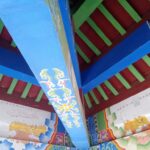
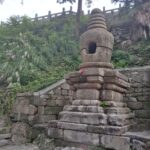
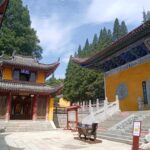
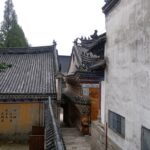
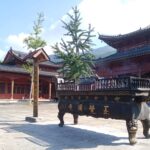
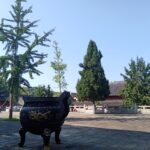
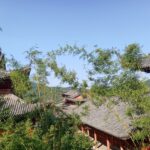
A few photos of Wuzu Si
The next morning, I got up early and wanted to be at Sizu Si early as I knew it would be hotter than the day before. A particularly friendly taxi driver drove me to the other side of the town. I got to the temple gates and walked in to see a builiding site. Seemed like I’d picked the wrong time to visit. Construction in Chinese temples is something that I’m used to seeing though, as they’re all generally expanding and building something. Knowing that I’d come a long way to visit and the taxi I booked wouldn’t be here for a couple of hours, I had to make the most of it. So I walked past the building site at the front of the temple and explored what I could.
The thing that struck me most about Sizu Si, was the amount of photos on the walls, especially the ones with foreigners in them (Bill Porter was in more than one of them). I’d never seen this before in a Chinese temple. There was also a display that had information about the international spread of Chan, which was something they seemed to take pride in.
I knew there were other areas around the temple to visit, but it was getting hotter and I didn’t fancy going too far, so just found a shaded spot to relax until my taxi came, enjoying the countryside landscape.
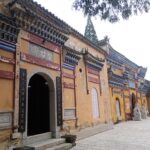
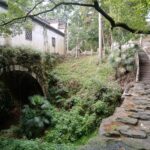
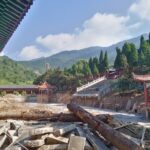
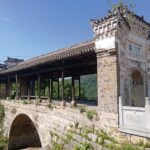
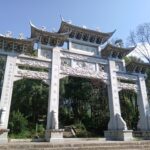
A few photos of Sizu Si
So, that was my rather uninteresting pilgrimage to Huangmei.
If there’s a me or mine, that’ll cost you a heavy fine. Delighting in the taste of wine? Surely you’ll miss out on the divine. Another candle at the shrine….I think not one goes from gross to fine. Not looking at the above or below instead what is really here, already the Seer. From flame to fire, he who kindles this burns down the world as himself: beware not to be the heir! Not seen or yet known, knowing I haven’t seen or yet known – my seed is safely sown. Wash away sin with nurturing! Uncertain in this could be gain: came to be certain to give up this could be, already in vain.
I think with time, practice, restraint, and discipline(and 8FNM) the practice of “Just say no” can be a good method.
If it’s not working for u yet…don’t say no…just say later. Or not now.
Let me see if I can wait 10 more mins and not do that behavior which is causing more suffering….and see if I can imagine being ok if I do it, or if I don’t. It’s okay either way.
From that okayness saying no becomes easier. Cultivate good feelings and right action. Its also about what you do leading up to trying to Saying no to immaturely following sense desires…get some momentum with the easy “No’s” and then when the hard ones come you will have a stronger foundation to help u ride the wave.
A desperate desire that one will remain untouched by the winds of the universe is what drives the sails of fear. To be forever untouched by calamity is akin to the search for happiness. It can easily be argued that a false security from our fears is even more sought after than our peace and happiness. Many of us right now are trading our happiness for a sense of false security. In part our societies have been arranged as such in an effort to guarantee our security.
We are willing to live in a prison chained to the wall while making the greatest effort to extend our arms so that we be holding a knife to each other’s throats if it means that we may feel as though we are safe. To live in a society where there is no trust, and everything must be legislated and sustained by force. To arm ourselves even under the nails of our toes. To bring to fruition the most perverted weapons imaginable so that if our safety is violated both throats will not only be slit but there will be no remnants. So that there will never be a conversation had by other beings as to who got the better of the other. To manipulate and abuse each other in an effort to become eternal.
Many of us have succumbed to a sense of desperation. When we have come to realize that this suffering lies in a poor education which leads us towards a deep disgust of ourselves and others will our societies be removed from such a primitive and self-castrating arrangement. There is a proven solution to this fear of security, and it is to keep the Dhamma in our minds and in our hearts. To abandon the notion of a life untouched by traumas. We are born in trauma, and we will die in trauma but we can remain calm and happy through it all. To overcome the world is to overcome all traumas. Our love for each other and the Dhamma will sustain us from everything that we fear. This wisdom and love is true security.
The one that loves everyone, and everything is able to face the most unfortunate and agonizing of situations. Yes, there will be pain however they cannot be moved in a matter that diminishes them as they are empowered by love. They are not weak and submissive their love is the strength of the universe itself. Though the winds of the universe take a path that seems to threaten their security they know that the only security that can be found in existence and outside of it is inside of themselves and their love for others. Though their bodies, possessions, family, friends, nations perish in the material they know that behind every lover, son, daughter, father, mother, and so on there is but one. It is in that love that one becomes eternal.
Though in this life one may fear imprisonment the one that has acquired a true love for themselves and others knows that the only prison that exists is outside of that love. They know that if they cannot provide for their family in the material that their family will be sustained by this universe. They know that their reputations lie only in their love. They understand that all fears are caused in the absence of love. Though they scream in pain as is the natural reaction of their bodies and instincts their minds are pacified by their love. The perfect hedonist finds this to be true and abandons that title.
Hate is what causes the fictional state of perdition and the fear of it not because it be a physical place in our world but because it is something that we have created for ourselves. Many have understood this fictional perdition as such and this hell has been used to abuse, manipulate, extract, and control by those who understand what great fear lies in it.
Hatred is a path that is effortless in its beginnings as it is an impulsivity, but to maintain that hatred one must frantically empty the ocean with the cupped palm of one’s hand. What great strength one has when one allows oneself to be vulnerable in love. To not be sullied by the thoughts of those who do not harness that strength, but instead castrate themselves using hatred as they have mistakenly identified it with strength.
Always remember that we share the power of creation and destruction. We can create and destroy our fears. The good news is that the Dhamma is with us and has always been with us and that a state of fictional perdition in this life is impossible unless one wishes to reside in the absence of love for themselves and others. Laws are imperfect creations of mankind that almost always fail to grasp the simplicity that is any action done in pure love away from ignorance and selfishness has but to agree with the universe.
The Buddhist world is overflowing with academic minded people who hold up a clipboard of sutta criteria to evaluate your experience and see if it fits what that nonlivivng text says. But that’s not where or what the Dhamma is. The Dhamma is this very real, very alive, bottomless well of happiness that flows inside, covered over by greed, hatred, and delusion, muddied by hinderances, distorted by this cyclical pursuit of stimulating activities. But despite all that obstruction, when we can stop, it takes only a slight turn in the right direction to see this happiness that’s always already here. And when you see it, stay with it and be satisfied. As you remain looking at this causeless happiness, it will grow and overflow all the defilements that once covered it over, and the endless seeking for stimulating sensory activities, stimulating ideas and answers, will become valueless, like straw in your hand. “Problems” that once occupied decades of discussions will look like a single grain of dust on your pants, and you’ll laugh or giggle when they arise in the mind, starved for attention. It’s really that simple, there’s nothing to it. Don’t worry, be happy.
I walk down the street. There is a deep hole in the sidewalk. I fall in. I am lost… I am hopeless. It isn’t my fault. It takes forever to find a way out.
Chapter II:
I walk down the same street. There is a deep hole in the sidewalk. I pretend I don’t see it. I fall in again. I can’t believe I am in this same place. But it isn’t my fault. It still takes a long time to get out.
Chapter III:
I walk down the same street. There is a deep hole in the sidewalk. I see it there. I still fall in… it’s a habit… but, my eyes are open. I know where I am. It is my fault. I get out immediately.
Chapter IV:
I walk down the same street. There is a deep hole in the sidewalk. I walk around it.
When we are walking in nature all things disappear, when we practice Silence of the heart the Dhamma is revealed within us, the wind on our face in the graveyard, the grass on our skin, all is well right here n now, what more could one ask for?, when we walk in the warm sun beams, Where do questions & answers go? When we smell the sweet flowers fragrance, where does politics & religions go? When we Laugh gently & with Wholesomnes, Where does buddhism & meditation practice go? All is Mara Save Satisfaction, all is dukkha Save Silence & remaining calm❤️🌱🌲🌄
There’s a Quote by Sri Ramana Maharshi that is used & taught often by His student Robert Adams, it basically goes like this, ” Whatever occurs, don’t react, good or bad, remain calm in all situations, this is the only practice one needs , is not react” , I Love this Wholesome Thought so much, especially for it’s straightforward message & brilliant simplicity, often it remains in the forefront of my mind as a Mantra, it has become a very important cure all Wholesome thought that transforms any dissatisfaction into pure joy & peace, also i enjoy meditating on Silence of the heart, an Actual Title of one of Robert Adams Books, we don’t necessarily have to be quite in outward speech, but it does help, when not only our speech but especially our heart is Silent, all negativity, all dissatisfaction seems to be burnt up in the beautiful flame of pure unborn awareness, gladening the mind here n now, questions don’t even arise, answers don’t mean anything, self, not self, soul no soul doesn’t even appear anywhere in the clear waters of the Mind , all is well 💙
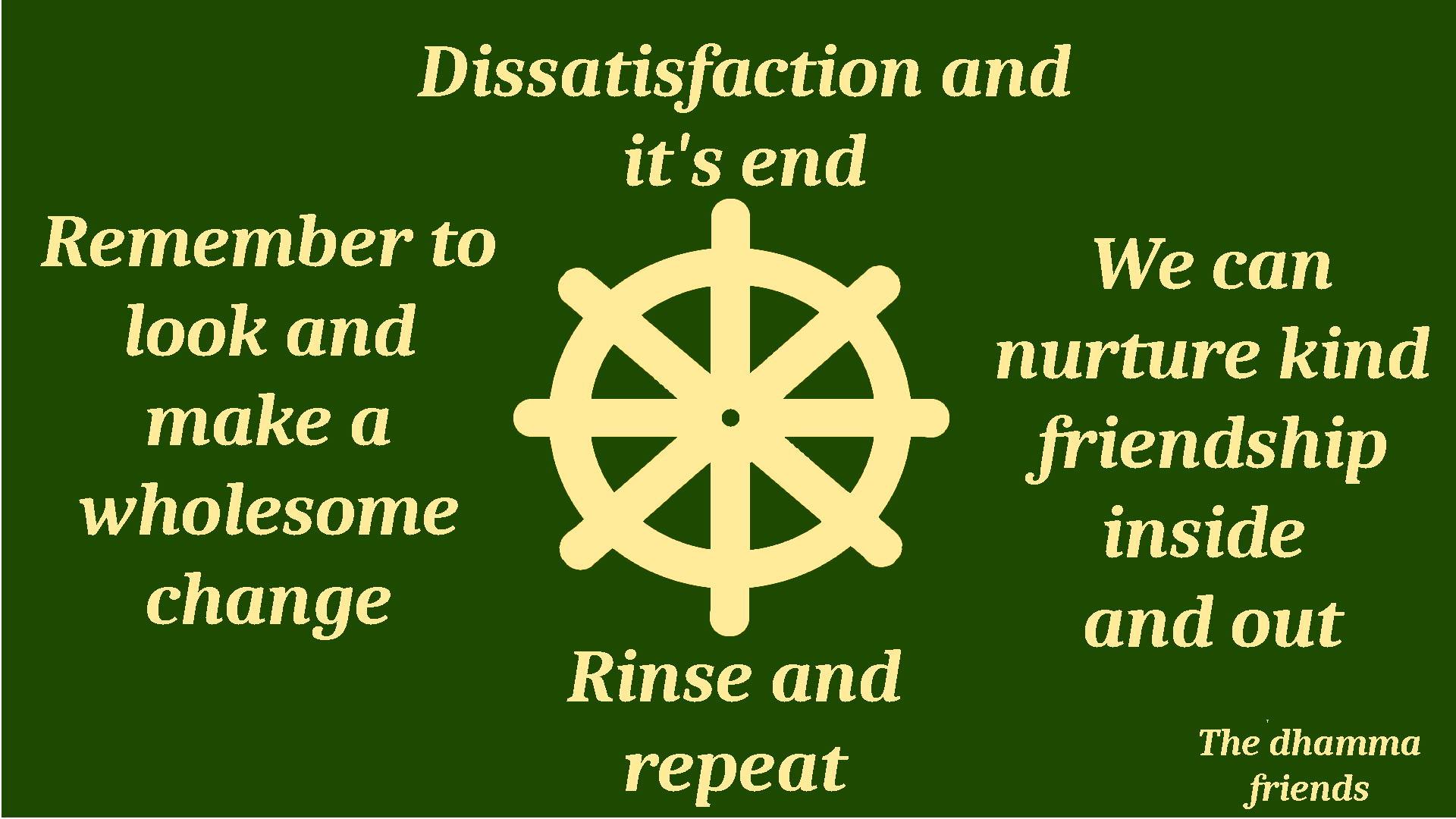
Dissatisfaction and its end, this is the core of the truly awake teaching!
The cause of dissatisfaction is wanting unwisely. When we stop wanting unwisely dissatisfaction ends.
The method to stop wanting unwisely is The Noble eightfold path.
This includes the skills to Remember, look, and change.
Remember to look at what you are doing and make a wholesome change.
These 3 qualities run circles around each other and the rest of the path.
Practice remembering in or out breathing. To develop R.L.C (Remember, Look, Change) as well as the whole Noble Eightfold Method. Remembering the in and out breath as an anchor to wake up, look, and direct the mind away from the unwholesome and to the wholesome.
Getting into seclusion helps develop these skills, into a spot that is safe. Makes it easy to talk yourself into feeling safe, secure, and satisfied when it’s the reality. It’s very beneficial to develop these skills because the mind can run off into Dissatisfaction Town very quickly, so it’s of great benefit to keep the practice in mind and return home here and now often.
One wholesome thought after another leads to
A wholesome attitude.
Then the mind becomes unified, whole, and Free from dissatisfaction.
When the mind is whole we speak, act, and live kindly and skillfully.
I have seen this work again and again directly. I have full confidence in the method and the Four Noble Truths. They are just that Noble and True!
You can do this! Simply remember to look, make wholesome Change, and Congratulate yourself for doing so! Recognizing that this truly is enough, dissatisfaction ends!
I would like to write about my experience staying at Sumedharama in Portugal for 2.5 weeks.
This is a monastery in the Ajahn Chah Thai Forest tradition, usually with about 4-6 lay friends visiting, 8-12 monks, and a lot of people that come for the night meditation. Its a really nice environment to practice in for people that know how to practice already and don’t need a lot of guidance. Ajahn Vajiro and Ajahn Appamado were available for some discussions in the afternoon and I got a lot of benefit talking to them, as well as talking to some of the other monks and lay practitioners during my stay.
It really gave me a lot of time to reflect with space from my life at home. Also in terms of personal practice, I noticed a willingness to let go of the physical sensation of the breath and fall more calmin and looking into the other aspects of the 16 steps of anapanasati; the vedana, citta, and dhamma. Opening more to the mind in this way, and really noticing where the thoughts were arising from really brought a lot of clarity and confidence to my practice.
I would highly recommend a stay here to people; you can stay for one week on an initial visit, longer on subsequent visits.
I learned something from a nun that i felt like sharing. I just stopped a moment and asked myself why does she always ask for me to give other people things she makes/cooks?
I’m not even sure she thinks about the way i’ll explain but she always makes something and then asks someone to offer it, instead of offering it herself which is interesting because here in thailand merit and merit making is such a big deal that anyone will happily jump on the immediate opportunity to ‘gain merit’ and I was confused about her but eventually realized that for her, her generosity is that she gives other people the opportunity to practice generosity, she has also said she’d been in temples for 17 years so she probably picked up a few good things and that in itself showed me that giving others the opporunity to grow is such a big deal, so profound that it goes right into the fundamental design of the sangha relationship to the laypeople, it is entirely about support, about helping each other from the point we’re at, whereas in the west it’s about who can win, who can be the best and who can be perfect, and if that’s true then the dissatisfaction of not being good enough is going to affect us and everyone around us, instead of happily enjoying where we are at and happily practicing the good way.
It seems when it comes to the Dhamma, it is impossible to teach in one sense, but it is possible to teach the intellectual stuff and give people an environment to realize it themselves.
We can in many ways refine our behaviours to both completely benefit from each other instead of the western way that always someone will be a loser, why don’t we just all be winners?






 The Buddhist world is overflowing with academic minded people who hold up a clipboard of sutta criteria to evaluate your experience and see if it fits what that nonlivivng text says. But that’s not where or what the Dhamma is. The Dhamma is this very real, very alive, bottomless well of happiness that flows inside, covered over by greed, hatred, and delusion, muddied by hinderances, distorted by this cyclical pursuit of stimulating activities. But despite all that obstruction, when we can stop, it takes only a slight turn in the right direction to see this happiness that’s always already here. And when you see it, stay with it and be satisfied. As you remain looking at this causeless happiness, it will grow and overflow all the defilements that once covered it over, and the endless seeking for stimulating sensory activities, stimulating ideas and answers, will become valueless, like straw in your hand. “Problems” that once occupied decades of discussions will look like a single grain of dust on your pants, and you’ll laugh or giggle when they arise in the mind, starved for attention. It’s really that simple, there’s nothing to it. Don’t worry, be happy.