Tag: teaching

  • The Knower

    The Knower

    Theta Pati

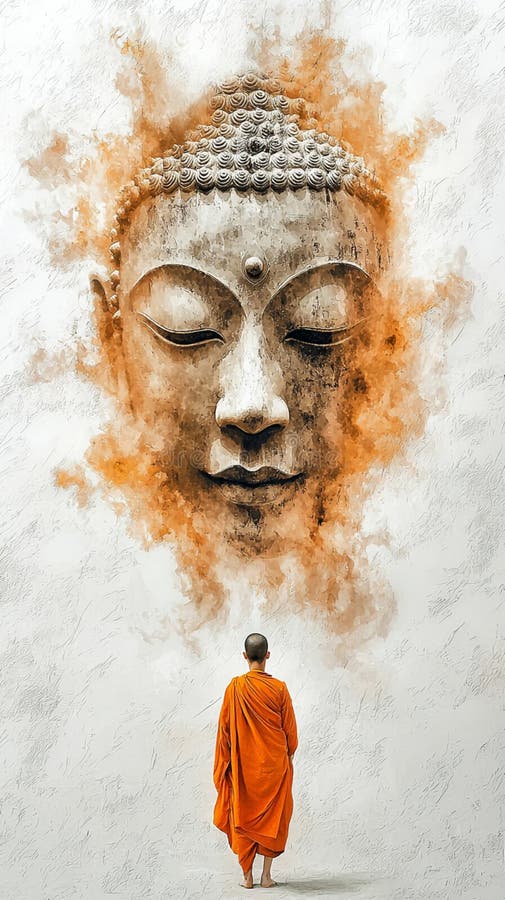
    buddhist-monk-contemplating-giant-buddha-face-watercolor-painting-artistic-watercolor-painting-buddhist-monk-standing-338303455.jpg

    THE KNOWER

    At start the ‘knower’ may be identified with some kind of entity or someone going through the process of knowing.

    But who is this someone ?
    This someone is the mind.

    Is the mind ours ?
    Yes or, better, we think so, because having a perception of it based on individuality, separation, difference and duality.

    But when the truth is seen through wisdom, then the mind becomes one with everything and any link to a self disappears, it cannot be identified with me, I or mine.

    How can a mind, that is everything, be identified with anything like a self ?

    That is not possible, so, when understanding the not-self or the mind, then the self or the mind disappears, in the same way like understanding the knower as not self, not us, not ours, then, the knower disappears.

    In order to know anything, one needs to examine it through right evaluation and the best or deeper way is surely through both samadhi-bhavana and sampajanna, both allowing to experience directly and to discern rightly between what is real or it is illusion, between what changes & finishes or it is eternal, between what seen as limitied or it is limitless, between what seen as self, linked to causes and conditions, or what it is the real self, that exists without them, but that it is totally hidden & imprisoned by them.

    The knower is neither a being nor an entity and it is not linked to any self.

    The knower is the result of a cause, i.e. understanding both what real suffering is and the escape from it.

    The knower rises through a wisdom based on virtue, that cleans the heart from the evil done in countless previous lives and sets us free from their endless consequences, allowing each of us to end any suffering forever, because trascending changement or impermanence.

    Wisdom, made as the cause, defeats ignorance, the true enemy, as the result.

    Why a cause is needed?

    Because, still being in samsara, we still need to use cause & result, but, when using them in the only right way, that is understanding the Dhamma of the Buddhas, then, any cause can be trascended and ended.

    For example, one makes a mistake based on ignorance, thinking that he made the mistake, assuming that ignorance is inside him, identifying himself as the cause.

    But ignorance, like wisdom or suffering or happiness or anything else, it is not something that one owns, it is outside each of us, in fact, it is because outside of us, that anyone can make it increase or decrease at will.

    The knower looks at things and uses the right evaluation process to see their true nature.

    We all start from the same point, that is the illusion to be someone or a self or a knower or a cause, but the more wisdom increases and the more comes the understanding of our own timeless and limitless nature.

    In other words, when understanding to be everything, how can anyone be classified as a self or as someone or as an entity or as a knower or as a cause?

    When the not-self is understood as everything, then the knower disappears and wisdom takes his place.

    This means that, when the knower understands the truth, then, that truth made of wisdom trascends the knower and the knower becomes just the all-inclusive wisdom or the pure truth.

    In the same way with each element, for example pure universal Metta trascends any love linked to an entity or a self, in the same way Karuna with compassion, in the same way going through past lives with self-consciousness and so on.

    The knower is pure wisdom, not linked to me or to you or to a self or to a consciousness, because wisdom it is not a learning process like the one of the world, that we may forget because linked to an entity or to a being or to a self.

    Once wisdom increases, it cannot be forgotten, it cannot dicrease and its result is always an increased wellness, that may be called unshakable neverending happiness, born from overcoming or trascending the suffering based on ignorance and duality.

    This is what & how i see & have understood the ‘knower’ and what i think useful to share, based on the little i got to know. 😅

    🙏❤️🙏
    Theta-Pati

    Email

    Views: 1

  • SOCRATES: Perhaps you seem to make yourself but rarely available,

    SOCRATES: Perhaps you seem to make yourself but rarely available,

    Waxhaw Luke

    PoppaBear.png

    SOCRATES: Perhaps you seem to make yourself but rarely available, and not be willing to teach your own wisdom, but I’m afraid that my liking for people makes them think that I pour out to anybody anything I have to say, not only without charging a fee but even glad to reward anyone who is willing to listen. If then they were intending to laugh at me, as e you say they laugh at you, there would be nothing unpleasant in their spending their time in court laughing and jesting, but if they are going to be serious, the outcome is not clear except to you prophets.

    Three things going on in this passage—

    1. He teaches because he likes people, he enjoys others (metta, loving-kindness).

    2. He teaches for free, doesn’t charge (Dana, generosity).

    3. He doesn’t care if people laugh at him or laugh with him- he just cares that they’re having a good time (piti, joy).

    Pretty neat to see that teaching from old Socrates!

    Email

    URL

    Views: 13

  • When I first came across the story of Angulimala,

    When I first came across the story of Angulimala,

    Thomas Hammon

    Dollarphotoclub_65729073-683x1024.jpg

    When I first came across the story of Angulimala, I was immediately captivated by its powerful message of redemption and the potential for change within every individual. The tale not only resonated with me but also reminded me of the importance of understanding our own personal struggles and using them as a catalyst for growth. In this blog post, I will delve into the essence of pacing and leading in the story of Angulimala, and how it masterfully demonstrates that even the darkest of hearts can find the light.

    The story of Angulimala begins with a man who, consumed by ill will and greed, commits unspeakable acts of violence. Yet, when confronted by the Buddha, he embarks on a transformative journey that ultimately leads him to redemption. What makes this story so compelling is the subtle pacing and leading interplay between the Buddha and Angulimala, as well as its universal themes that resonate with the reader.

    As a master of pacing, the Buddha acknowledges the darkness within Angulimala and mirrors it back to him. When Angulimala demands the Buddha to “stop, monk,” the Buddha’s response – “I have stopped” – speaks volumes. This statement implies that, like Angulimala, the Buddha too was once caught in the web of delusion, yet he found the strength and wisdom to break free. By doing so, the Buddha establishes a connection with Angulimala, emphasizing their shared human experience.

    The brilliance of the Buddha’s leading technique lies in his gentle suggestion that Angulimala, too, can change his ways. When he tells Angulimala, “and now it is your turn to stop too,” he plants the seed of hope within the heart of the murderer. The Buddha’s own journey from darkness to light serves as an inspiring example that no one is beyond redemption, not even someone who has committed heinous acts like Angulimala.

    The story of Angulimala is not just about the transformation of a single man, but a reflection of the potential for change within each of us. We have all experienced moments of ill will, greed, and delusion – yet, like the Buddha and Angulimala, we have the power to break free from these destructive patterns and embrace a path of compassion and wisdom.

    In today’s world, where divisiveness and intolerance seem to be ever-present, the story of Angulimala serves as a timely reminder that every individual possesses the capacity for change and growth. By acknowledging our own struggles and connecting with others through shared experiences, we can pave the way for personal and collective transformation.

    So, let us take inspiration from the story of Angulimala and strive to see clearly through our own challenges, for in doing so, we can become a beacon of hope and light in the world around us.

    Email

    Views: 5

  • Just breathe & relax

    dhammadasa

    In the beginning we head into seclusion and just breathe & relax & feel good here and now, in the middle we can do this anywhere,  in the end same, over time you will begin to realize all thoughts feelings and emotions are just impermanent,  if we cling to them to strongly we have dissatisfaction,  the ego character we created in our head with a past and a future story also does not last, it’s all an illusion,  you will see your days can go by perfectly fine with only breathing and relaxation here & now, it will become more clear with each moment,  you will notice how attached to the minds illusions you used to be & how silly it all was, how much energy was spent chasing liking & disliking,  good and evil,  adding or subtracting to your characters story, wow, how much lighter we feel putting all that garbage down,  no longer creating bad habits,  now go forward & sin no more, the kingdom of heaven is within u dude, so just chill the f out 😀🌊🏄🏽‍♂️☯️🌸🤗☺️

    Email

    Views: 22

  • Can “just say no” Be effective

    I think with time, practice, restraint, and discipline(and 8FNM) the practice of “Just say no” can be a good method.

    If it’s not working for u yet…don’t say no…just say later. Or not now.
    Let me see if I can wait 10 more mins and not do that behavior which is causing more suffering….and see if I can imagine being ok if I do it, or if I don’t. It’s okay either way.
    From that okayness saying no becomes easier. Cultivate good feelings and right action. Its also about what you do leading up to trying to Saying no to immaturely following sense desires…get some momentum with the easy “No’s” and then when the hard ones come you will have a stronger foundation to help u ride the wave.

    Email

    Views: 14

  • Silent Poetry

    dhammadasa

    When we are walking in nature all things disappear, when we practice Silence of the heart the Dhamma is revealed within us, the wind on our face in the graveyard, the grass on our skin, all is well right here n now, what more could one ask for?, when we walk in the warm sun beams, Where do questions & answers go? When we smell the sweet flowers fragrance, where does politics & religions go? When we Laugh gently & with Wholesomnes, Where does buddhism & meditation practice go? All is Mara Save Satisfaction, all is dukkha Save Silence & remaining calm❤️🌱🌲🌄

    Email

    Views: 41

  • Remaining calm

    dhammadasa

    There’s a Quote by Sri Ramana Maharshi that is used & taught often by His student Robert Adams,  it basically goes like this,  ” Whatever occurs,  don’t react, good or bad,   remain calm in all situations,  this is the only practice one needs , is  not react”   , I Love this Wholesome Thought so much,  especially for it’s straightforward message & brilliant simplicity,  often it remains in the forefront of my mind as a Mantra,  it has become a very important cure all Wholesome thought that transforms any dissatisfaction into pure joy & peace,  also i enjoy meditating on Silence of the heart,  an Actual Title of one of Robert Adams Books, we don’t necessarily have to be quite in outward speech,  but it does help,  when not only our speech but especially our heart is Silent,  all negativity,  all dissatisfaction seems to be burnt up in the beautiful flame of pure unborn awareness,  gladening the mind here n now, questions don’t even arise,  answers don’t mean anything,  self, not self, soul no soul doesn’t even appear anywhere in the clear waters of the Mind , all is well 💙

    Email

    Views: 49

  • What is going on right now

    Corey Lupo

    What is going on around you right now?

    I will tell you what is going on around me right now. I am sitting at home, it’s late at night. It’s a bit cold, but the heater will kick on soon enough. And I can always grab a blanket. There is a light next to me, and a wood wall behind the computer. I feel good.

    Now that we have a little bit of raw data to examine. Let’s consider why it’s important to be here now.

    Our memory is fallible, but what you are aware of and can sense around you right now is freely available. It’s a direct experience. No need to remember anything, no need to rely on memory. Not until we really want to or feel like it at least.

    If you try and hold on to a single thought… lets try and do a little peter pan exercise, think of a single happy thought. and try to hold on to it.

    Of course you’ll probably want to close your eyes, since it’s easier that way. But even with eyes closed, it’s quickly obvious just how difficult and slippery memory is. How rapidly a thought can fade into memory, and how hard we have to focus in order for it not to.


    But when you open your eyes, and you just look around. When you are just aware of what is here now, you can feel there is no strain. And there is no fallibility like with memory… lol, well if you are the philosopher type you might draw swords with me there on the “no fallibility” statement. But let me have it, and I will concede that the sense are…pretty much infallible 🙂

    And if you are skilled, you should also be able to feel peace. Memory is where most of our pain comes from. Books have been written about pain, so I won’t go much into it. But just try to analyze pain while you are practicing these things we talked about. Try to see, in real time and direct experience, how your ability to be here now is directly related to the pain felt from memory. The more skilled you are at being here now, the less pain you feel from memory.

    -Corey Lupo

    Email

    Views: 49

  • Avijjā Sutta (AN 10.61)

    Alexander Hipple

    “Bhikkhus, this is said: ‘A first point of ignorance, bhikkhus, is not seen such that before this there was no ignorance and afterward it came into being.’ Still, ignorance is seen to have a specific condition.

    I say, bhikkhus, that ignorance has a nutriment; it is not without nutriment. And what is the nutriment for ignorance? it should be said: the five hindrances.

    The five hindrances, too, I say, have a nutriment; they are not without nutriment. And what is the nutriment for the five hindrances? It should be said: the three kinds of misconduct.

    The three kinds of misconduct, too, I say, have a nutriment; they are not without nutriment. And what is the nutriment for the three kinds of misconduct? It should be said: non-restraint of the sense faculties.

    Non-restraint of the sense faculties, too, I say, has a nutriment; it is not without nutriment. And what is the nutriment for non-restraint of the sense faculties? It should be said: lack of recollection and awareness.

    Lack of recollection and awareness too, I say, has a nutriment; it is not without nutriment. And what is the nutriment for lack of recollection and awareness? It should be said: no concurrent attention.

    No concurrent attention too, I say, has a nutriment; it is not without nutriment. And what is the nutriment for no concurrent attention? It should be said: lack of trust.

    Lack of trust, too, I say, has a nutriment; it is not without nutriment. And what is the nutriment for lack of trust? It should be said: not hearing the good Dhamma.

    Not hearing the good Dhamma, too, I say, has a nutriment; it is not without nutriment. And what is the nutriment for not hearing the good Dhamma? It should be said: not associating with good people.”

    —AN 10.61

    Email

    URL

    Views: 155

  • Mettāsutta (Kp 9)

    Alexander Hipple

    “Those who are skilled in the meaning of scripture
    should practice like this so as to realize the state of peace.
    Let them be able and upright, very upright,
    easy to speak to, gentle and humble;

    content and unburdensome,
    unbusied, living lightly,
    alert, with senses calmed,
    courteous, not fawning on families.

    Let them not do the slightest thing
    that others might blame with reason.
    May they be happy and safe!
    May all beings be happy!

    Whatever living creatures there are
    with not a one left out—
    frail or firm, long or large,
    medium, small, tiny or round,

    seen or unseen,
    living far or near,
    those who have been born
    and those about to be born—
    may all beings be happy!

    Let none deceive another,
    nor look down on anyone anywhere.
    Though provoked or aggrieved,
    let them not wish pain on each other.

    Even as a mother would protect with her life
    her child, her only child,
    so too for all creatures
    unfold a boundless heart.

    With love for the whole world,
    unfold a boundless heart:
    above, below, all round,
    unconstricted, without enemy or foe.

    When standing, walking, sitting,
    or lying down while yet unweary,
    keep this ever in mind;
    for this, they say, is a divine meditation in this life.

    Avoiding harmful views,
    virtuous, accomplished in insight,
    with desire for sensual pleasures dispelled,
    they never return to a womb again.”

    —Kp 9

    Email

    URL

    Views: 55

  • Noble Conversation

    Noble Conversation

    Brett

    In pursuit of more skillful speech, especially with teachers and members of the Sangha, yesterday I downloaded the freely available book Noble Conversation, by Ajahn Thanissaro.

    https://www.dhammatalks.org/ebook_index.html

    It’s amazing to have these free books available and I am very thankful to have found them at this time.

    On a 10 day retreat in 2013, I wasn’t really supposed to read books but one book that went with me was Right Mindfulness, by Ajahn Thanissaro (Thanissaro Bhikkhu at the time). It was worth taking with me. These books are distributed free of charge.


    Email

    Views: 45

  • First jhana is all you need

    First jhana is all you need

    PietroDN

    20230811_051911.jpg

    And so now i Wake up, take a look, make a change.

    I stop right here, right now, whatever thing i am doing, i can remember to consciously stop and see: what is happening right now? How do i feel? Which thoughts am i having? And then enter the doors of the senses, how do my clothes feel on my skin ? And the feet on the floor? The butt on the chair? Can I take some deep breaths and remind myself how much I can feel good with very little, because I believe that is enough, that I have arrived, that there is nothing to do and nowhere to go? I can be alive here and now, i let the chest expand with inhalation and going back with exhalation, such a gift that It is! Feeling safe, secure, wholesome on the inside , and satisfied.

    Then first jhana arises, I come to the state of the plateau, my homebase, the always on time train of the present moment. And I let go of the worries, the neediness, the complaining,and the wanting for something more , for something next. Here the fire of the wholesome has started, from a little sparkle of intention, now the logs are on fire and it warms me up, what a joy to nourish it and keep it alive!

    I will abide in the wholesome, I will get to know my mind and its mysteries because from here everything looks more clear and the clouds of doubt are far away , blown by the winds of conscious decision. Right effort and awesome thoughts in line, born one after another, from the womb of nourishment and awareness of my sweetest behalf, the one i call when i need to come to understand that this moment is all i have and i will be relaxed and chilled, swimming in an ocean of wholesomeness.

    My safe environment is a state of mind that doesn’t need boundaries to be protected, that I don’t have to put a guard on it and that I don’t have to defend my security. Is an expanded light of softness that embraces all there is right here right now.

    Such a delight to abide in first jhana 

    Such a delight to be here and now

    In noble wisdom I trust, and I let myself flow in the stream of the never ending present moment.

    Email

    URL

    Views: 41

  • A-Buddhist-Charter-Buddhadasa

    https://opensanghafoundation.org/

    ajpoh1

    [pdfjs-viewer url=”https://opensanghafoundation.org/newsite/wp-content/uploads/2023/08/A-Buddhist-Charter-Buddhadasa.pdf” attachment_id=”7993″ viewer_width=100% viewer_height=800px fullscreen=true download=true print=true]

    Email

    URL

    Views: 70

  • Call the Buddha

    Call the Buddha

    Cathal Costello Costello

    Screenshot-2023-08-05-133816.png

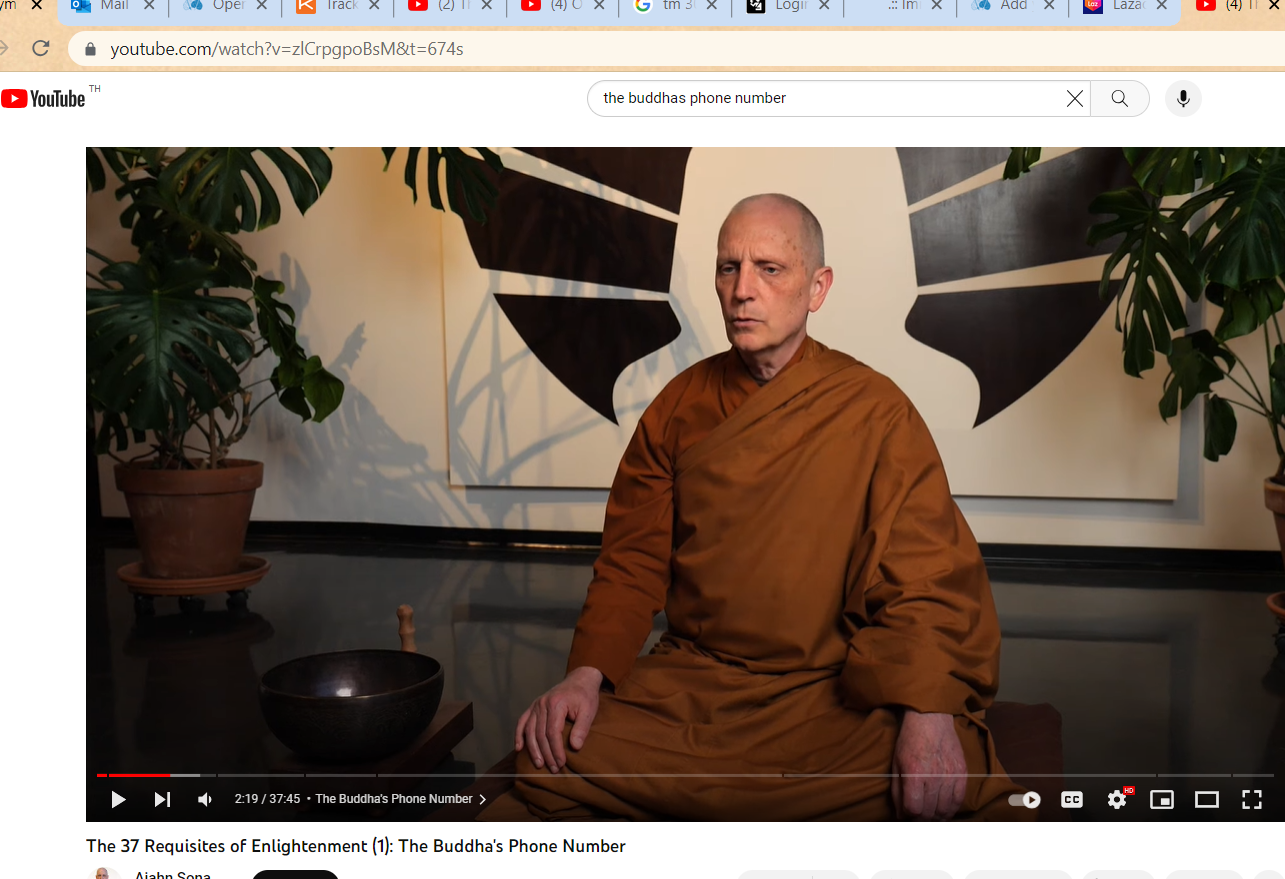
    The Buddhas phone number .

    https://www.youtube.com/watch?v=zlCrpgpoBsM&t=674s

    875444

    1. 8 fold noble path
      7 factors of enlight
      5 Powers
    2. 5 faculties
    3. 4 foundations of mindfulness
    4. 4 basis of psychic power
    5. 4 right efforts

    Email

    URL

    Views: 37

  • Only One Buddhism

    Only One Buddhism

    ONLY ONE BUDDHISM

    We are all One
    Mahayana, Western Buddhism and Theravada and all the Buddhisms all have the same taist, the taist of freedom.

    Buddhism really has no variety, It’s all about stop hurting

    One buddhism

    Views: 30

  • A Short Visit to Sunyata

    A Short Visit to Sunyata

    A Short Visit to Sunyata

    Sunyata – a small forest thai wat in Sixmilebridge, Co. Clare, Ireland – by Cathal

    I came to Sunyata for 5 days (1/12/2022-5/12/2022) and I was very impressed by how such a small
    monastery can have such a big impact. The schedule ran like the other wats in this forest thai tradition
    (with Ajahn Chah) such as Chithurst, Amavarati – there was about 3 hours work to be done the entire
    day with everything being ran off of dāna, breakfast, lunch, tea and the two daily hour pujas I attended.
    In the barren countryside of Ireland it’s very personal experience in polarity to the busyness of other
    wats, there was 3 other guys in the entire place so I was left alone for most of the day to the chatters of
    my mind, which proved to be a new experience and a very insightful to see my mind in such social
    seclusion. There was no monastics about although recently Ajahn Succito resided a while for a self-
    retreat, there are generally lay visitors coming and going and a couple dedicated long-term laypeople
    who stick around who worked quite a bit to maintain the place and keep up the handling of retreats and
    so on. It still somehow felt like a Sangha with those guys, we openly could talk and relate to each other
    on many levels of personal experience in life and our experiences in meditation, it felt really nice to be
    able to find a place in my home country who practiced, sharing connections and places to meet Sangha
    is pretty solid.
    The place itself is really very simple and after roaming around it is easy to tell they’ve spent a lot of time
    cultivating a very aesthetically beautiful place with a bit of land for herbs and vegetables, you have your
    room in a dormitory (although the entire dorm will likely be your room if you’re not in some
    retreat/event) and do whatever you want. There are free books to read if you like and a comfortable hall
    to sit in during the common showery cold Irish days and the only thing you’ll be disturbed by is a dog
    and a few cats. There is literally nothing to do and nowhere to go. (welcome to anapanasati)
    After the morning reflection, work begins, you will be likely off to do your own task and it is very nice to
    practice working meditation as that is something quite mentioned in this tradition, to approach
    absolutely everything with mindfulness even the most mundane of things. (where I saw my mind prefers
    to be the most active).
    It is good to bring any kind of dāna you can whether that be some groceries from the nearby town of
    Sixmilebridge or donations, this is a very small place and generally they have to do their own shopping
    from retreat donations, but don’t worry if you can’t because there is plenty of food to go around. Being
    no monastics has its downside of not being able to talk about your practice or observe long-term
    practitioners who can make great friends or teachers, so I suggest if you are a point you’d like a self-
    retreat this is definitely a good place to go or to join during some kind of retreat where you’ll be
    amongst more people, or to be in contact with the lay-manager as to when monastics are coming and
    going. I’ll absolutely be back and for anyone in Ireland this is certainly a place you’ll be glad to be able to
    visit often.

    Views: 36